Long Form vs Short Form Birth Certificate: Key Differences Explained (2026)
The Main Difference: Long Form vs Short Form Birth Certificate
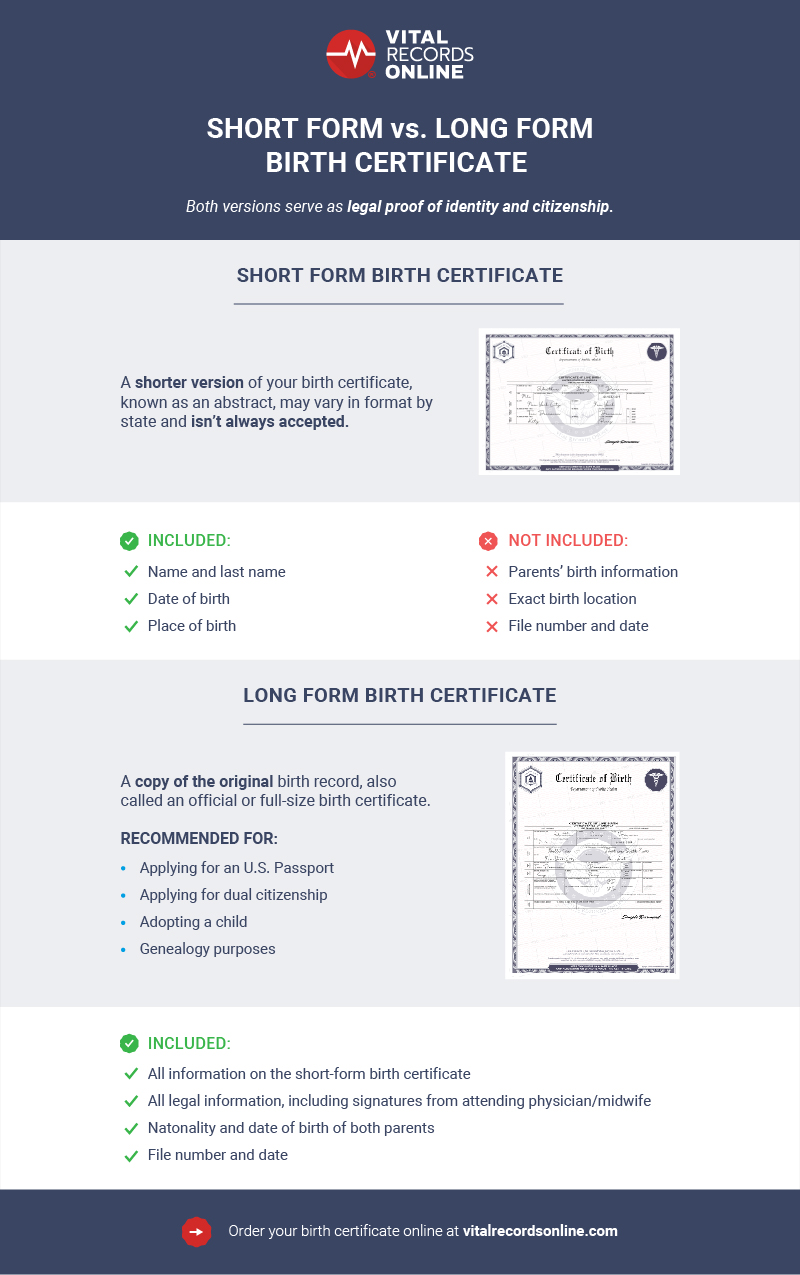
The main difference between a long form and short form birth certificate is the level of detail. A long-form birth certificate is a complete certified copy of the original birth record, including parents’ names, hospital, and attending physician. A short-form birth certificate is a summary that contains only basic facts like name, date, and place of birth.
What Is a Birth Certificate?
A birth certificate is an official government-issued document that records an individual’s birth details. It is commonly required for passport applications, driver’s licenses, legal identification, school enrollment, and other official purposes.
There are two main types of birth certificates issued in the United States:
✔ Long-Form Birth Certificate (official detailed copy)
✔ Short-Form Birth Certificate (summary version)
What’s the Difference Between a Long-Form and Short-Form Birth Certificate?
Long-Form vs Short-Form: Quick Comparison
| Long-Form Certificate | Short-Form Certificate | |
|---|---|---|
| Also called | Certified copy of birth record | Certification of birth / abstract |
| Detail level | Full original record | Summary — basic facts only |
| Parents’ info | Yes — full names and birthplaces | Sometimes — varies by state |
| Hospital / birth location | Yes | No |
| Accepted for passports | Yes | Usually not |
| Accepted for REAL ID | Yes | Depends on state |
| Best used for | Legal, travel, immigration | School enrollment, basic ID |
A long-form birth certificate is a certified copy of the original birth record, containing complete information such as place of birth, parents’ names, hospital details, and signatures. It is commonly required for legal matters, international travel, and official identification purposes.
A short-form birth certificate is an abstract or summary version of the original document, confirming the person’s birth without all additional details. It is typically used for basic identity verification and school enrollment but may not be accepted for passports or immigration purposes.
Long-Form Birth Certificate: What It Includes & When You Need It
A long-form birth certificate is a complete, official copy of the original birth record. This type of birth certificate includes:
- Full name of the person born
- Date and place of birth (city, county, and state)
- Hospital or birth location
- Parents’ full names and birthplaces
- Signature of the attending physician or midwife
- Official state seal or certification stamp
When Do You Need a Long-Form Birth Certificate?
A long-form birth certificate is often required for:
✔ Applying for a passport or REAL ID
✔ Immigration or citizenship applications
✔ Marriage license applications
✔ Legal name changes
✔ Enrolling in government programs or benefits
Some agencies only accept a long-form birth certificate for official processes.
Which Birth Certificate Do I Need for a Passport?
The U.S. State Department requires a long-form birth certificate for all passport applications. Your certificate must show:
- Full name
- Date of birth
- Place of birth
- Parents’ full names
- Registrar’s signature and/or seal
Short-form certificates are NOT accepted for passport applications. This is one of the most common reasons people need to order a new long-form birth certificate. If you only have a short-form version, you’ll need to request a long-form certified copy from your state’s vital records office.
Which Birth Certificate Do You Need for REAL ID?
Since May 7, 2025, the REAL ID Act has been fully enforced across the United States. To apply for a REAL ID at your local DMV, you need proof of identity — and a birth certificate is the most common document used.
Most states accept a long-form birth certificate for REAL ID applications. Some states may also accept a short-form version, but requirements vary. To avoid problems at the DMV, we recommend bringing a long-form certified copy to be safe.
Not sure if you need a REAL ID or a passport? Check our comparison guide to find out which ID is right for your travel needs.
Long Form vs Short Form Birth Certificate: State-by-State Differences
One important factor when deciding which birth certificate to order is understanding your state’s policies. Not all states issue both types of certificates — policies vary significantly across the United States.
- Some states only issue one type: For example, California and some other states issue a single “certified copy” that functions as a long-form certificate. You don’t have a choice between forms.
- Some states issue both: States like New York, Texas, and Florida allow you to choose between long-form and short-form when ordering.
- Terminology varies by state: The same document might be called a “certified copy,” “abstract,” “certification of birth,” or “vital record” depending on your state.
Check with your state’s vital records office to understand what options are available in your state.
Can I Use a Short-Form Birth Certificate for Employment (I-9)?
For I-9 employment verification purposes, both long-form and short-form birth certificates are generally accepted as List C documents (documents of identity). However, there are important requirements:
- The document must include your full name
- The document must include your date of birth
- The document must be an official, certified copy (not a photocopy or uncertified version)
That said, many employers are stricter than federal requirements. If your employer specifically requests a long-form certificate, you should provide one to avoid complications with your hiring process.
Short-Form Birth Certificate: What It Includes & When It’s Used
A short-form birth certificate is an official document but contains limited information compared to the long-form version. It typically includes:
- Full name of the person born
- Date of birth
- Place of birth (state and county)
- Basic details of parents (if applicable)
When Can You Use a Short-Form Birth Certificate?
A short-form birth certificate is often accepted for:
✔ School registration
✔ Employment verification
✔ Basic proof of age and identity
✔ Some government programs
However, some government agencies, banks, and passport offices may require a long-form version instead. If you’re unsure which type you need, a long-form certificate is always the safer choice.
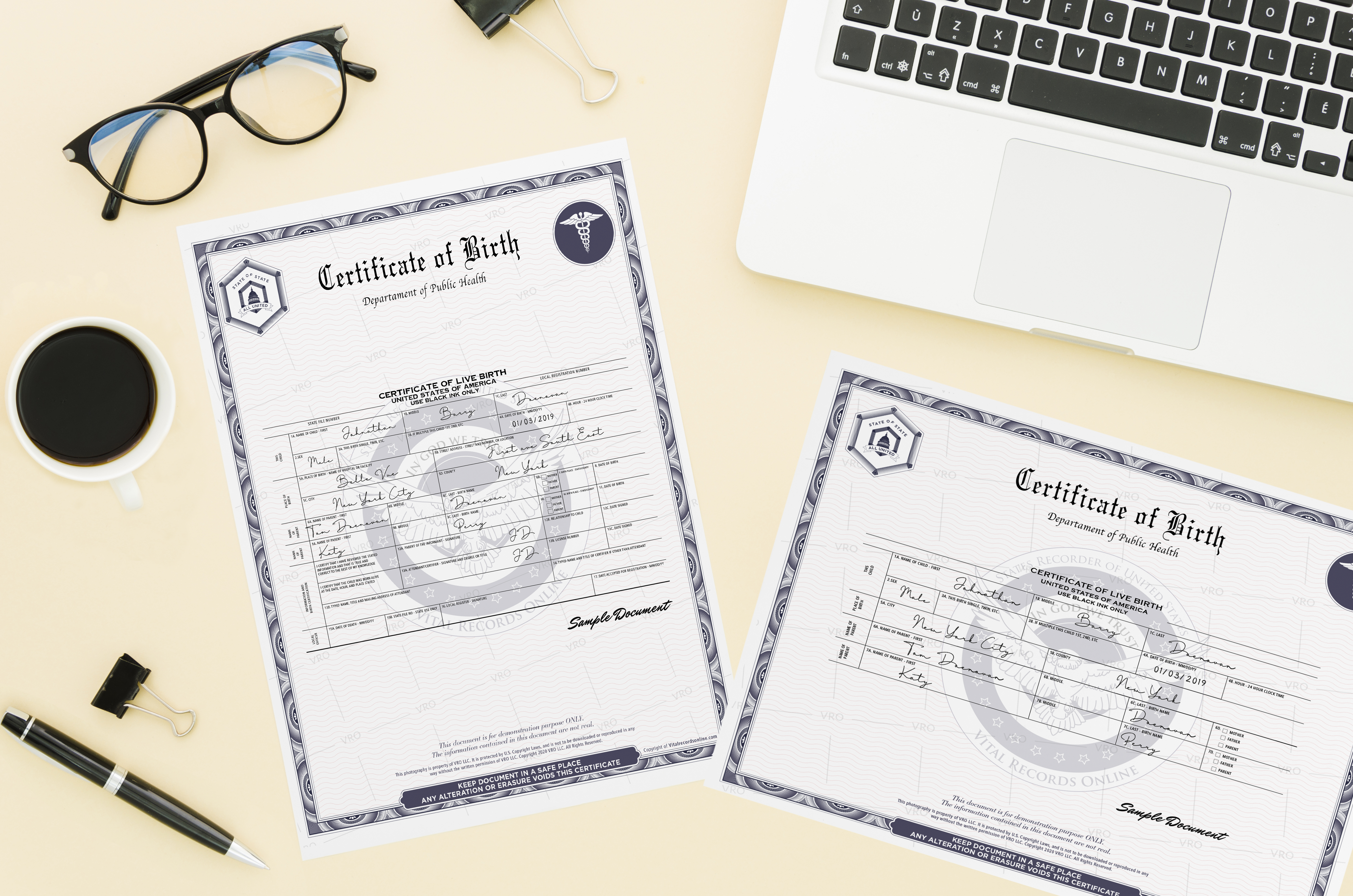
What does a short form Birth Certificate look like?
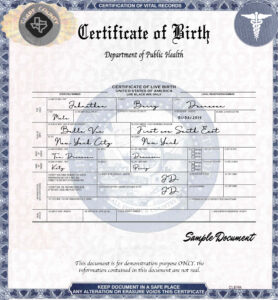
Short Birth Certificate Template Image
This is a short form birth certificate (also called “Certification of Birth”). It is issued by the New York City Department of Health and Mental Hygiene and signed by the City Registrar.
How to Obtain a Long-Form or Short-Form Birth Certificate
If you need to replace or request a birth certificate, follow these steps:
Step 1: Check Your State’s Requirements
Each state has different policies on whether they issue long-form, short-form, or both types of birth certificates. You can locate your local vital records office by using our state requirements page.
Check your state’s birth certificate requirements here.
Step 2: Choose the Best Application Method
- Online Application (Fastest Option) – Apply online for a certified copy with expedited processing.
- Mail Application – Submit a request by mail to the state’s vital records office (takes longer).
- In-Person Request – Visit the Vital Records Office in your birth state for same-day pickup (if available).
Step 3: Provide Required Documentation
When applying, you will typically need:
✔ A valid photo ID (driver’s license, passport, or state-issued ID)
✔ Proof of relationship (if requesting for a family member)
✔ Full name, date of birth, and place of birth
✔ Parents’ full names
Step 4: Submit Your Application & Payment
Each state charges a processing fee for issuing a certified birth certificate. Expedited services are available in some states for faster processing.
Order a certified birth certificate online now.
Frequently Asked Questions (FAQs)
What’s the difference between a long-form and short-form birth certificate?
A long-form birth certificate is a complete, certified copy of the original birth record with full details, while a short-form birth certificate is an abstract version that contains basic birth information. Long-form certificates include parents’ names, hospital details, and the attending physician’s signature. Short-form certificates typically only show name, date of birth, and place of birth.
Which type of birth certificate do I need for a passport?
To apply for a passport, you must provide a long-form (official) birth certificate that includes your full name, date of birth, place of birth, and parents’ names. The U.S. State Department will not accept short-form certificates for passport applications under any circumstances.
Is a short-form birth certificate valid for legal purposes?
A short-form birth certificate is valid for basic identity verification but may not be accepted for passports, immigration, or court-related matters. Always check with the specific agency to confirm which type they require.
Is a short-form birth certificate the same as a certified copy?
No. A certified copy typically refers to a long-form birth certificate — an official, complete copy of the original birth record. A short-form certificate is a different document that contains only summary information. Some states use different terminology, so it’s important to clarify with your vital records office.
Can I use a short-form birth certificate for a driver’s license?
In most states, yes. Driver’s license applications typically accept both long-form and short-form birth certificates as proof of identity and date of birth. However, requirements vary by state, so check with your local DMV before applying.
Which is better: long-form or short-form birth certificate?
A long-form birth certificate is generally better if you’re unsure which type you need. It’s accepted for virtually all purposes — passports, REAL ID, legal matters, immigration, and employment. A short-form certificate is more limited in use and may not be accepted when a long-form is required. When in doubt, order the long-form version.
How do I know if my birth certificate is long form or short form?
Look at the document itself. A long-form certificate will include extensive details: parents’ full names and birthplaces, the hospital name, the attending physician’s signature, and the registrar’s seal. A short-form certificate will be shorter and contain only basic information: your name, date of birth, and place of birth. If you’re unsure, contact your state’s vital records office with a description of what appears on your certificate.
Does Texas issue long-form birth certificates?
Yes. Texas issues both long-form and short-form birth certificates. You can choose which type to order when you apply through the Texas Department of State Health Services. The long-form certificate is recommended for passports, REAL ID, and legal purposes.
How long does it take to get a birth certificate?
Processing times vary by state:
- Online expedited requests: 5-10 business days
- Standard processing: 2-6 weeks
- Mail requests: 4-12 weeks
Check state processing times here.
Related Guides You May Find Useful
- Comprehensive Guide to Acceptable Forms of ID in the U.S. — Learn about all accepted identification documents and when to use long-form vs. short-form birth certificates.
- How to Obtain a REAL ID — You’ll need a long-form birth certificate to apply for a REAL ID. Since May 2025, REAL ID is required for domestic flights.
- What Documents Do You Need for a Passport? — Detailed guide on passport requirements, including which birth certificate type is required.
- Do Birth Certificates Expire? — Wondering if your old certificate is still valid? Find out what to do if yours is damaged or outdated.
- How to Order a Birth Certificate from Another State — Born in a different state? Here’s how to get a certified copy online.
- Do Passports Expire? — Renewing your passport? You’ll need a long-form birth certificate.
Ready to order? Apply for your certified birth certificate online — fast, secure, and hassle-free.
Final Thoughts
Understanding the long form vs short form birth certificate differences is essential when applying for passports, legal documents, or identity verification.
✔ Long-form birth certificates provide complete birth details and are required for most legal and travel purposes.
✔ Short-form birth certificates serve as a basic identity document but may not be accepted for government applications.
If you need a certified birth certificate, apply online for a fast and secure process.