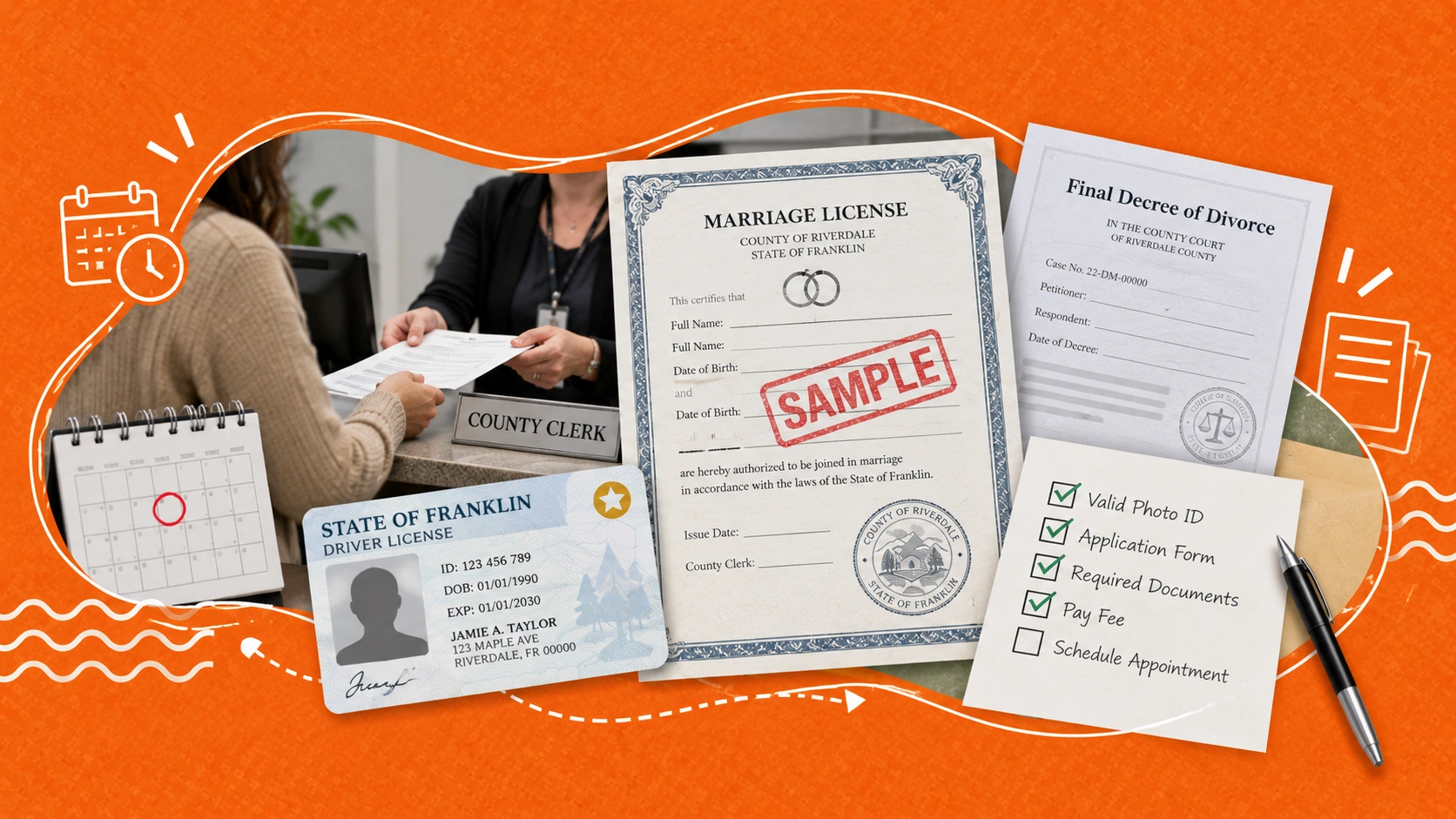
How to Apply for a Marriage License Online?
If you want to change your name legally in the United States, you must go through the legal jurisdiction process to obtain a court order. Here’s everything you need to know about changing your name legally in your state.
What Is a Legal Name Change?
A legal name change is a formal, legal process that requires you to file paperwork in a court to become a legal resident with your new name. A legal name change will be recorded in the jurisdiction where the name change was granted. In most jurisdictions, you can change your name at any time, unless you are trying to evade the law.
Why Would You Want a Legal Name Change?
There are many reasons why someone might want a legal name change. Common reasons include:
- Marriage
- Divorce
- Correcting an error in a birth certificate
- Correcting an error in a marriage certificate
- Transgender, gender nonconforming, or intersex individuals wanting their birth certificate updated
- Personal or spiritual reasons
- Religious reasons
How to Change Your Name Legally
Changing your name legally involves several steps. These steps vary by jurisdiction. However, all states have a similar basic process to change your name. Here are the general steps:
- Research your state’s requirements and fill out the appropriate petition.
- File your petition with the court in your jurisdiction.
- Serve notice to relevant parties (usually your spouse or ex-spouse).
- Attend a hearing before a judge in your jurisdiction.
- Receive a court order
- File your name change court order with the vital records office in your jurisdiction
Cost of a Legal Name Change
The cost of a legal name change varies by jurisdiction. Most states have court filing fees that range from $100 to $500. Some states may require you to publish a notice in the newspaper, which will cost additional money.