9 Legal and Everyday Uses for a Divorce Certificate

  1. Home
  2. Blog
  3. Vital Records
  4. 9 Legal and Everyday Uses for a Divorce Certificate

A person with red lipstick holds a divorce certificate while thoughtfully touching their chin. The background includes symbolic graphics of a broken heart, male and female icons, and a justice scale, representing separation and legal processes. The design features a red and black abstract layout with flowing lines and a forward arrow, suggesting moving on after divorce.

A divorce certificate is more than the endpoint of a marriage; it’s a pivotal legal document you’ll need afterward. Whether you’re remarrying, reclaiming your former name, handling finances, or navigating international custody issues, your divorce papers will come into play. Below are nine key scenarios in which you’ll need a certified copy of your divorce certificate.

1. Remarrying: Many States Require Proof of Dissolution

Planning to remarry? Most states require a divorce certificate when applying for a new marriage license to prove that a previous marriage has legally ended. Both parties must provide proof that any prior marriages are legally dissolved before a marriage license can be issued. For example, in California, courts enforce a six-month waiting period from the date of filing until the date of remarrying. Applicants must present a certified divorce certificate at the county clerk’s office before obtaining a new license.

2. Changing Your Last Name Back to Your Maiden Name

A divorce certificate is used to update official identification documents, such as a passport, Real ID, or driver’s license, especially when a name change has occurred after divorce. Returning to your birth name after divorce is not legally assuming your former identity; instead, it is simply reverting to your original name. The certificate serves as your official authorization. Many states include name restoration language automatically in the final judgment. In South Carolina, for example, the family court typically allows former married names to be reclaimed without requiring a separate name-change petition, streamlining the process. With the certificate in hand, you can update your vital documents.

3. Applying for Housing or Benefits That Require Current Marital Status

Government agencies require a divorce certificate to adjust benefits or eligibility status for programs that are affected by marital status. Programs like HUD-subsidized housing or TANF require proof of current marital status. A divorce certificate documents your eligibility as a single adult, especially if you’re applying as an individual or claiming head-of-household status. Federal housing authorities and many state-managed benefit offices request a certified copy of your divorce record as part of their application process.

4. Correcting Records with Tax or Social Security Agencies

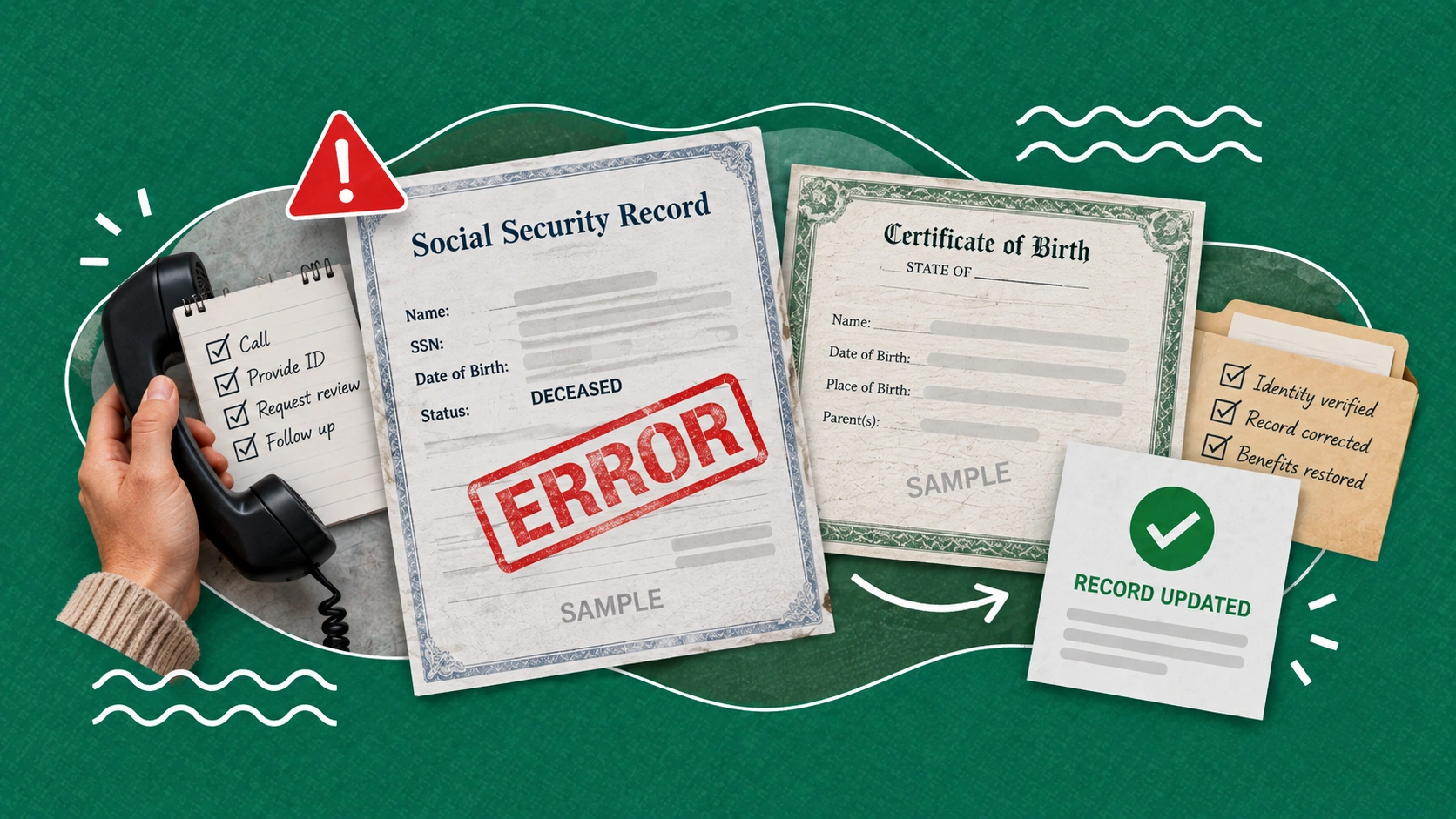
The Social Security Administration uses divorce certificates to update marital status, process name changes, and verify eligibility for certain benefits. If your marital status or name is wrong on any federal or state record after divorce, the certificate is the fundamental proof needed to make corrections. For Social Security, a divorce decree that includes a name-change clause, or coupled with your birth certificate, is accepted to process a name restoration on your Social Security record. The Internal Revenue Service also recommends keeping your certificate on record to support your filing status in the event of an audit.

5. Health Insurance, Financial Institutions, and Schools

Health insurance providers use divorce certificates to remove a former spouse from a policy or to update the marital status of the primary account holder. Banks and financial institutions use it to update account records, change marital status, or remove a former spouse as a joint account holder or beneficiary. Schools and Healthcare providers may request it to confirm changes in parental or legal guardian status when managing records for children.

6. Accessing Spousal Benefits

Pension plans and retirement benefit programs use divorce certificates to verify eligibility for spousal or survivor benefits based on marital status. In some instances, spouses who were married for at least 10 years and are now divorced may claim Social Security benefits based on their ex’s work record. To apply, you must submit your divorce certificate as proof of eligibility and evidence that you are unmarried at the time of application. SSA regulations explicitly require certified final decrees to verify the length of marriage and beneficiary status.

7. Pursuing Immigration Petitions Post-Divorce

If you previously sponsored a spouse for a green card (K-1 or CR-1 visa), a divorce certificate shows that the prior petition is no longer valid, preventing potential legal conflicts. USCIS uses this document to confirm that the earlier marriage has dissolved before a new petition is filed.

8. Legal Name Changes for You or Your Children

In a divorce that involves a name change, the authorization also extends to children born during the marriage. A parent granted sole custody may be able to legally change a child’s surname within the decree, provided the court rules it’s in the child’s best interest. States like New Jersey and South Carolina permit this and issue name-change certificates, which are used to update school records, Social Security information, and passports.

9. Adoption or Step-Parent Adoption Proceedings

Blended families often proceed with step-parent adoptions after a divorce. The divorce decree plays two key roles: it proves the termination of previous spousal relationships. It sets custody arrangements, both of which are critical in adoption courtrooms. Having this document is a prerequisite for obtaining a new birth certificate that shows the step-parent as a legal guardian.

Divorce Certificate Uses

A certified copy of your divorce certificate is more than a symbol of closure; it’s a powerful legal tool. From validating your remarriage to protecting parental rights, it governs property division, taxes, name changes, benefits eligibility, living arrangements, and international travel. Always request multiple certified copies, store them securely, and use them proactively. If you’re uncertain which agencies require your decree or need to enforce its terms, consult a family law attorney to ensure full legal compliance and protection.