Why You Might Need a Divorce Certificate Years After the Divorce

  1. Home
  2. Blog
  3. Vital Records
  4. Why You Might Need a Divorce Certificate Years After the Divorce

A person examines an official certificate with a magnifying glass, symbolizing document verification. The image includes design elements like a crumpled paper with a question mark, an hourglass, and wavy lines on a red background, representing time, inquiry, and the process of obtaining vital records.

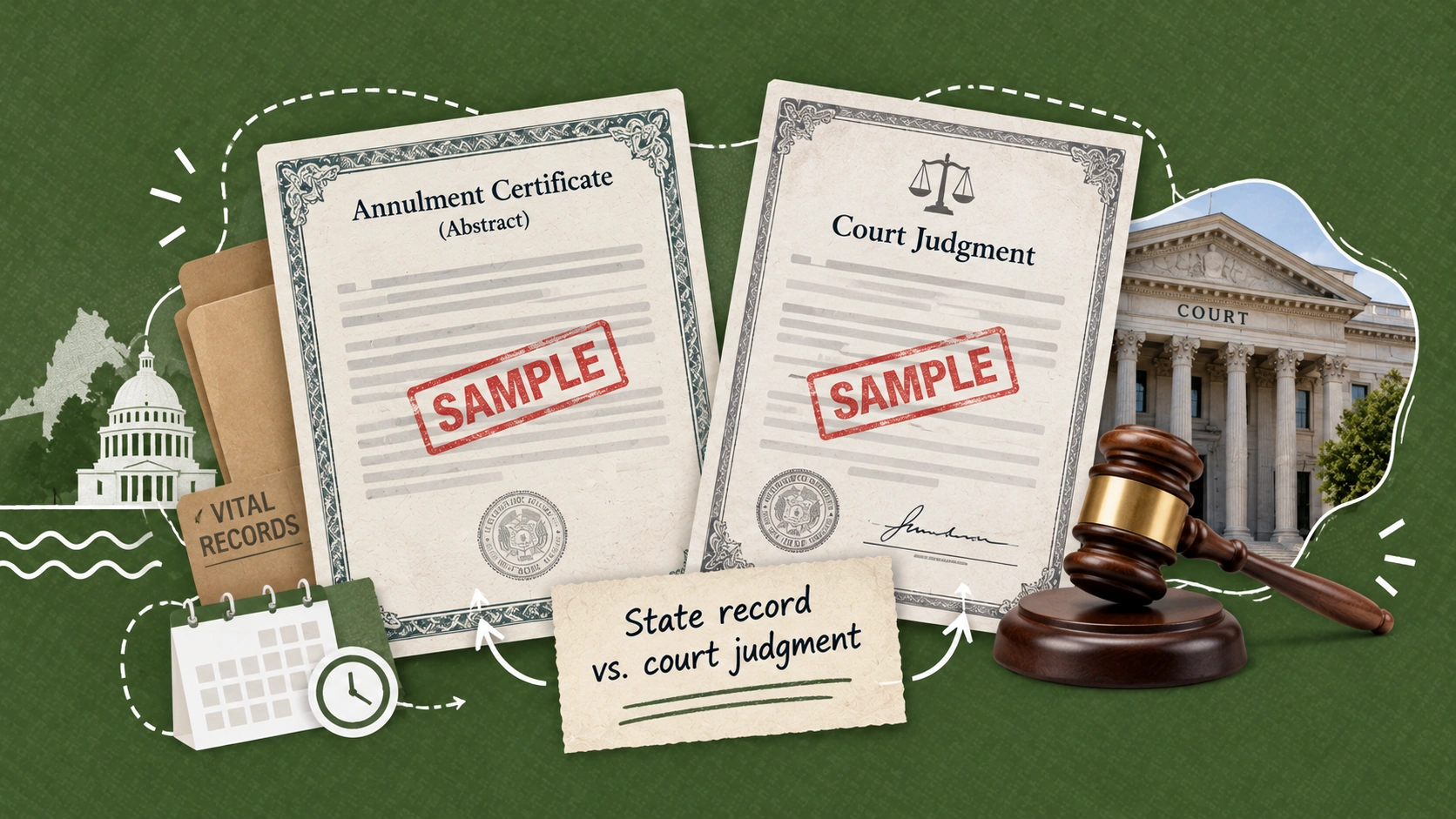
A certified divorce certificate often remains one of the most essential documents for a long time after the final decree is issued. While the divorce decree includes detailed provisions on alimony, custody, and the distribution of assets, the divorce certificate serves as legal proof that the marriage has been officially terminated. A divorce certificate lists basic details, such as names, date, and location of the divorce, but its importance often grows over time. It serves as essential proof of marital dissolution for future needs, such as remarriage, estate matters, government benefits, and legal or financial transactions.

Legal Proof for Remarriage and Name Changes

One of the most common situations where a divorce certificate becomes essential is when an individual seeks to remarry. Before issuing a marriage license, most jurisdictions require proof that any previous marriage has legally ended. Without this documentation, the application process can stall, and in some cases, be denied entirely. The divorce certificate provides the legal evidence needed to confirm that a prior marital bond has been legally dissolved.

Similarly, suppose someone wants to revert to a maiden name or legally adopt a new surname after a divorce. In that case, government agencies often require a certified copy of the divorce certificate. This is particularly relevant when updating a name on official documents, such as a Social Security card, driver’s license, or passport. The certificate serves as a bridge between one legal identity and the next, verifying to prevent confusion or dispute.

For example, Angela, having lived under her maiden name informally for years, decided to remarry. She needed her divorce certificate to apply for a new marriage license under her legal name, which required a documented name change. The certificate provided proof, enabling her to proceed without legal complications.

Real Estate and Property Transactions

A divorce certificate can also be indispensable in property and mortgage-related matters. When refinancing a mortgage or transferring a title on a home that was once jointly owned, lenders and title companies typically need to confirm that any prior spouse no longer has a legal claim to the property. A divorce certificate helps clarify these questions and allows property transactions to proceed unimpeded. It proves not just the end of a marriage, but the termination of potential shared property rights—information vital to legal and financial institutions.

Many people only realize the importance of a divorce certificate when they’re already under pressure to produce it. Consider someone who divorced in the 1990s and thought she had moved on entirely. Decades later, she attempted to refinance her home and was surprised when her lender required a copy of her divorce certificate to finalize the process. A short delay in obtaining the document nearly postponed the entire refinancing.

Accessing Benefits and Claims After Divorce

Even years after a divorce, you may be eligible to receive certain benefits that require documentation of the former marriage. In cases involving life insurance policies, pensions, or Social Security survivor benefits, a certified divorce certificate may be necessary to process claims. For example, suppose an ex-spouse has named you as a beneficiary on a retirement plan or policy. In that case, the administering agency may request proof that the marriage ended before issuing funds. This also applies in some Social Security cases, where the length of the marriage can affect benefit eligibility, even after divorce.

In another example, an ex-husband listed as a pension plan beneficiary needed the divorce certificate after his former spouse passed away. The plan’s administrator required verification of the former marriage and its dissolution. Presenting the certificate ensured his eligibility and allowed the benefit claim to proceed.

Documentation for Tax Audits

Tax-related issues often require clarity about one’s marital status, especially during an IRS audit. If you filed taxes as “single” or “head of household” after your divorce, an audit may prompt you to show official proof that the divorce was finalized before or during the tax year in question. In such scenarios, the divorce certificate becomes critical documentation. It provides a clear and credible timeline of your marital status, ensuring that tax filings are validated without unnecessary penalties or corrections.

Relevance in Genealogy and Immigration

Though perhaps less common, divorce certificates can also play a role in genealogy, family research, and even international legal proceedings. For people tracing family history, divorce certificates help build accurate timelines and identify familial connections. In citizenship and immigration cases, these documents can be used to verify a parent’s legal status, clarify lineage, or prove eligibility for specific programs.

How to Access a Divorce Certificate

To obtain a certified copy of a divorce certificate, individuals typically need to contact either the county court where the divorce was finalized or the state’s vital records office. Access is generally granted to the spouses named in the document, their legal representatives, and, in some cases, immediate family members, such as adult children. Third parties with a legal reason may need to obtain a court order.

Most states offer multiple ordering methods. You can request a certificate in person, by mail, or through online services, such as Vital Records Online. While in-person requests often yield same-day results, mail and online requests may take several days or weeks, depending on the jurisdiction.

More Than Just a Past Record

Divorce may end a marriage, but the divorce certificate is the ongoing proof that helps people start new chapters without bureaucratic setbacks. From financial applications and benefit claims to name changes and legal transitions, the certificate is often required even decades after the court proceedings have ended. It’s not just a document for the past—it’s a key to the future.

Whether you’re navigating a new marriage, applying for retirement benefits, or addressing family legacy issues, having a certified divorce certificate ready saves time, ensures legal clarity, and removes the uncertainty that can block progress. Think of it not as a formality, but as a foundational piece of your legal identity—one you’ll want to have readily available when life demands it.