Can I Order My Ex-Spouse’s Death Certificate in Texas?

  1. Home
  2. Blog
  3. Death Certificate
  4. Can I Order My Ex-Spouse’s Death Certificate in Texas?
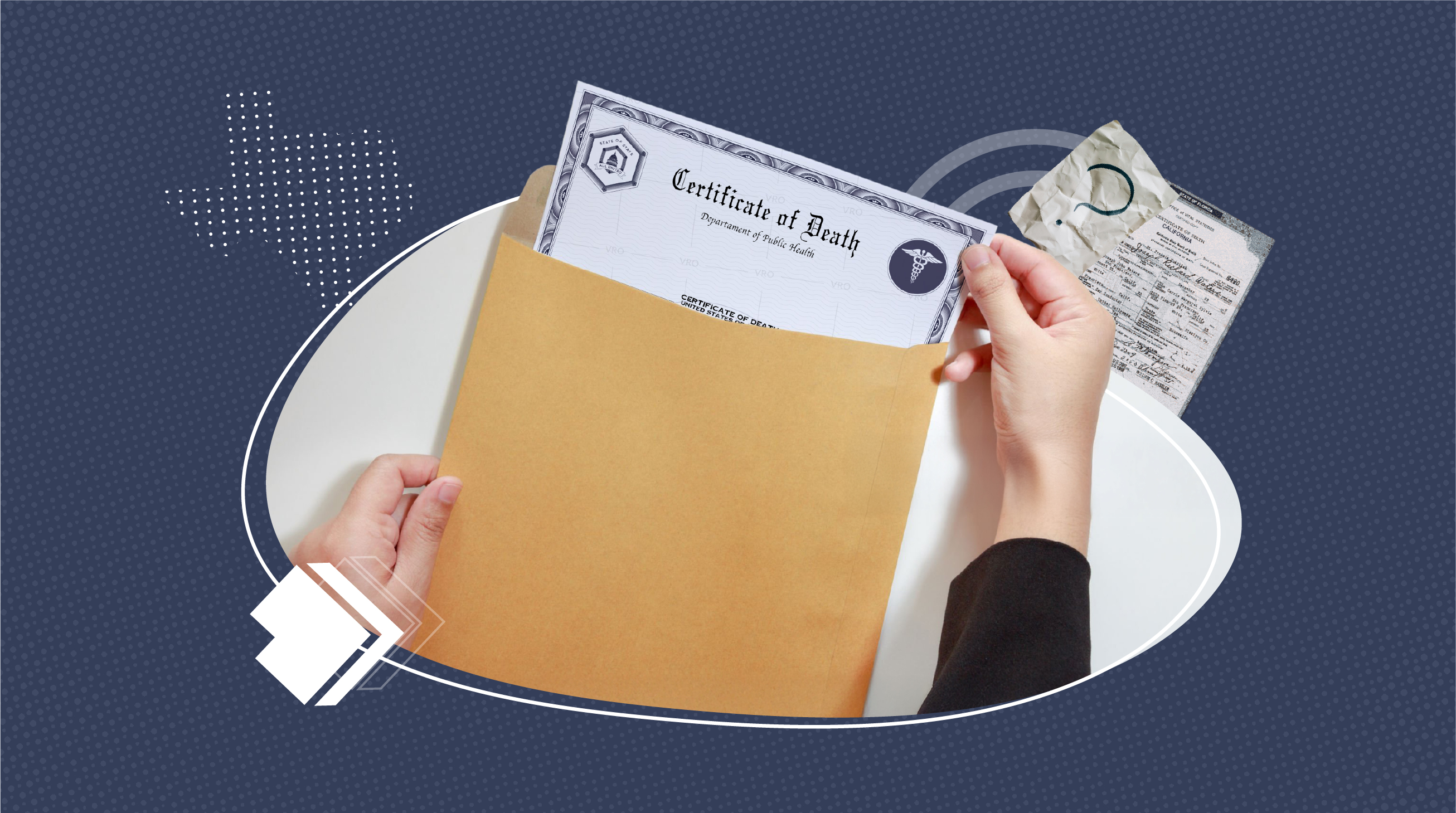
Hands holding a manila envelope with a death certificate partially visible inside, placed on a white table. The background features a dotted blue pattern with the outline of Texas and faint document graphics.

In the United States, access to certified death certificates is governed by state laws and vital records regulations, resulting in varying rights across the country. Being a current spouse or direct blood relative typically grants access in most states, but the situation becomes more restrictive when it comes to ex-spouses. Some states, like Texas, allow former spouses to request certified death certificates if they can demonstrate a “legitimate interest,” under certain conditions. Here’s what you need to know.

Why Ex-Spouses May Need a Death Certificate

An ex-spouse in Texas may need a certified death certificate for several important reasons tied to legal, financial, and personal matters that often arise after a divorce. Even though the marriage has ended, the ex-spouse might still have ongoing responsibilities or rights that require official proof of the former spouse’s passing. One common reason is to settle estate or probate matters. If the ex-spouse is named as an executor, heir, or has a vested interest in the deceased’s estate, the death certificate is essential to initiate or finalize legal proceedings related to inheritance or asset distribution.

Additionally, insurance policies and survivor benefits can make obtaining the death certificate a necessity. Some life insurance policies or pension plans may still name an ex-spouse as a beneficiary, particularly if the policy wasn’t updated after divorce. In such cases, the ex-spouse needs the official death certificate to file claims and receive any entitled payouts. Similarly, retirement benefits, social security survivor benefits, or veterans’ benefits may require proof of death to stop payments, transfer survivor benefits, or confirm eligibility, especially if the ex-spouse has any legal claim or entitlement.

Another frequent scenario involves financial accounts and obligations that were shared or co-signed during the marriage. For example, joint bank accounts, mortgages, or loans may require the death certificate to close accounts, transfer ownership, or resolve outstanding debts. Without this documentation, ex-spouses could face delays or complications in managing these financial affairs.

How Texas Allows Ex-Spouses to Seek Death Certificates

Ex-spouses fall outside the category of “immediate family.” They are treated like any other non-family applicant, meaning they must provide legal documentation showing a “direct, tangible interest.” In Texas, statewide rules allow ex-spouses to request certified death certificates, provided they can supply documentation such as a divorce decree, insurance information, or beneficiary designation. This is outlined in the Texas DSHS Vital Statistics FAQs.

What the Death Certificate Provides

A certified death certificate from the Texas Department of State Health Services contains several key pieces of information, including the deceased’s full name and date of birth, the date, time, and place of death, and the cause of death (unless restricted by law). It also includes the official certification seal and registrar’s signature, confirming its authenticity. For an ex-spouse, this document serves as essential formal proof needed to handle important matters such as opening or closing an estate, accessing life insurance or survivor benefits, and settling shared legal or financial obligations that may still be in place following a divorce.

Considerations for Requesting a Death Certificate in Texas

Proof Requirements: Ex-spouses must provide documentation that demonstrates a legitimate, tangible interest in the death certificate, such as being named in a will, listed on a life insurance policy, or holding a court order. Without proper supporting documents, the request can be denied by the issuing agency. It’s important to gather all necessary paperwork before applying to avoid delays or rejections.

Jurisdictional Differences: While Texas follows statewide rules, individual county offices may apply them differently in practice. For example, in Dallas County, you must be a qualified applicant, which includes only immediate family members (child, parent, sibling, spouse, grandparent, or legal guardian). If you’re not, such as an ex-spouse, Dallas County requires a signed, notarized authorization from a qualified relative, meaning you’d need more than just documentation of divorce. In contrast, other counties follow the statewide standard: ex-spouses or other non-immediate family members must supply a statement of legal interest. Contact the local office before applying to confirm the required information.

Age of Record: In Texas, death certificates are considered confidential for the first 25 years after the date of death. During this period, only qualified individuals with a documented interest can request them. Once that 25-year window has passed, the death certificate becomes a public record and is accessible with fewer or no restrictions.

Challenges in Some Cases: Some counties have reportedly denied ex-spouse requests outright, even when documentation was provided, often citing strict interpretations of the law. In such situations, a court order or legal assistance may be necessary to establish the right to access the record. Seeking legal counsel can help navigate denials and ensure the correct steps are taken to meet eligibility requirements.

How to Order Texas Death Certificates

Start by gathering all required documents, including valid identification and evidence of a direct, tangible interest, such as a divorce decree, proof that you’re listed as a beneficiary, or paperwork related to an estate. These materials help demonstrate your eligibility under Texas law. Once prepared, you can order a certified death certificate in several ways: in person at a local vital records office, by mail by sending your completed application and documents to the Texas Department of State Health Services, or online. For added convenience and step-by-step support, you can also use a secure third-party service, such as Vital Records Online (VRO).

Requesting a death certificate as an ex-spouse in Texas can feel complex. Still, with the proper documentation and understanding of state and county requirements, the process is manageable. Whether you need it for legal, financial, or estate-related reasons, proving your legitimate interest is key to gaining access. By preparing ahead and choosing the method that best meets your needs —whether in person, by mail, or online —you can take an important step toward settling your legal, personal, and financial matters.