
Certified Copy (of a document)
Last updated on April 11, 2026
What Is a Certified Copy?
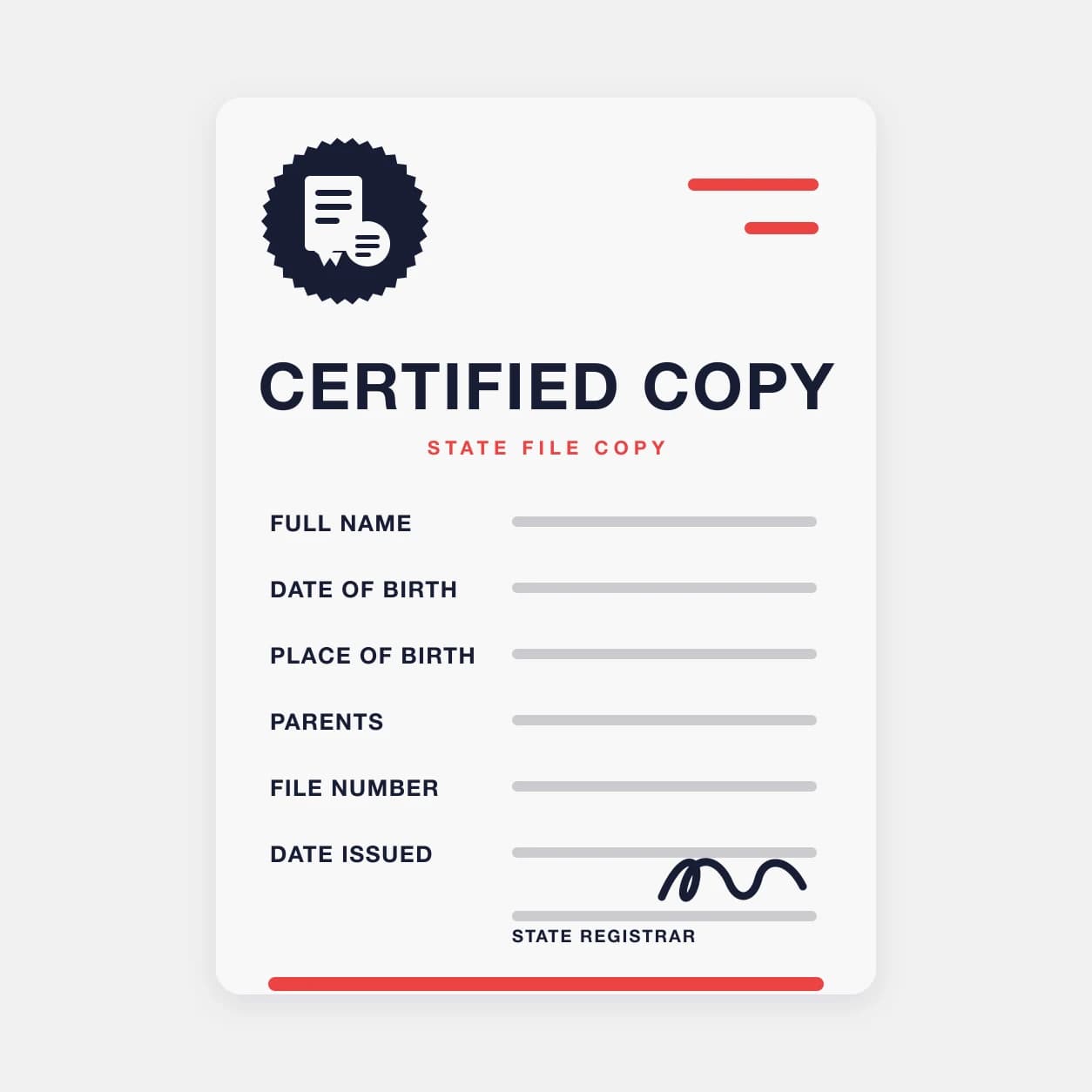
A certified copy is an official reproduction of an original document that has been verified and authenticated by a government authority or custodian of records. The certification confirms that the copy is a true and accurate representation of the original document on file. Certified copies bear an official seal, the signature or stamp of the authorized official, and are printed on security paper to prevent fraud and unauthorized reproduction.
Certified copies are legally binding documents recognized by courts, government agencies, employers, and financial institutions. They serve as proof of vital events, legal status, educational achievements, and other important matters. Unlike simple photocopies or informational copies, certified copies carry the full legal weight and authority of the original document.
Certified Copy vs Notarized Copy vs Informational Copy
| Feature | Certified Copy | Notarized Copy | Informational Copy |
|---|---|---|---|
| Legal Validity | Highest; accepted for official purposes | High; requires notary attestation | Limited; informational purposes only |
| Contains Official Seal? | Yes, raised seal | Yes, notary seal | No |
| Accepted for Government Use? | Yes | Varies by agency | No |
| Who Issues It? | Vital Records Office or County Clerk | Licensed notary public | Government agency or custodian |
| Cost Range | $15–$50 per copy | $5–$15 per copy | $5–$25 per copy |
Types of Documents That Have Certified Copies
Certified copies are available for many vital and legal documents. Common examples include:
- Vital Records: Birth certificates, death certificates, marriage certificates, and divorce decrees are among the most frequently requested certified copies. These documents establish identity, lineage, and legal status.
- Court Records: Certified copies of judgments, orders, and decrees are required for legal proceedings, appeals, and enforcement actions. These copies confirm the official disposition of cases.
- Academic Transcripts: Educational institutions issue certified copies of academic records to verify enrollment, degrees, and credentials for employment or further education.
- Property Records: Deeds, titles, and property transfer documents may be certified for real estate transactions and mortgage applications.
- Business Documents: Articles of incorporation, business licenses, and certificates of good standing are certified for official corporate matters.
How to Get a Certified Copy
The process for obtaining a certified copy depends on the type of document and which agency maintains the original:
- Identify the Custodian: Determine which government office holds the original record. For vital records, contact your state or local Vital Records Office or County Clerk. For court documents, contact the appropriate courthouse.
- Gather Required Information: Prepare identifying details such as names, dates of birth, dates of events, and case or reference numbers.
- Submit Your Request: Complete the official request form and submit it in person, by mail, or online. Many agencies now accept requests through their websites.
- Provide Proof of Identity: You may need to submit a copy of your government-issued ID to verify your identity.
- Pay the Fee: Submit payment as required by the agency. Fees vary by jurisdiction and document type.
- Choose Processing Speed: Many agencies offer standard and rush service options. Rush service accelerates processing for an additional fee.
- Receive Your Copy: The certified copy will be mailed to you or available for pickup, typically sealed in an official envelope with the raised seal intact.
How Much Does a Certified Copy Cost?
Certified copy fees vary by state, county, and document type. Standard costs typically range from $15 to $50 per copy for vital records, though some jurisdictions charge more. Additional fees may apply for expedited processing, delivery by courier, or multiple copies.
Many vital records offices offer discount pricing for multiple copies ordered at the same time. Some states also provide fee waivers for indigent individuals or public health purposes. Contact your local Vital Records Office directly for current pricing in your jurisdiction.
How to Spot a Certified Copy
Authentic certified copies have several distinctive features that set them apart from photocopies or informational copies:
- Raised Official Seal: A three-dimensional embossed or raised seal from the government agency is present on the document. This seal is difficult to replicate and serves as a security feature.
- Registrar or Official Signature: The document bears the wet signature or official stamp of the authorized registrar or custodian of records. This signature certifies the authenticity of the copy.
- Security Paper: Certified copies are printed on specialized security paper with watermarks, color backgrounds, or security threads that prevent unauthorized reproduction.
- Official Certification Statement: A printed statement confirming that the document is a true and certified copy of the original on file, along with the date of certification.
- Official Envelope: Many agencies mail certified copies in official envelopes with the seal visible on the outside, preventing tampering during transit.
- Document Number: Each certified copy may have a unique reference or certification number assigned by the issuing agency.
Frequently Asked Questions
How long is a certified copy valid?
Certified copies do not expire and remain valid indefinitely. However, some organizations may request recently issued copies (within the last 6–12 months) for specific purposes, such as adoption proceedings or passport applications.
Can I make a copy of a certified copy?
Photocopying a certified copy may reduce its legal validity, as the raised seal and security features cannot be fully reproduced. For official purposes, it is best to obtain additional certified copies directly from the issuing agency rather than copying an existing certified copy.
What if I lost my certified copy?
You can request a replacement certified copy from the issuing agency using the same process as ordering an original. There is typically no difference in cost or processing time between ordering a replacement and ordering additional copies.
Do I need certified copies for all vital records requests?
No. For personal or informational purposes, you may request informational copies, which are less expensive. However, certified copies are required for legal matters, government applications, and official proceedings.
Can I request certified copies for someone else?
In most cases, you can request certified copies of a person’s vital records if you have a legitimate interest (such as being a spouse, parent, or authorized representative). However, many agencies have restrictions based on privacy laws. Contact your Vital Records Office for specific eligibility requirements.