Do Death Certificates Have a SSN on Them?

  1. Home
  2. Blog
  3. Vital Records
  4. Do Death Certificates Have a SSN on Them?
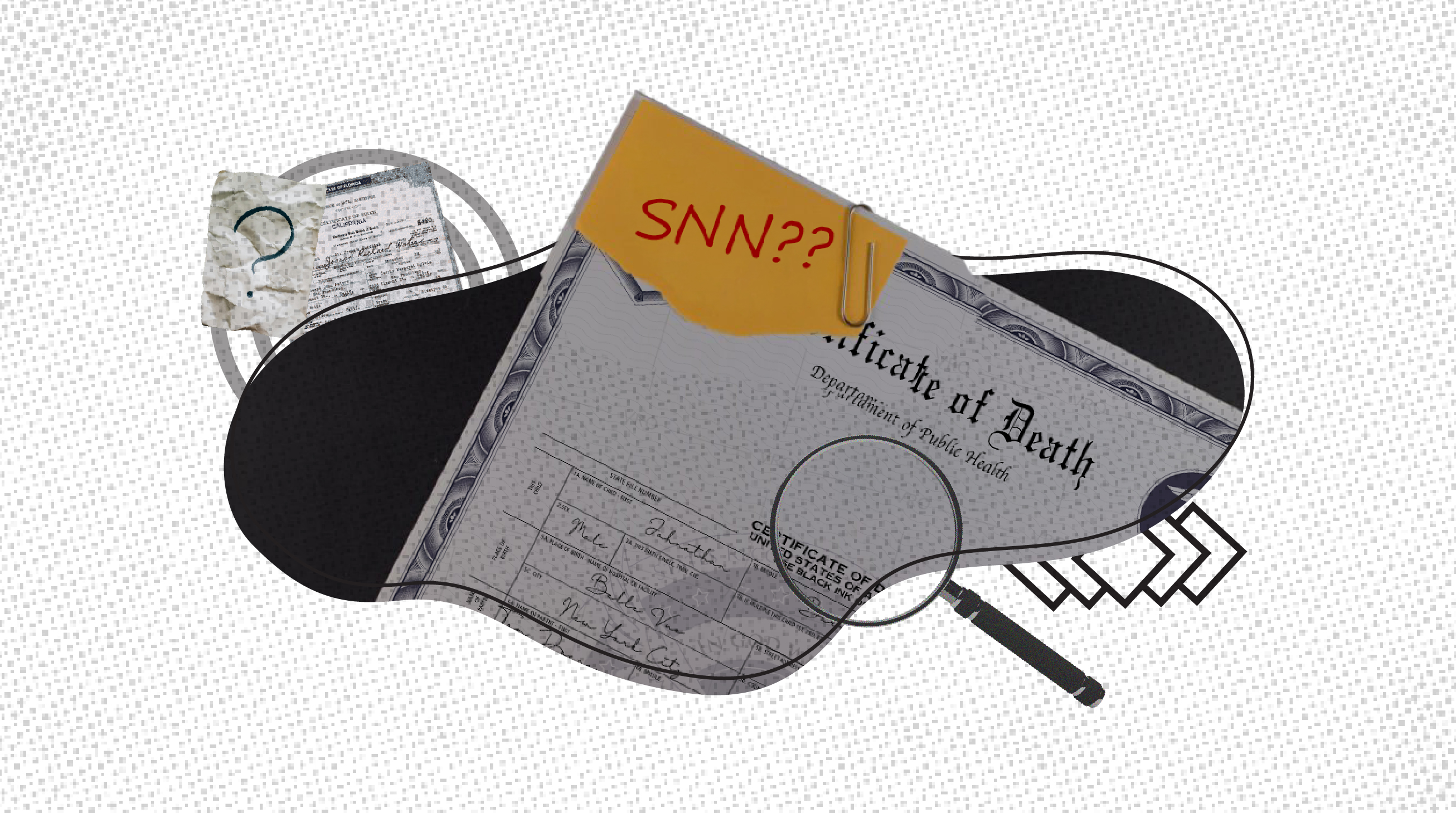
Illustration showing a death certificate labeled “Certificate of Death” partially covered by a yellow file tab with the text “SSN??” in red. A magnifying glass and paper clip are placed over the document, with a faded paper marked with a question mark in the background, symbolizing investigation or uncertainty about Social Security Numbers on death certificates.

When managing the affairs of someone who has passed away, proper documentation is essential. Among the most important records is the death certificate, which is often required for settling an estate, filing insurance claims, and notifying agencies such as the Social Security Administration.

A common question is whether a death certificate includes the deceased person’s Social Security number (SSN). Whether it’s included varies by state and the type of certificate issued.

In this blog, we’ll explain when SSNs are included on death certificates, why this information is important, and how to request a certified copy.

Death Certificate: Include a Social Security Number

In most cases, yes—a full Social Security number is included on the death certificate. However, there are some important caveats.

Full SSNs Are Typically Included on:

  • Certified copies of the death certificate are issued to family members or authorized parties.
  • Long-form death certificates are used for legal, financial, or estate matters.

SSNs May Be Redacted or Omitted From:

  • Public records or informational copies, especially in states that restrict access to sensitive data.
  • Copies issued to non-family members for genealogical purposes or unauthorized requesters.
  • States with privacy laws that limit the release of full SSNs to prevent identity theft.

So, while SSNs are commonly included, they may be hidden or removed from some versions of the certificate to protect privacy.

Why a Death Certificate Includes the Social Security Number

Unlike a birth certificate, which is issued at the start of life and doesn’t include a Social Security number (SSN), a death certificate is created at the end of life—when a person’s identity and legal matters must be verified and resolved. Including the SSN on a death certificate serves several important purposes:

Verification of Identity

The SSN helps confirm the deceased person’s identity, especially in cases where there may be familiar names or inconsistent records. It ensures that government agencies, financial institutions, and insurance providers can accurately match the record to the correct individual.

Preventing Fraud and Identity Theft

Recording the SSN helps reduce the risk of postmortem identity theft. Once a death is officially recorded with the Social Security Administration and other relevant agencies, the SSN is flagged, which helps prevent misuse.

Coordinating Benefits and Accounts

Many institutions—including banks, pension funds, and the SSA—use the SSN to locate accounts, process survivor benefits, or close records. Having the SSN on the death certificate helps expedite this coordination and avoid delays in finalizing affairs.

Estate and Tax Purposes

The SSN is also used in tax filings, estate management, and probate proceedings. Executors and legal representatives often need to reference the SSN when reporting final income or resolving debts.

While the inclusion of an SSN on a death certificate is not universal—some states omit it from public or short-form copies—it remains a critical piece of identifying information for legal and administrative purposes. That’s why many states place strict rules around who can request a copy that includes this information.

Who Can Request a Death Certificate With a SSN?

Generally, only authorized individuals can request a certified death certificate that includes the Social Security number. This typically includes:

  • The deceased’s next of kin (spouse, child, parent)
  • A legal representative (such as an attorney or executor)
  • A person with tangible interest (e.g., financial or property claims)

States may also require documentation proving your relationship to the deceased or your legal interest in their estate.

What If You Need the SSN But It’s Not Included?

If you receive a death certificate without a Social Security number and need one with the whole SSN, your best option is to contact the state’s vital records office and request a certified long-form copy. Be prepared to provide documentation to prove your eligibility.

In some cases, if the SSN is still unavailable, you may need to access the deceased’s Social Security records directly through the Social Security Administration or by working with an attorney or executor of the estate.

How to Request a Certified Copy of a Death Certificate

If you need a death certificate for legal or official purposes, follow these steps:

1. Determine the State of Death: Death certificates are issued by the vital records office in the state where the person died. Each state has its own process, fees, and forms.

2. Visit the State’s Vital Records Website: Look for the Department of Health or Vital Records Office for the appropriate state. Many offer online applications or downloadable forms.

3. Choose the Right Type of Certificate: Request a certified copy (not an informational copy) if you require the SSN to be included. Some states may offer “long form” or “full record” certificates.

4. Provide Required Documentation: To complete your request, you’ll likely need to provide a valid photo ID, such as a driver’s license or passport. You may also require proof of relationship, like a birth or marriage certificate, and legal documents if you’re acting as an executor or attorney. Additionally, be prepared to submit payment, which typically ranges from $10 to $30 depending on the state.

5. Submit Your Request: You can typically submit your request through several convenient methods. The most common option is online, either via the state’s official digital portal or through a third-party vendor such as Vital Records Online (VRO). Alternatively, you may choose to submit your request by mail or in person at a county or state office, depending on what’s available in your area.

Why the SSN May Appear on a Certified Death Certificate

One of the most frequently asked questions about death certificates is whether they include the deceased’s Social Security number. The answer depends on where and how the certificate is issued. Some states include it on long-form or certified copies, while others omit it entirely or restrict access to versions that contain it.

When present, the SSN plays a key role in confirming the deceased’s identity and helping settle important matters such as life insurance, Social Security benefits, taxes, and estate administration. Because it is sensitive information, states have safeguards in place to limit access to copies that include the SSN.

Understanding how and why the SSN is used on a death certificate can help you better navigate the paperwork involved in managing someone’s affairs—and ensure the process is handled accurately and securely.