Do You Need to Provide a Marriage Certificate for Insurance? Here’s What To Know

  1. Home
  2. Blog
  3. Vital Records
  4. Do You Need to Provide a Marriage Certificate for Insurance? Here’s What To Know
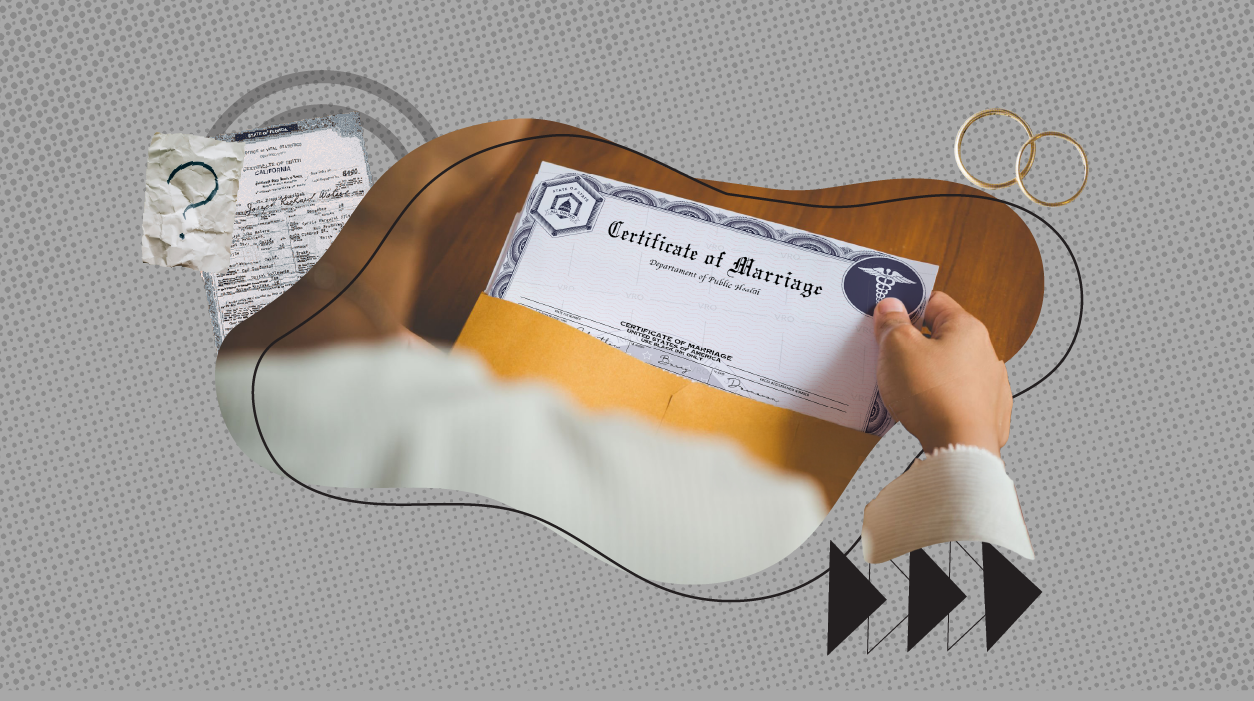
Person holding a marriage certificate partially pulled from a brown envelope on a wooden table. The background has a gray textured design with abstract shapes, two gold wedding rings, and a torn paper with a question mark, symbolizing questions about marriage documentation.

When you get married, updating your insurance information—whether it’s health, life, or auto coverage is an important step. But you may be wondering: Do I need to provide a marriage certificate for insurance? The short answer is often yes, especially when it comes to adding a spouse to your plan, updating beneficiaries, or filing a claim.

In this article, we’ll break down when and why insurance companies require a marriage certificate, how to submit it, and what to do if you don’t have one on hand. We’ll also explain how to get an official certified copy through your state’s vital records office or a trusted third-party service such as Vital Records Online (VRO).

Why Insurance Companies Request a Marriage Certificate

When it comes to insurance, your marriage certificate does more than sit in a drawer. It serves as essential proof for adding a spouse to your policy, verifying eligibility for benefits, and protecting against fraud. Without it, insurers can’t confirm the legal status of your relationship, putting you and your spouse’s coverage and compliance at risk.

Insurance companies operate under strict legal and regulatory guidelines. Whether it’s health, life, auto, or home insurance, whenever someone is added to a policy, named as a beneficiary, or claims a benefit, the insurer must confirm that the person is legally entitled to those rights. That’s where a certified marriage certificate comes in.

Here’s why insurers often require it:

To Add a Spouse to a Health or Dental Insurance Plan

When you get married and want to add your spouse to your employer-sponsored or private insurance plan, the insurer may request a certified marriage certificate to confirm your marital status and that your marriage is legally recognized. Without it, they can’t verify your spouse’s eligibility, especially if your last names differ. This protects the insurance provider from covering ineligible individuals and helps control costs.

To Verify Spousal Eligibility for Employer-Sponsored Benefits

Employers offering health, vision, dental, or other group benefits to employees and their spouses must ensure that dependents meet the plan’s criteria. HR departments often request a certified marriage certificate as part of their dependent verification process. If you’re enrolling during open enrollment or after a qualifying life event (such as marriage), you can expect to be asked for it.

To Update Beneficiaries on Life Insurance or Retirement Accounts

If you’re updating your life insurance policy or retirement plan (like a 401(k)) to name your spouse as the primary beneficiary, the insurance company may require proof of the marriage. This is especially true if:

  • You’re changing a previously named beneficiary to your new spouse
  • The legal name on the form doesn’t match existing records

To file a claim if your spouse passes away, you may be asked to submit a certified copy of your marriage certificate along with other documents, like a death certificate or beneficiary form.

Homeowners or Auto Insurance

Some companies offer discounts or joint policies for married couples. To qualify for spousal benefits or bundled coverage, you may need to show proof of marriage, especially if your last names are different.

In cases involving death benefits, pension transfers, or funeral expenses, a surviving spouse may need to prove the legal relationship to the deceased. Insurance companies won’t release funds or settle claims until that relationship is verified through documentation. This is especially important for life insurance claim payouts, spousal continuation of retirement benefits, and health insurance settlements after a spouse’s death. If there’s no valid proof of marriage, the claim could be denied or delayed.

What Counts as Proof of Marriage?

Only a certified marriage certificate issued by a state or local vital records office qualifies as legal proof of marriage. This is not the same as the decorative certificate some couples receive at their wedding ceremony.
A certified copy includes:
A raised seal, watermark, or official stamp

The date and place of marriage
Names of both spouses

The issuing authority (state or county office)
Photocopies or unofficial documents may not be accepted, particularly for insurance claims or legal filings.

How to Get a Certified Marriage Certificate

If you’ve lost your marriage certificate or never ordered a certified copy, you’ll need to request one from the vital records office in the state (and often the county) where the marriage took place.
For a faster and more convenient option, you can request your certificate online through Vital Records Online (VRO). VRO is a secure, trusted service that helps you complete the correct form for your state, avoid paperwork errors, and get support if you encounter issues.

Submitting Your Marriage Certificate to the Insurance Company

Once you have your certified copy:

  1. Check your insurance provider’s requirements—some may allow digital scans, while others require the original or a mailed copy.
  2. Send the certificate along with any forms related to beneficiary changes or dependent additions.
  3. Keep a copy for your records in case the provider requests verification again in the future.

From Vital Records to Real Benefits

Do you need to provide a marriage certificate for insurance purposes? In many cases, yes —especially when it involves adding your spouse to a policy or filing a claim based on marital status. Insurance companies use certified marriage certificates to verify eligibility, prevent fraud, and ensure the accurate processing of benefits.

If you don’t have one, getting a certified copy will benefit you while navigating through legal requirements. Whether you go through your state’s vital records office or a trusted service like Vital Records Online (VRO), securing this important document now can save time and stress later.