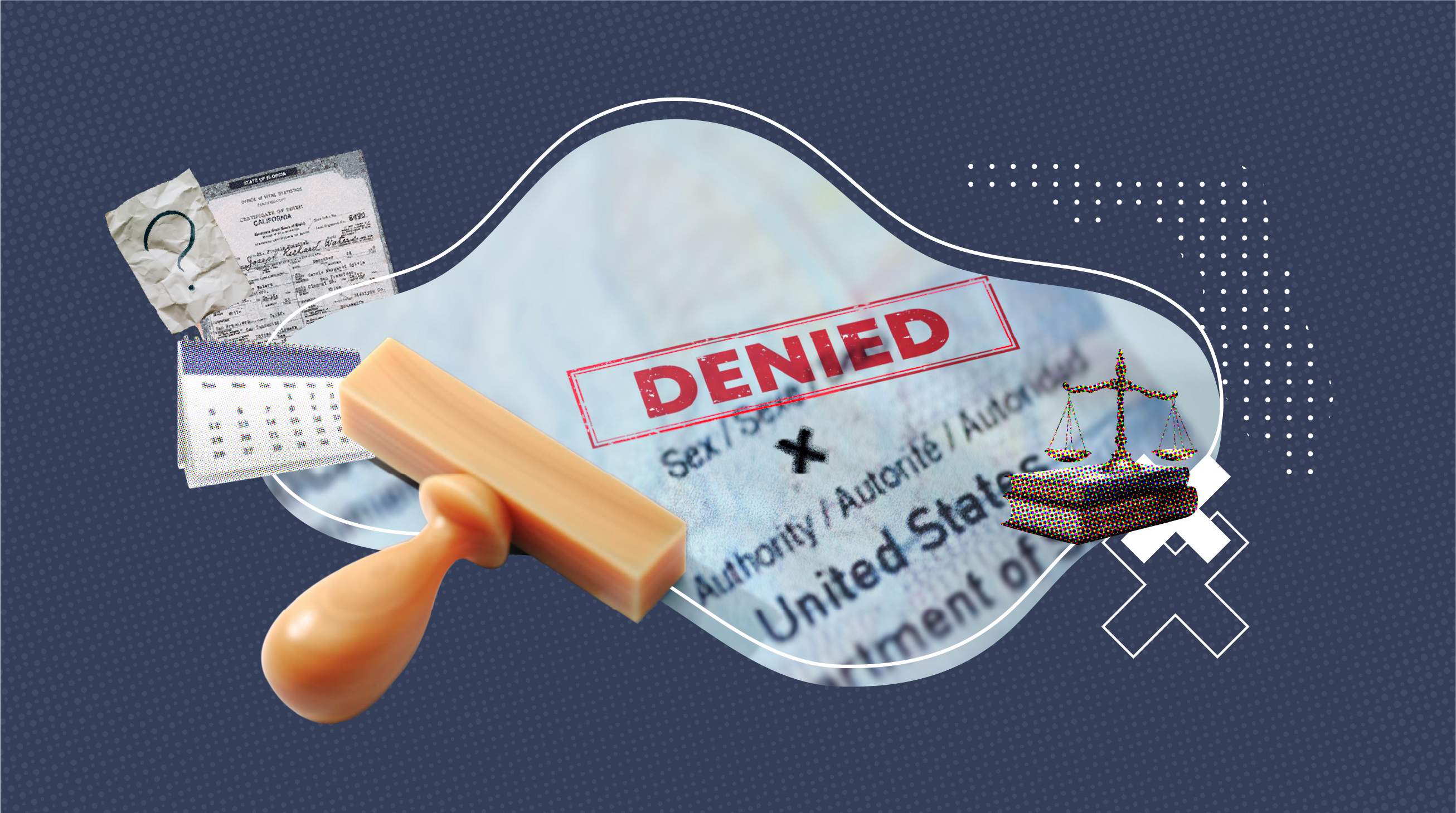
Florida has recently taken a firm stance by denying gender marker updates on both birth certificates and driver’s licenses, a reversal from policies that once recognized gender identity in official documents. This shift has significant implications for vital records, presenting challenges and consequences for transgender Floridians.
Historical Context: Progress Then Pushback
Before 2023, transgender individuals in Florida had a clear path to update the gender marker on their birth certificates. The process required a court order confirming a legal name change, a notarized affidavit, and a letter from a physician stating that the individual had undergone “appropriate clinical treatment for gender transition.” This procedure allowed many Floridians to align their vital records with their gender identity, offering a sense of dignity and legal recognition.
Similarly, the Florida Department of Highway Safety and Motor Vehicles (DHSMV) allowed gender marker changes on driver’s licenses starting in 2018. These could be attested to by physicians, and by 2021, advanced practice registered nurses were also eligible to verify gender identity.
Policy Reversals in 2023–2024
However, changes unfolded beginning in 2023:
January 2024: A DHSMV memo barred updates to gender markers on driver’s licenses and ID cards. Though this policy referenced potential criminal or civil consequences, it was not supported by any statutory change.
Mid-2023 to early 2024: The Florida Bureau of Vital Statistics began rejecting gender marker changes on birth certificates, even from applicants who submitted legal and medical documentation. Reviewers now claim that discrepancies between gender identity and biological sex don’t constitute a correctable “error”.
Additionally, denial letters introduced conflicting and burdensome criteria—such as requiring proof of treatment before age 7 or 18—making compliance nearly impossible for many. The result: Florida now joins Texas, Kansas, and Tennessee among the few states that prohibit gender marker changes on both birth certificates and driver’s licenses.
What This Means for Vital Records
These changes have wide-ranging implications on legal identity, healthcare access, and daily life:
Birth Certificates: Previously, there was a path to update gender identity on birth records. Currently, only legal name changes (obtained through a court order) can be amended, not gender markers. This means a trans person can change their name but not their gender marker on a birth certificate.
Driver’s Licenses & State IDs: With the 2024 memo, DHSMV no longer permits gender marker corrections, regardless of whether the correction is based on court or medical documentation. Floridians are left with ID documents that often don’t reflect their true gender identity.
Inconsistent Policies: These policy shifts were not legislated but enacted administratively, raising questions about their legality.
Real-World Consequences
Misidentification Risks: Mismatched ID documents increase the risk of being misgendered, outed, or subjected to harassment when verifying identity for employment, medical care, travel, education, or housing. Practical Workarounds: Some individuals rely on federally recognized IDs, such as passports, which still permit gender changes through self-attestation.
Current Policy vs. Statutory Law
Florida’s new policies appear to conflict with existing language in Chapter 382.016 of the Florida Statutes, which allows amendments for any “misstatement, error, or omission” on birth records. Despite this, the Bureau of Vital Statistics now asserts that changing a gender marker does not fall under the category of “error”—effectively narrowing the law by administrative fiat.
This has sparked concern from legal advocates, who argue that only the state legislature—not an administrative agency—has the authority to redefine gender marker policy. Compounding this, attempted legislation to restrict gender marker changes (e.g., HB 1233, SB 254) failed to pass; yet, agencies enacted the restrictions anyway.
Next Steps & Advocacy
In response to Florida’s policy changes, affected individuals are now turning to legal avenues to challenge the restrictions. Federal litigation is currently being pursued, with legal advocates arguing that court challenges, particularly under federal civil rights laws, may be the most viable path to restoring the right to update gender markers on vital records. In the meantime, transgender Floridians are encouraged to rely on federal forms of identification, such as passports, which still permit gender self-attestation and are broadly accepted across various institutions and jurisdictions.
What You Can Do Now
There are several steps transgender individuals in Florida can take in light of the current restrictions on gender marker changes. Staying informed is essential, as ongoing legal challenges and policy updates are likely to emerge and will be reported by reliable sources. Securing a federal ID, such as a passport, that reflects your correct gender marker can provide an important form of identification that is still widely accepted. It’s also wise to gather relevant documentation now—such as court-issued name change orders and medical records—in case future policies change. Finally, seeking legal guidance from organizations like Southern Legal Counsel or the ACLU can help with appeals, provide support, and potentially open the door to participating in legal action aimed at challenging the state’s policy.
If you or someone you know is affected by these policy changes, consider seeking legal guidance and advocating for inclusive policies.