12 Reasons You’ll Need Your Marriage Certificate

A marriage certificate isn’t just a keepsake; it’s a legally recognized document that validates your marriage and grants you access to numerous rights and services. Below are 12 important situations where you’ll likely need that certificate.
Last updated April 2026.
1. Changing Your Last Name After Marriage
If you decide to take your spouse’s surname or combine, hyphenate, or alter your name in some way, your marriage certificate serves as official proof. This document allows government agencies to recognize your new name as legally valid without needing a court order. Whether at the Social Security Administration, DMV, or financial institutions, your marriage certificate authorizes this change.
Name Change: California and Texas allow you to request a new name directly on your marriage license, which can save you from needing a court order later.
2. Updating Government IDs
Changing your name requires updating information across multiple agencies. Begin with the Social Security Administration. To start, present your marriage certificate to the SSA to get an updated Social Security Card. Once you’ve received your new card from SSA, you’ll show that card, along with the marriage certificate, to the local motor vehicle agency to update your driver’s license or state ID. If you have a passport, you’ll also need to provide the certificate when renewing or applying for a passport to reflect your married name.
For example, Florida requires newlyweds to use a certified copy of their marriage certificate and an updated SSA card at the FLHSMV to receive an updated driver’s license or REAL ID within 30 days.
3. Adding a Spouse to Your Health Insurance Plan
Many employers or marketplace-sponsored health insurance plans require proof of marriage as a qualifying life event. The marriage certificate verifies your relationship and establishes the timeframe for registration. Without it, you risk missing enrollment windows or being denied coverage.
Many employers only allow a 30- or 60-day window after marriage to add a spouse, and the certificate must be submitted with the application.
4. Applying for Spousal Immigration or Visas (K-1, CR-1)
If you’re sponsoring a spouse for immigration to the U.S., your marriage certificate proves the authenticity of your relationship to U.S. Citizenship and Immigration Services (USCIS). It must be included with Form I-130 (Petition for Alien Relative) or I-129F (Fiancé(e) visa), along with translations and certified copies for foreign marriages.
5. Filing Joint Tax Returns
Married couples can often benefit from filing their taxes jointly, which can lead to higher standard deductions and certain tax credits. If the IRS questions your filing status or you need to update your name with the IRS, your marriage certificate is the primary document to provide. The certificate itself isn’t filed with your tax return. Still, it’s necessary to maintain your records for audits or inquiries.
6. Proving Marital Status for Military Benefits or Survivor Pensions
If you’re a military spouse or eligible for survivor benefits, the Department of Defense and the Department of Veterans Affairs require a certified marriage certificate to confirm marital status. This determines eligibility for housing, health benefits, education scholarships, and survivor pensions. Failing to provide it can result in delayed benefits or disqualification.
7. Buying Property Together or Applying for Homestead Exemption
Some states, such as Florida, Iowa, Kansas, Oklahoma, South Dakota, and Texas, offer a homestead exemption or tax relief for married couples purchasing property for the first time together. To qualify, local county or state assessors may require a certified marriage certificate at the time of purchase or when filing for the exemption to verify eligibility and residency.
8. Applying for Spousal Benefits from Social Security
If you’re applying for spousal or survivor benefits through the Social Security Administration, including benefits based on your spouse’s work record, your marriage certificate is mandatory. SSA will verify the validity and duration of your marriage. Delays or errors in presenting the certificate can significantly delay your benefits.
9. Inheritance Claims, Wills, or Trusts Involving Spouses
When estates are probated, your marriage certificate establishes your legal spouse status, which can entitle you to inherit under state intestacy laws or confirm your place in a will. Legal heirs often need to provide certified copies to executors or courts to demonstrate their marriage was valid and ongoing at the time of death.
10. Traveling Internationally Where Proof of Relationship Is Needed
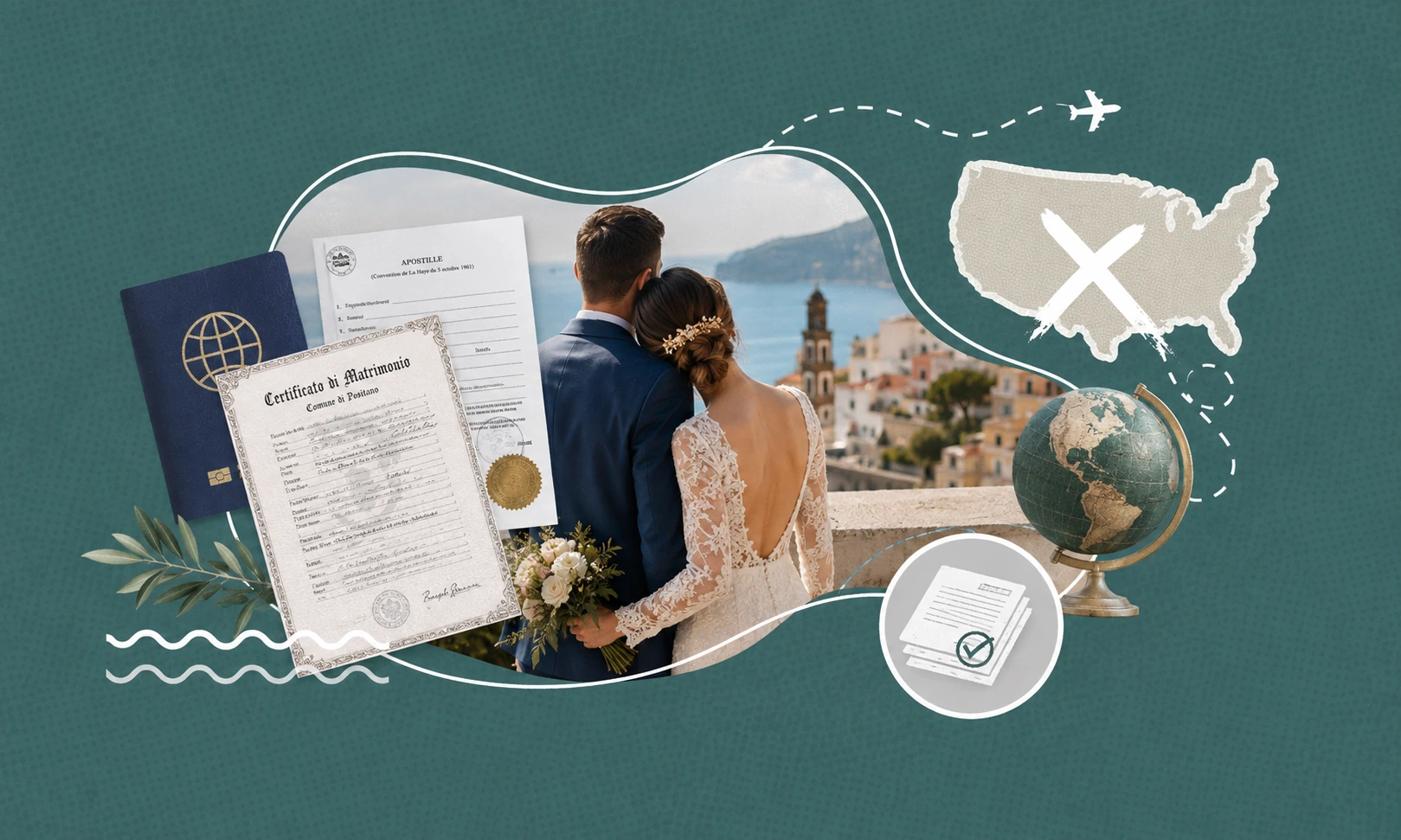
When accessing diplomatic services, such as applying for a dependent visa, family passport, or emergency documentation abroad, many countries require proof of marriage as a prerequisite. A certified copy, often with an apostille, establishes your relationship to your spouse. For example, many European countries require it for long-term stays or residency permits.
11. Marrying Abroad and Proving Current Marital Status
Couples marrying a second time in a foreign country, or receiving recognition of their U.S. marriage, often need to show proof they’re currently single (if one spouse is remarrying). A certified marriage certificate may also serve as proof of divorce or annulment, shown in the marriage status section, as required by some international marriage laws.
12. Enrolling a Stepchild in School or Claiming Them as a Dependent
If you’re enrolling a stepchild in school, claiming them on insurance, or listing them as a dependent on taxes, a marriage certificate helps establish your legal relationship. Many public schools and insurance carriers require documentation proving guardianship relationships, including a parent’s marriage to the custodial parent.
Marriage Certificate Tips
Request multiple certified copies of your marriage certificate, at least three to five, since each agency typically keeps its own. After your marriage is officially recorded, it’s wise to order several certified copies of your marriage certificate from the issuing authority, usually the county clerk or state vital records office. This is because many institutions, such as the Social Security Administration, the DMV, banks, and insurance providers, require a certified copy for their records, and they typically do not return them. Having three to five copies on hand prevents delays when you’re updating IDs, changing your name, or adding a spouse to benefits. It also saves time and money compared to ordering copies individually as needed.
Store them securely, preferably in a fireproof safe, and use certified copies rather than originals, unless originals are required. Because marriage certificates are vital legal documents, protecting them is essential. Certified copies should be stored in a secure, easily accessible location, ideally in a fireproof and waterproof safe at home. This ensures they’re protected from damage or theft while remaining available when you need them. It’s also a best practice to make digital copies for your records. However, most agencies won’t accept digital scans instead of certified hard copies. In most cases, you’ll only need to provide a certified copy rather than the original document.
Follow agency timelines, for instance, insurance carriers usually require adding a spouse within 30 or 60 days of marriage. Many government and private institutions have strict timeframes for updating marital status or adding a new spouse to benefits. One of the most time-sensitive is health insurance. Most employer-sponsored plans recognize marriage as a “qualifying life event,” but only offer a 30-day window to make changes to coverage. If you miss that deadline, you might have to wait until the next open enrollment period to add your spouse, which could leave them uninsured. Other agencies, such as the DMV or Social Security, may not impose strict deadlines; however, handling updates promptly can avoid complications like mismatched ID documents. Some state-level programs, such as Medicaid or housing assistance, also require prompt notification of marital changes to prevent benefit delays or overpayments.
Plan international processes early, especially if you need an apostille, translation, or embassy service. If you plan to live, work, or travel abroad and need to prove your marital status, be aware that obtaining international documentation may take additional time. Many foreign governments require not only a certified marriage certificate but also an apostille, a form of authentication issued by the Secretary of State for use in countries that are part of the Hague Apostille Convention.
Maintain chronological documentation, such as updated Social Security and driver’s licenses, to establish a transparent chain of name usage. When you change your name after marriage, it’s important to establish a clear and consistent paper trail. Start with updating your name with the Social Security Administration, then proceed to your driver’s license, passport, financial institutions, and other records. Maintaining this chronological documentation creates a seamless link between your old and new identity, which is especially important when applying for loans, benefits, or immigration paperwork. Discrepancies in name spellings or mismatched records can delay approvals or trigger identity verification issues.
Your marriage certificate is more than a symbolic document; it’s a legal cornerstone that impacts your identity, rights, and benefits in both private and public affairs. Whether you’re changing your last name, updating IDs, adding a spouse to insurance, sponsoring immigration, or establishing legal rights to property and benefits, keep several certified copies ready, because there’s always another form or office that will request one.
Frequently Asked Questions
How many certified copies of my marriage certificate should I order?
Order at least three to five certified copies. Agencies like the SSA, DMV, banks, and insurance providers each typically keep the copy you submit, so having extras on hand prevents delays when updating your records.
Can I use a marriage certificate from another state?
Yes. A certified marriage certificate issued by any U.S. state or county is recognized nationwide. If you need an additional certified copy, contact the county clerk or vital records office where your marriage was recorded, or use a service like Vital Records Online.
How long after marriage do I have to update my documents?
There is no universal legal deadline for updating your name, but many employer health insurance plans only allow a 30- to 60-day window after marriage to add a spouse. It is best to begin updates with the Social Security Administration as soon as possible.