Essential Steps to Obtaining U.S. Residency Through Marriage
Gaining U.S. residency through marriage is a common pathway for many international spouses seeking to live in the United States with their American partners. This process, while straightforward in many ways, involves several steps and legal requirements that must be meticulously followed. This guide aims to provide a clear overview of the necessary procedures and considerations for securing U.S. residency through marriage.
Eligibility and Initial Steps
Understanding Eligibility Requirements
To begin the process, it’s essential to confirm that both parties meet the eligibility criteria. The U.S. citizen spouse must be legally married to the foreign national, and the marriage must be bona fide, meaning it is genuine and not entered into for the sole purpose of obtaining immigration benefits.
Filing the Petition
The first formal step in the process is for the U.S. citizen spouse to file Form I-130, Petition for Alien Relative, with U.S. Citizenship and Immigration Services (USCIS). This form establishes the relationship between the spouses and is accompanied by various supporting documents, including proof of citizenship, a marriage certificate, and evidence of a legitimate relationship.
For the specific cases where the marriage took place inside the United States, you will be required to obtain a certified copy of your marriage certificate. Also, your spouse would have to prove their citizenship by including a certified copy of a birth certificate. Order a birth certificate, and marriage certificate copy using our online vital records services.
Adjusting Status or Consular Processing
Pathways to Residency
There are two primary pathways for the foreign national spouse to obtain residency: adjusting status if they are already in the U.S., or consular processing if they are outside the U.S.
Adjusting Status
If the foreign national spouse is already in the U.S. on a different visa, they may apply to adjust their status to a permanent resident. This involves filing Form I-485, Application to Register Permanent Residence or Adjust Status. The process includes a background check, a biometrics appointment, and an interview with USCIS.
Consular Processing
For those outside the U.S., consular processing is required. After the I-130 petition is approved, the case is transferred to the National Visa Center (NVC), which coordinates the consular interview. The foreign spouse will need to attend an interview at a U.S. embassy or consulate in their home country, where they will be asked to provide further documentation and answer questions about their relationship.
Required Documentation
Supporting Documents
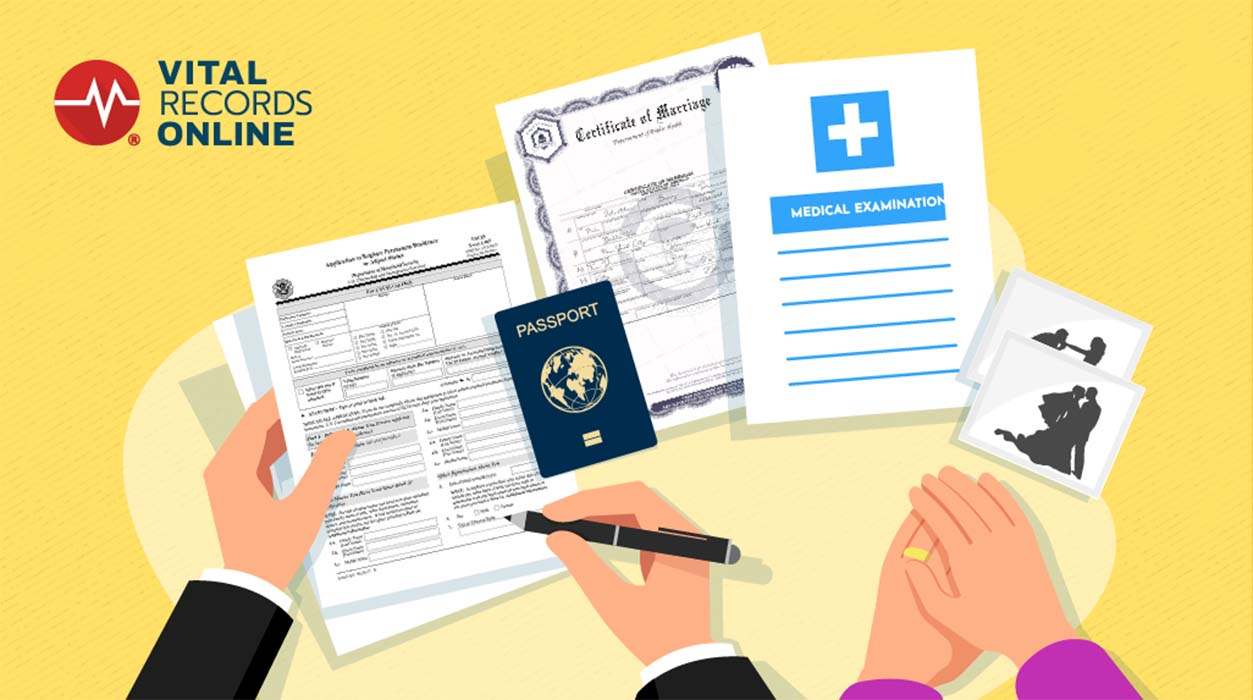
A crucial part of the process is gathering and submitting the appropriate documentation. This typically includes:
- Proof of U.S. Citizenship: Passport or birth certificate of the U.S. citizen spouse, which can be obtained from Vital Records Online.
- Marriage Certificate: Official document proving the marriage, available through Vital Records Online.
- Evidence of Relationship: Photos, joint financial documents, correspondence, and affidavits from friends and family attesting to the genuine nature of the marriage.
- Medical Examination: The foreign national spouse must undergo a medical examination by an approved physician. More details on medical examination requirements are available on the CDC’s website.
Overcoming Challenges
Potential Obstacles
Applicants may face various challenges during the process, including:
- Proof of a Bona Fide Marriage: USCIS is vigilant about preventing fraudulent marriages. Providing ample evidence and being prepared to discuss the relationship in detail during the interview is essential.
- Legal Complications: Previous immigration violations or criminal history can complicate the process. Consulting with an immigration attorney may be necessary to navigate these issues. You can find immigration legal services here.
After Approval
Conditional Residency and Removal
If the marriage is less than two years old at the time of approval, the foreign national spouse will receive conditional residency. This status is valid for two years, during which time the couple must jointly file Form I-751, Petition to Remove Conditions on Residence, to obtain permanent residency. Failure to file this petition or provide sufficient evidence of a continuing bona fide marriage can result in the loss of residency status.
Final Considerations
Maintaining Residency and Citizenship
Once the conditions are removed, the foreign national spouse will receive a 10-year green card, renewable indefinitely. After three years of residency as the spouse of a U.S. citizen, the green card holder may be eligible to apply for U.S. citizenship through naturalization.
Gaining U.S. residency through marriage is a significant step that requires careful preparation and adherence to immigration laws. By understanding the process and requirements, couples can navigate the journey to residency successfully and begin building their lives together in the United States.