Single Status Affidavit: How to Prove You’re Free to Marry Abroad
If you’re planning to marry abroad — a destination wedding, marrying a partner overseas, or relocating — you may be asked for a document many Americans have never heard of: a single status affidavit. Here’s what it is, when you need one, and how to get it accepted in another country.
What Is a Single Status Affidavit?
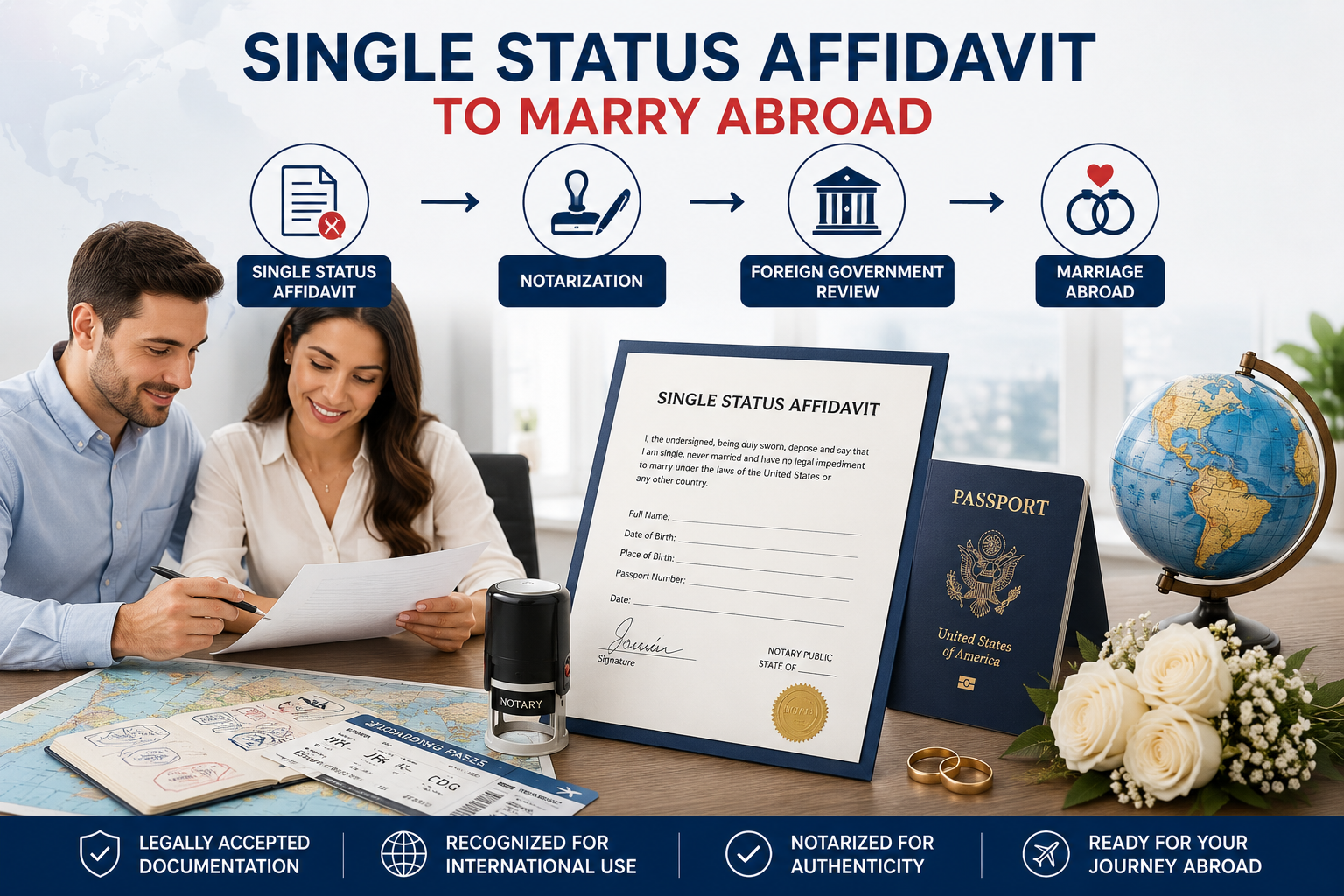
A single status affidavit is a sworn, notarized statement declaring that you are legally free to marry — that is, you’re single and not currently married to anyone else. It goes by several names, including an affidavit of single status, a certificate of no impediment, or a certificate of freedom to marry.
The United States does not maintain a national “marital status” registry, so there’s no single federal document proving you’re unmarried. That’s exactly why this sworn affidavit exists — it’s how you formally attest to your status when another country requires proof.
When Do You Need One?
You’ll typically need a single status affidavit when:
- You’re getting married in a foreign country that requires proof both parties are free to marry
- You’re marrying a foreign national abroad
- A foreign government, church, or civil registrar requests documentary proof of your single status
Most foreign authorities require the affidavit to be recently issued (often within the last few months), so timing matters.
How to Get a Single Status Affidavit
The process generally looks like this:
- Prepare the affidavit. The statement declares your full name, that you are unmarried, and that you are free to marry. Some countries provide a specific form or required wording.
- Sign it before a notary. Because it’s a sworn statement, it must be signed in front of a notary public who verifies your identity.
- Gather supporting documents. You may also need a certified birth certificate, and if you were previously married, a divorce decree or a deceased spouse’s death certificate showing the prior marriage ended.
Some states or counties can also issue a related record — a “certificate of no marriage record” or “no record of marriage” — from their vital records office, which can supplement or substitute for the affidavit depending on the destination country’s rules.
The Crucial Final Step: Apostille or Legalization
A single status affidavit usually isn’t accepted abroad on its own. To be recognized in another country, it typically needs an apostille (for countries in the Hague Apostille Convention) or consular legalization (for countries that aren’t members). The apostille authenticates the notary’s signature so foreign officials will accept the document.
This is the step travelers most often overlook. Learn more about apostille services and, if you’ll also need your marriage record recognized later, how to apostille a marriage certificate. For a broader view, see the vital records you may need internationally.
Frequently Asked Questions
Is a single status affidavit a government document?
No. It’s a sworn statement you make before a notary. The U.S. has no central marital-status registry, so this affidavit is how you attest to being free to marry.
Does it need to be apostilled?
Usually, yes. Most countries require an apostille or consular legalization before they’ll accept it.
What if I was previously married?
You’ll typically need to show the prior marriage ended — with a divorce decree or your former spouse’s death certificate.
How recent does it need to be?
Many countries require the affidavit to be issued within the last 3 to 6 months, so don’t prepare it too far in advance.
Make Your Documents Valid Abroad
A single status affidavit clears the way to marry overseas — but only once it’s properly notarized and apostilled. If you need to authenticate your affidavit, birth certificate, or marriage certificate for use in another country, Vital Records Online’s apostille service can help, so paperwork doesn’t get in the way of your wedding.
This article is for general informational purposes only and is not legal advice. Requirements for marrying abroad vary by country. Always confirm the exact documents and authentication your destination requires with its embassy, consulate, or civil registrar.