EU Entry/Exit System (EES) & ETIAS in 2026: What U.S. Travelers Need to Know
If you’re planning a trip to Europe, the way you cross the border is changing. The European Union has rolled out a new biometric Entry/Exit System (EES), and a separate travel authorization called ETIAS is arriving in late 2026. Here’s a plain-English explainer of what’s new, what U.S. travelers need to do, and how your passport — and the birth certificate behind it — fit in.
What Is the Entry/Exit System (EES)?
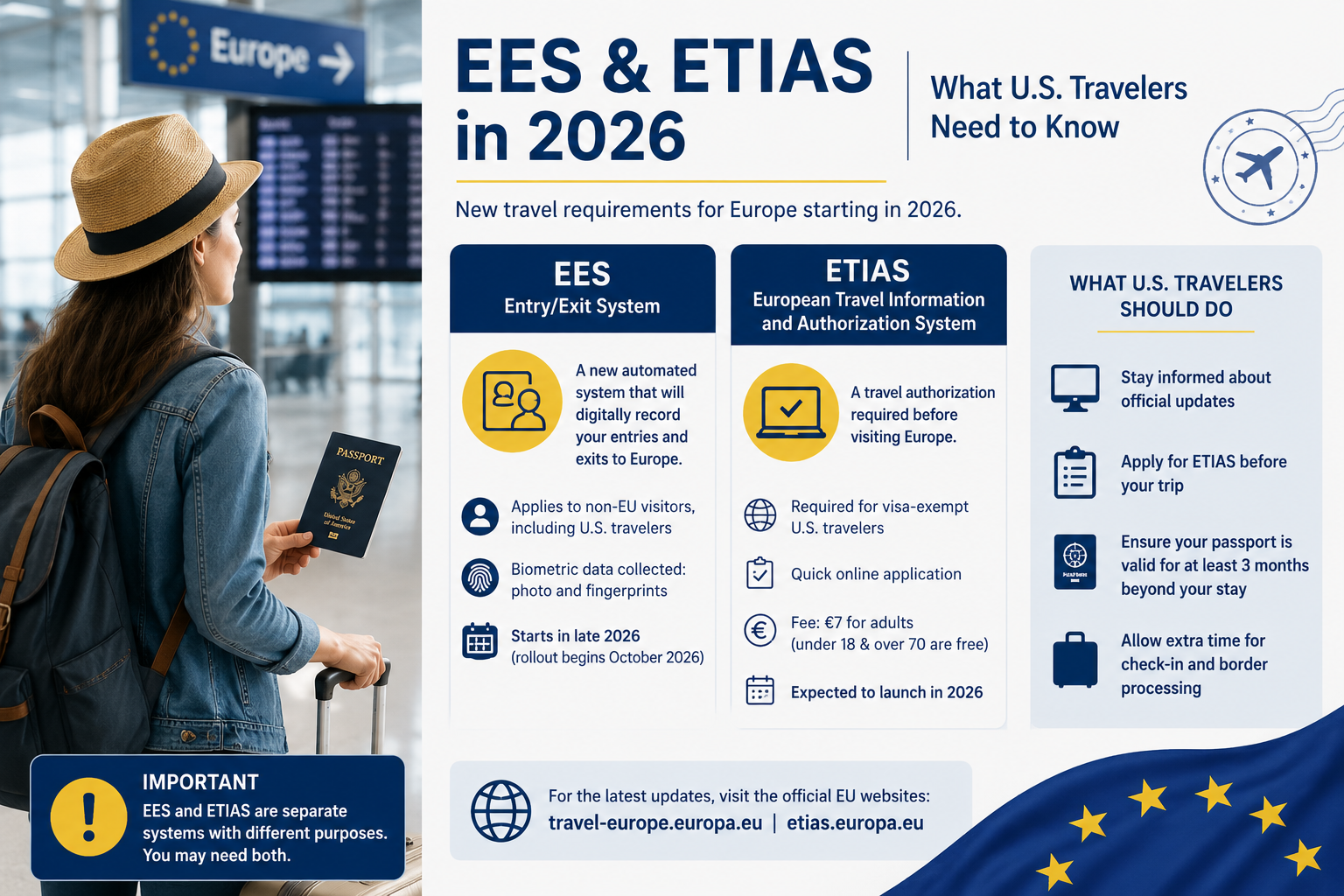
The EES is an automated system that digitally records non-EU visitors as they enter and exit the Schengen Area. Instead of manually stamping your passport, border officials now capture your name, travel document, date and place of entry/exit, and biometrics — your fingerprints and a facial image.
As of April 10, 2026, the EES is fully operational across 29 European countries, including popular destinations like France, Italy, Spain, and Germany. For U.S. travelers, there is no fee for the EES and no advance action required — you’ll simply complete the biometric process at the border on arrival.
What Is ETIAS — and When Does It Start?
ETIAS (the European Travel Information and Authorisation System) is different: it’s a pre-travel authorization that visa-exempt visitors, including U.S. citizens, will need before boarding a flight to Europe for short stays.
- Launch: Expected in the last quarter of 2026, after a mandatory EES transition period.
- Cost: Around €20 per application (with exemptions for younger and older travelers).
- Grace period: A roughly six-month transitional window is planned, during which travelers are encouraged — but not yet strictly required — to hold an ETIAS.
ETIAS is an authorization tied to your passport, not a visa. It’s broadly similar to the U.S. ESTA system that visitors to America already use.
What U.S. Travelers Should Do Now
- Make sure your passport is valid. Both EES and ETIAS are linked to your passport, and many countries require it to be valid for at least six months beyond your travel dates. If yours is expiring, review our guide on passport validity and renewal.
- Build in time to renew or apply. If you need a new passport, check current passport processing times before booking.
- Have your birth certificate ready if you’re a first-time applicant. A certified birth certificate is required as proof of citizenship to get a U.S. passport in the first place.
- Watch for the official ETIAS launch. Apply only through official channels once it opens, and confirm details on the U.S. State Department’s Europe travel page.
How This Differs From the Old Rules
Previously, U.S. travelers could visit the Schengen Area for up to 90 days within any 180-day period with just a passport and a manual stamp. That 90/180 limit still applies — but now your entries and exits are tracked biometrically and automatically, and soon you’ll need ETIAS authorization before you travel. (Note: this is separate from older travel-authorization discussions; if you read about ETIAS years ago, the timeline has since shifted to late 2026.)
Frequently Asked Questions
Do I need ETIAS to travel to Europe right now?
Not yet. ETIAS is expected to launch in late 2026 with a grace period. The EES biometric system, however, is already in effect at the border.
Is there a fee for the EES?
No. The EES is free and requires no advance application. ETIAS, when it launches, will cost about €20.
Does the EES replace my passport?
No. You still need a valid passport; the EES simply records your entries and exits digitally instead of stamping it.
How long can I stay in Europe?
The standard short-stay limit remains 90 days within any 180-day period for U.S. citizens.
It All Starts With a Valid Passport
Europe’s new border systems don’t add much for U.S. travelers beyond a quick biometric check and, soon, an ETIAS authorization — but both depend on a current passport. And a passport depends on a certified birth certificate. If you need to get or replace yours before your trip, Vital Records Online can help you request a certified birth certificate quickly.
This article is for general informational purposes only. EU entry rules and timelines are set by European authorities and may change. Always confirm current requirements with official EU sources and the U.S. Department of State before traveling.