Your Birth Certificate Was Rejected for a Passport: What to Do Next
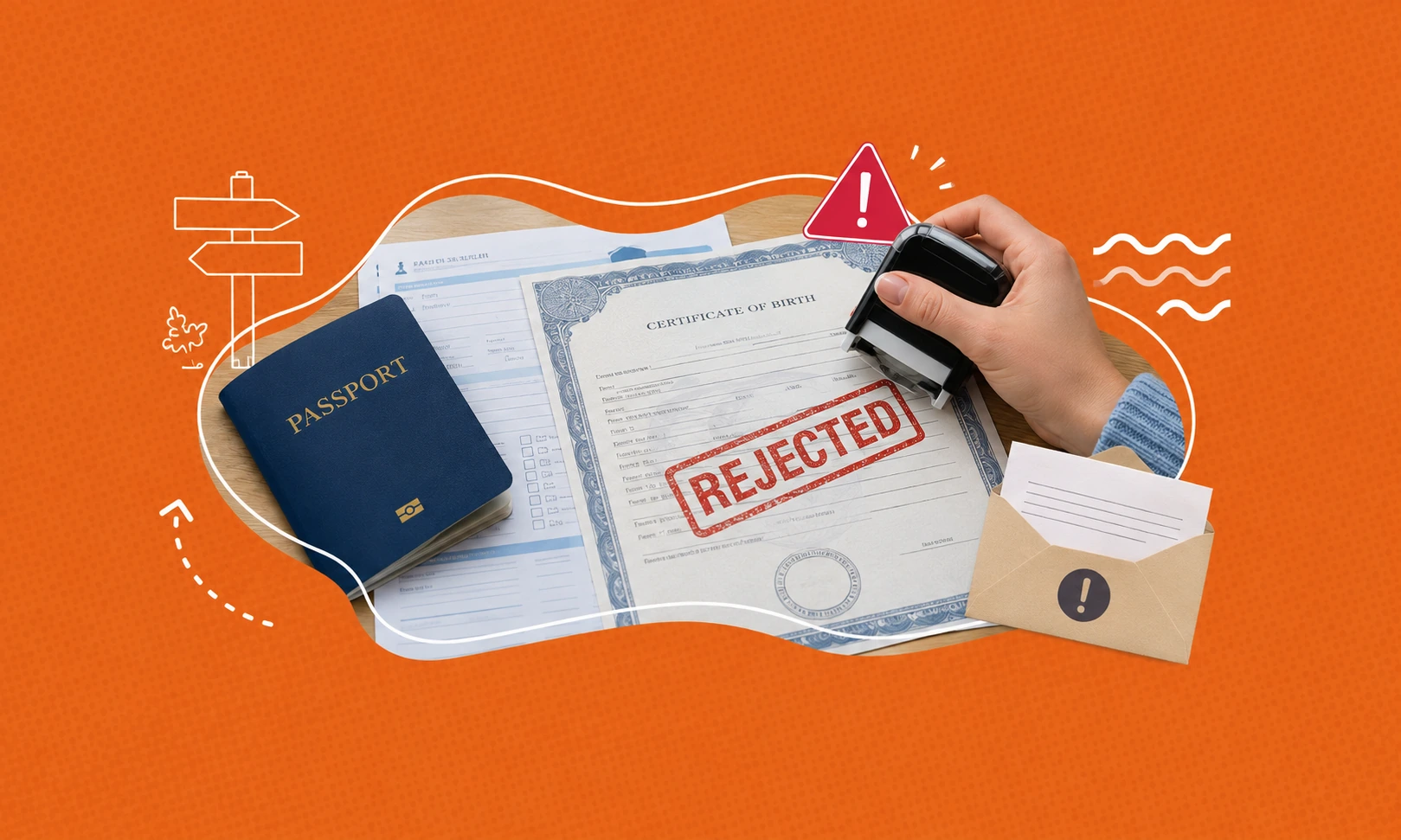
The letter arrives weeks after you applied. Your passport application is on hold, your birth certificate was not accepted, and the trip you booked is still on the calendar. The important thing to understand first is that this is not a denial. Your application is suspended pending additional information, and there is a defined window in which to supply it.
This guide covers what the letter is, why certificates get rejected, and the specific paths back. If you have not applied yet and are trying to work out which documents to bring, that is the earlier question, answered in our guide to birth certificate alternatives for a passport.
What the Letter Actually Is
When the U.S. Department of State needs more information to finish an application, it sends a letter or email and places the application on hold. Processing times are delayed while it waits, and nothing further happens until you respond.
You must respond within 90 days of the date shown on your letter. That date is the one that governs, not the day the letter reached you, which is why opening the envelope promptly matters more than it sounds. The letter names the address to send your response to and gives your application number; reference that number in any call or correspondence.
Do Not Start a New Application
The instinct to reapply from scratch is a costly one. A new application means a new fee, a new place in the queue, and an abandoned file that already contains your photo, your form, and your identification. Respond to the letter you have. Follow its instructions, send exactly what it asks for, and the office resumes processing the existing application when the information arrives.
Why Birth Certificates Get Rejected
The State Department has a specific list of elements a U.S. birth certificate must show to serve as citizenship evidence. A certificate is generally expected to include:
- Your full name, date of birth, and place of birth.
- The city, county, or state where you were born.
- Your parents' full names.
- The registrar's signature.
- The seal or stamp of the city, county, or state that issued it.
- The date it was filed with the registrar's office, which must be within one year of your birth.
Miss any one of those and the certificate can be rejected even though it is completely genuine. The most common failures are worth naming individually.
The Certificate Is a Short Form or Abstract
Many states issue an abbreviated certificate that confirms the birth but omits the parents' names. It is a real certified document and works for plenty of everyday purposes, and it still fails here, because parents' names are among the required elements. The fix is to order the long-form version. Our comparison of long-form versus short-form birth certificates explains what each contains.
It Is a Hospital Certificate, Not a State Record
The decorative certificate with the footprints, the hospital's name, and sometimes a gold seal is a souvenir. It was never a government record, and no registrar ever signed it. Our article on whether a hospital birth certificate can be used for legal purposes covers why it fails.
The Filing Date Is Missing, Illegible, or More Than a Year After Birth
The date the birth was filed with the registrar has to be visible and has to fall within one year of the birth. On older certificates it is often faint, handwritten, or worn away entirely, and an examiner who cannot read it cannot accept it.
If the record genuinely was filed more than a year after your birth, that is a delayed birth certificate, and it is treated as secondary rather than primary evidence. It can still be used, but it normally has to be accompanied by additional supporting documents rather than standing on its own.
You Sent a Photocopy or a Notarized Copy
Citizenship evidence must be an original or a certified copy issued by the vital records office. A photocopy is not acceptable, and neither is a notarized copy, because a notary attests to a signature rather than to the record's authenticity.
The Two Paths Back
Which path applies depends on whether a qualifying record exists at all.
Path One: A Better Certified Copy Exists
This covers most people. Your birth was registered properly, but the copy you sent was the short form, or a photocopy, or too worn to read. Order a new long-form certified copy from the vital records office of the state where you were born, confirm it shows every required element before you mail it, and send it in response to the letter within the window.
Give yourself margin. State processing and mailing time both run against your 90 days, so ordering in week one rather than week ten is the difference between comfortable and frantic.
Path Two: No Birth Record Exists
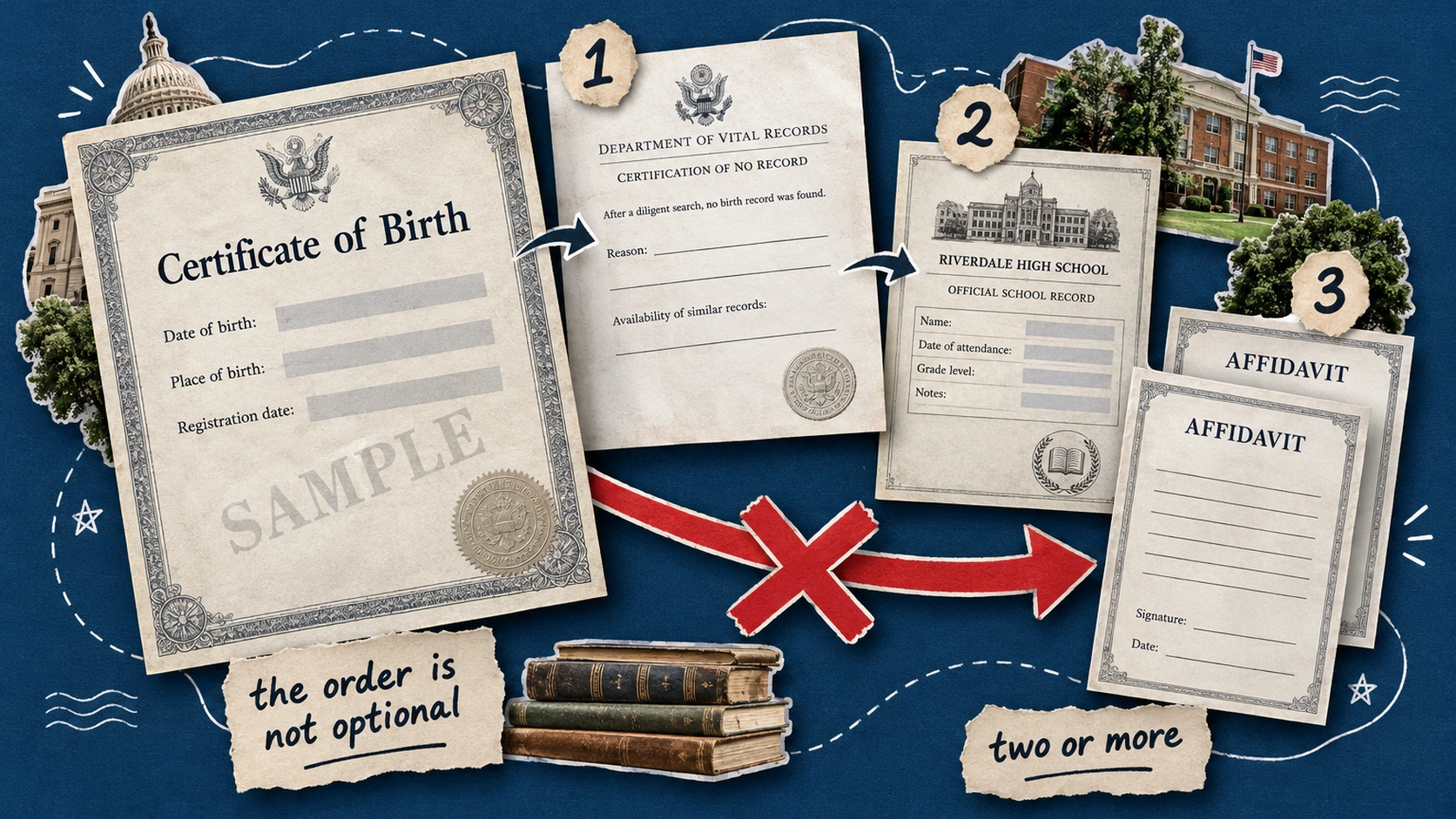
Sometimes the search comes back empty, most often for births at home, in rural areas, or in eras when registration was inconsistent. In that case you request a Letter of No Record from the state or territory where you were born. This is an official document stating your name and date of birth and certifying that the records were searched and no birth certificate was found.
A Letter of No Record is not sufficient on its own. It must be submitted together with early public records, meaning documents created as early in your life as possible that show your name, date of birth, and place of birth. Because these are gathered from schools, churches, censuses, and family archives rather than ordered from one office, this path takes the longest, and it is worth starting the day you learn no record exists.
Before You Mail the Response
- Reread the letter. It states exactly what is missing. Sending more than asked rarely helps; sending less restarts the delay.
- Check the certificate against the required elements one by one before it goes in the envelope.
- Use the address printed on the letter, which may differ from where you originally applied.
- Keep a copy of everything you send, including the letter itself.
- Track the mailing so you can prove the response left within the window.
If you have travel booked and the timeline is now tight, contact the passport office using the number on your letter and explain the deadline. Expedited handling and urgent-travel options exist, and the answer depends on how close your departure is.
If the fix is a proper long-form certified copy, you can order a certified birth certificate from the issuing state, and our passport services can help with the application once your citizenship evidence is in order.
Frequently Asked Questions
Does a rejected birth certificate mean my passport was denied? No. The application is suspended pending additional information, not denied. It resumes when you provide what the letter asks for.
How long do I have to respond? Within 90 days of the date shown on your letter. That date, not the delivery date, starts the clock.
Why was my certificate rejected when it is genuine? Usually because it lacks a required element, such as the parents' names, the registrar's signature, the issuing seal, or a legible filing date within one year of birth.
What is a Letter of No Record? An official document from the state or territory of your birth stating your name and date of birth and certifying that its records were searched and no birth certificate was found. It must be submitted along with early public records.
Should I just apply again instead of responding? No. Reapplying means paying again and starting over in the queue. Respond to the existing letter.