Death Certificates 13 Real-Life Uses Explained

After a loved one dies, a death certificate becomes a critical document used to handle legal, financial, and personal affairs. In this article, we’ll explain 12 real-life uses for a death certificate, from settling an estate and claiming Social Security to proving eligibility for remarriage or enrolling a child in survivor benefits. Understanding these uses can help you navigate the process with clarity during a difficult time.
Last updated April 2026.
1. Settling an Estate or Accessing Life Insurance Policies
When someone passes away, their death certificate serves as the key to unlocking assets, both financial and legal. Executors and heirs rely on certified copies to access life insurance policies, bank accounts, safety deposit boxes, and retirement funds. Insurance companies won’t pay beneficiaries without one, and probate courts require it to validate your authority to manage the deceased’s affairs. In California, for example, probate courts often require three certified copies issued by the county registrar, and insurance policies typically require an original death certificate to initiate the claims process.
2. Claiming Social Security Survivor Benefits
Surviving spouses and dependents must provide a certified death certificate to the Social Security Administration (SSA) to begin receiving survivor benefits. Funeral directors usually report the death to SSA, but families often still need to present the official document when applying. Federal laws say that failure to report promptly can result in repayment of benefits received after death.
3. Claiming a Pension or Retirement Account as a Beneficiary
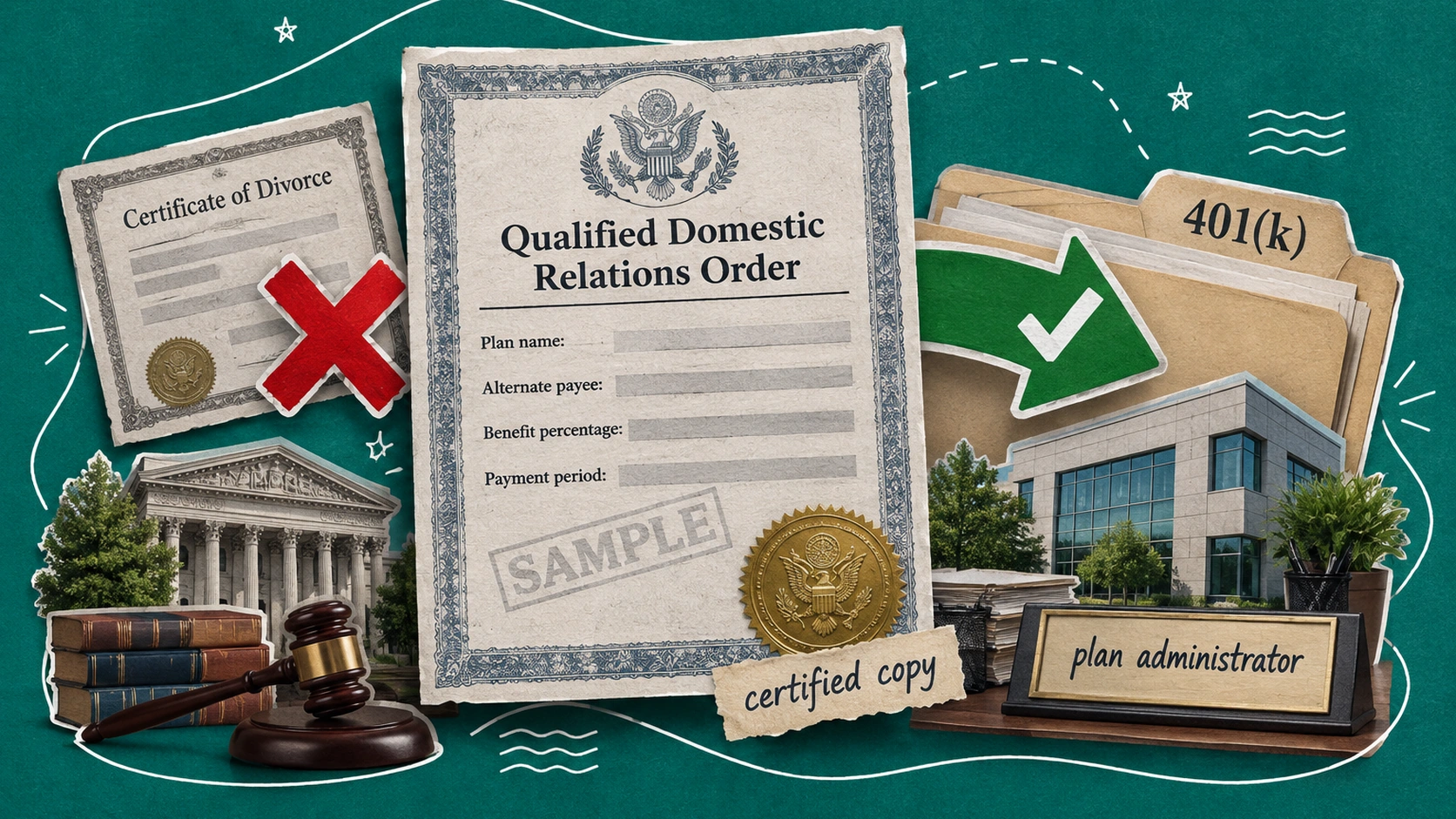
Defined‑benefit pensions and 403(b)/401(k) accounts typically require a death certificate to process survivor distributions. Plan administrators use it to confirm that the named beneficiary is legally entitled to receive the funds. In New York, union pension funds often require a certified death certificate as part of their standard processing package. Some federal pensions (e.g., for federal employees or teachers) may also require notarized copies to begin beneficiary payments.
4. Closing Accounts or Canceling Utilities for the Deceased
When a loved one passes away, banks, credit card companies, utility providers, and subscription services require a death certificate before closing or transferring accounts. In Texas, for instance, major banks commonly ask for an official death certificate to close accounts or issue refunds, and utility providers will request it to prevent further billing.
5. Arranging Funeral or Cremation Services
Funeral homes and crematoriums need a legal death certificate to obtain burial or cremation permits from county authorities. Under the FTC’s Funeral Rule, funeral providers must acquire this document before offering final arrangements. In Florida, funeral directors often work closely with the county medical examiner and local registrar to obtain death certificates, cemetery permits, and burial authorizations.
6. Applying for Veterans’ Burial or Survivor Benefits
Veterans and their eligible family members may be eligible for headstones, burial flags, and financial assistance for funeral costs through the Department of Veterans Affairs. These benefits require a certified death certificate to prove service history and eligibility. In Oregon, families must submit the veteran’s death certificate along with a DD-214 to claim burial allowances and state cemetery plots.
7. Transferring Ownership of Property, Vehicles, or Bank Accounts
When a person dies, titles for property, vehicles, and joint financial accounts must often be changed. A certified death certificate is typically needed as proof of ownership transfer. In Georgia, for example, the Department of Revenue requires certified death certificates to update vehicle titles if the deceased was listed. Similarly, deeds are updated during probate to reflect new ownership.
8. Filing Taxes on Behalf of the Deceased
Estates must file final income tax returns and, in some cases, estate tax returns. Internal Revenue Service instructions (Form 1041) require certified death certificates to establish the date of death and affirm legal authority. For federal estate tax filings over exemption limits, the death certificate validates the timeline and is a mandatory attachment. State-level revenue departments, such as those in New Jersey, also require certified certificates before issuing estate tax clearances.
9. Proving Death for Remarriage or Immigration Petitions
If a surviving spouse wishes to remarry, they may need certified evidence of the former spouse’s death before obtaining a marriage license, especially in jurisdictions with mandatory waiting periods, like Kentucky. U.S. citizens seeking to bring a spouse abroad by way of family-based immigration (Form I-130) must present a death certificate to prove the prior marriage ended, according to USCIS requirements.
10. Requesting Autopsy or Coroner’s Reports
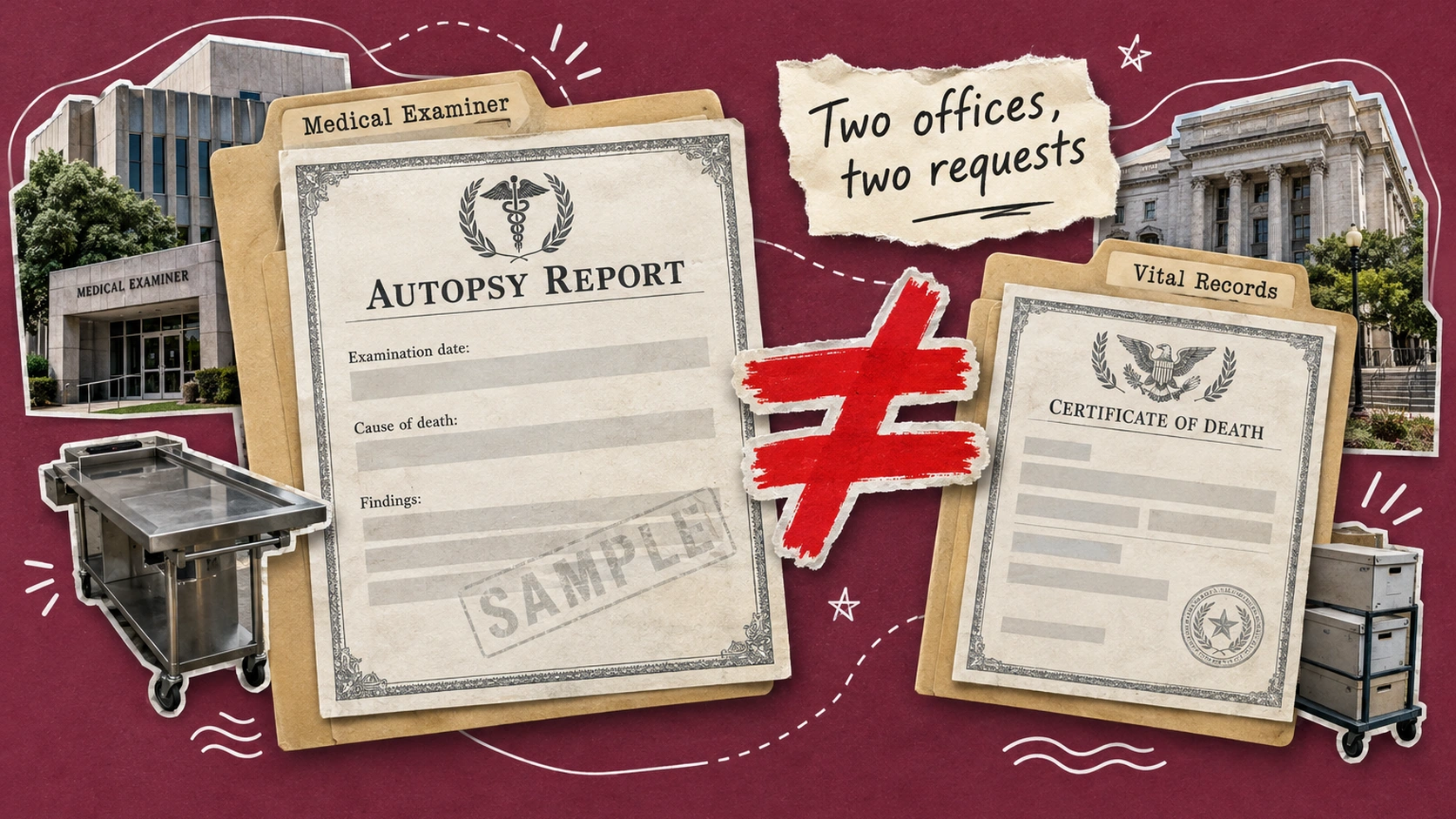
Families or their legal representatives can request coroner or medical examiner records for legal, medical, or insurance purposes. In Michigan, the legal next-of-kin may submit the death certificate to the county medical examiner’s office to access autopsy reports. Insurance companies often require both documents when reviewing accidental death benefits or wrongful-death claims.
11. Settling Wrongful-Death Lawsuits or Insurance Claims
Suppose the cause of death leads to legal action, like a wrongful-death lawsuit or personal injury claim. In that case, attorneys will typically request a certified death certificate to open cases and prove standing. In Colorado, certified death certificates are used to verify both the identity of the decedent and the timing of the death when filing a wrongful death lawsuit.
12. Transporting Remains or Handling International Death Reporting
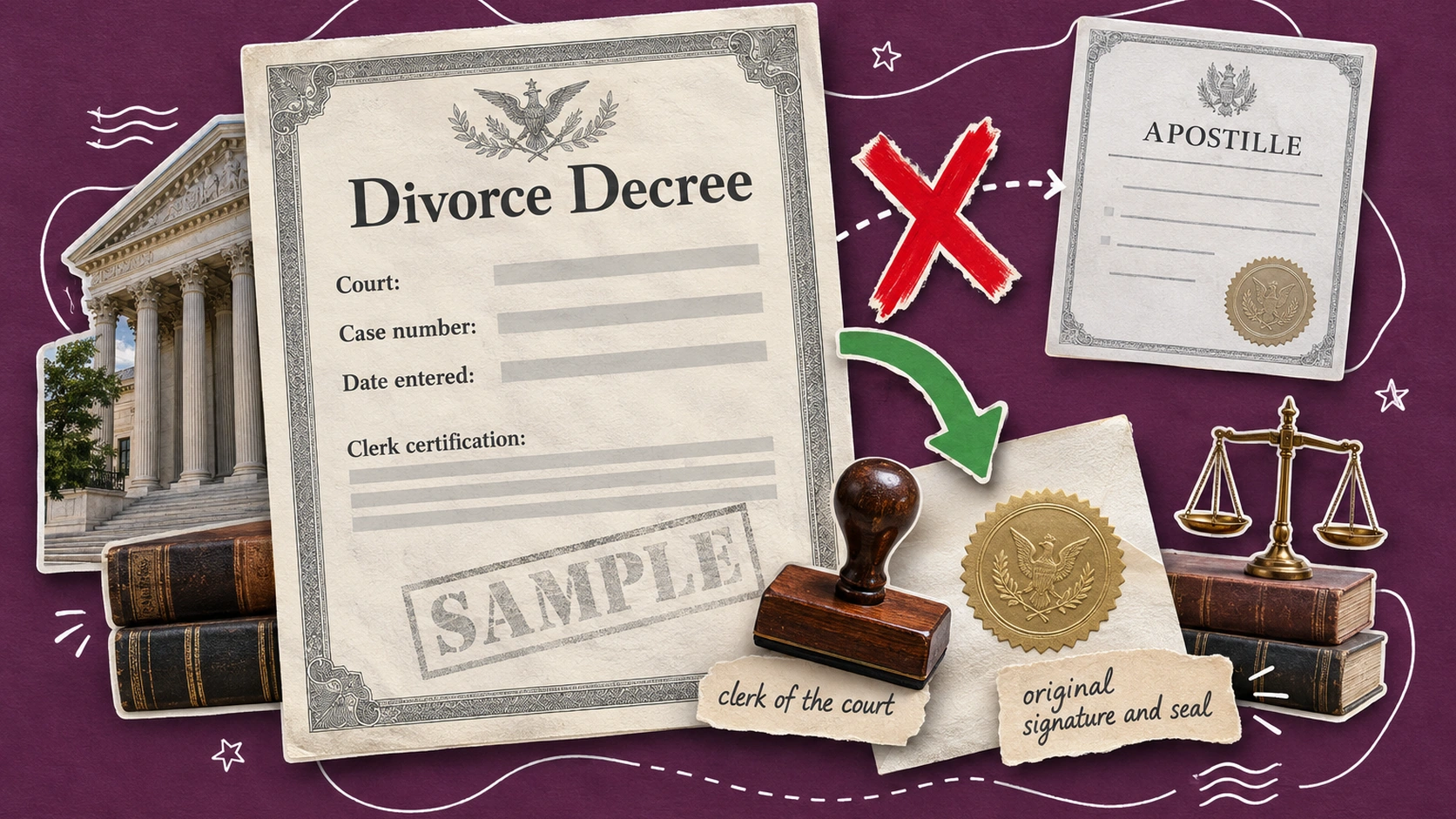
Transporting a body across state or national borders requires certified death certificates and additional permits. In cases of international repatriation, embassies in countries such as Switzerland require multiple copies of government-issued death certificates, which are often authenticated through apostille and sometimes translated. Airlines and funeral directors won’t proceed with transport until they receive government-issued documentation.
13. Enrolling Surviving Children in Benefits or Guardianship Arrangements
After the loss of a parent, children may become eligible for survivor benefits from Social Security, VA, or private pensions. In addition to naming a legal guardian, a certified death certificate is essential for these processes. In New York, courts require a death certificate to formalize guardianship and to activate benefits for children under state custodial care.
These real-world uses underscore the critical importance of obtaining multiple certified copies of a death certificate, usually five to ten, to keep on hand for government agencies, financial institutions, insurance carriers, and legal entities.
A certified death certificate is not just a formality; it’s a legal gateway for settling affairs, accessing benefits, and fulfilling regulatory requirements after the death of a loved one. From claiming estates, pensions, and survivor benefits to managing remarriage, guardianship, and international transportation, the document is indispensable. Families should order multiple certified copies immediately and store them securely, as each agency typically requires its sealed copy. If you’re unsure who needs one or how to get extra copies, your county registrar or funeral director can guide you through state-specific procedures.
Frequently Asked Questions
How many certified death certificates should I order after a loved one dies?
Most estate and benefits professionals recommend ordering 5 to 10 certified copies immediately. Each agency, banks, insurance companies, pension plans, courts, and government offices, typically requires its own sealed copy. Ordering more upfront is usually faster and more cost-effective than reordering later.
Can a photocopy of a death certificate be used instead of a certified copy?
Generally no. Most institutions, including banks, insurance companies, courts, and the Social Security Administration, require an original certified copy with an official seal. Some states issue “informational” copies that are not valid for legal or financial transactions. Always request certified copies for official use.
How do I get a death certificate if the funeral home didn’t provide one?
You can request certified copies directly from the vital records office in the county or state where the death occurred. Most states also allow online ordering through state portals or authorized third-party services. You’ll need to provide the deceased’s full name, date of death, and proof of your eligibility to request the record.