Florida SAVE Act 2026: Documents You Need to Vote and How to Prepare
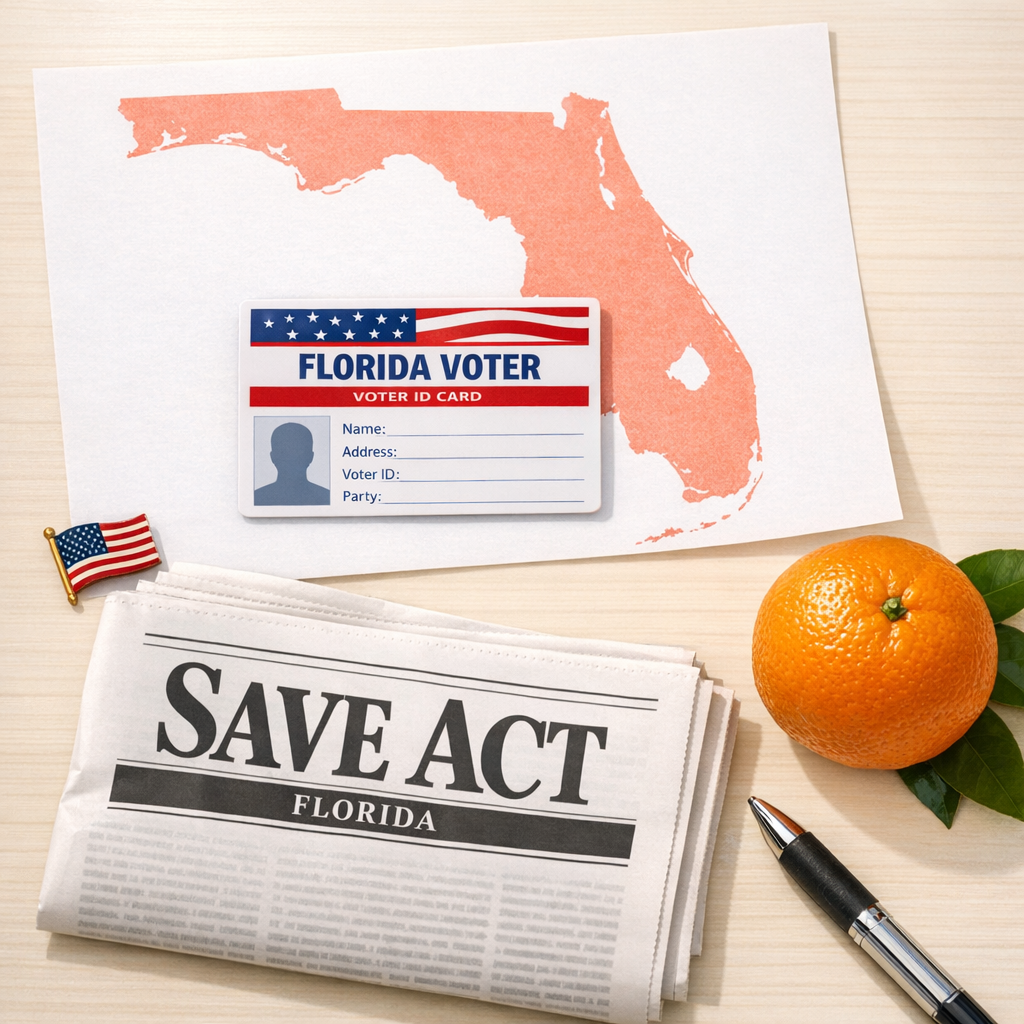
Florida has enacted its state-level version of the SAVE Act — legislation that tightens the documents required to prove U.S. citizenship when registering to vote. Governor Ron DeSantis signed House Bill 991 (HB 991) into law on April 1, 2026, and the new requirements take effect on January 1, 2027.
Whether you’re a first-time Florida voter, someone updating an existing registration, or a snowbird splitting time between states, here’s what the Florida SAVE Act changes, which documents are accepted, and how to prepare during the months before it kicks in.
Why This Matters
The Florida SAVE Act represents a significant change in how voter eligibility is verified. For many voters — especially those who don’t have immediate access to a U.S. passport or certified birth certificate — these new requirements will add extra steps before registering or updating voter information.
The simplest way to stay ready is to have a certified U.S. birth certificate on hand. It’s the most accessible, lowest-cost document that satisfies the proof-of-citizenship requirement, and it doubles for Real ID renewals, passport applications, and Social Security updates. If you don’t already have one — or your copy is lost, damaged, or uncertified — now is the time to request a replacement, well before election-cycle demand spikes at state vital records offices.
What Is the SAVE Act?
The SAVE Act — which stands for Safeguard American Voter Eligibility Act — is the name used for a series of federal and state laws requiring voters to present documentary proof of U.S. citizenship when registering to vote. At the federal level, a version of the SAVE Act passed the U.S. House but has not yet become federal law. In the meantime, several states, including Florida, have passed their own versions.
Florida’s version — HB 991 (with Senate companion SB 1334) — does three main things:
- Requires documentary proof of U.S. citizenship from voters when registering or updating their registration
- Strengthens photo ID requirements at the polls (Florida already requires photo ID; the new law narrows the list of acceptable IDs)
- Directs election officials to verify citizenship against state and federal databases, and to request additional documentation from any voter whose status cannot be confirmed
The law was signed on April 1, 2026 and becomes effective on January 1, 2027.
Who Is Affected?
This is the detail that catches the most people off guard: the Florida SAVE Act applies to both new registrations and existing registered voters under certain conditions.
- New voter registrations — Anyone registering to vote in Florida on or after January 1, 2027 must provide documentary proof of citizenship
- Address changes and updates — Voters updating their registration may be asked for proof
- Naturalized citizens — Voters born outside the U.S. who have become U.S. citizens need to be ready with their Certificate of Naturalization or U.S. passport
- Existing registered voters — This is the key clarification: current voters are not automatically removed from the rolls, but if state or federal databases cannot verify their citizenship, those voters may be required to submit additional documentation to remain registered
In other words: if you’re already registered to vote in Florida and your citizenship status is confirmed in official records, you likely won’t need to do anything. If records are missing or inconclusive, you may receive a notice requesting proof. Having a certified birth certificate or valid passport ready protects you in either case.
Do You Need a Birth Certificate to Vote in Florida?
Short answer: Under the Florida SAVE Act, a certified U.S. birth certificate is one of the most common and accessible ways to prove U.S. citizenship when registering to vote.
A birth certificate is typically the easiest citizenship document to obtain because:
- It’s less expensive than a U.S. passport (under $30 in Florida versus $130+ for a passport book)
- You already qualify for one if you were born in the United States — there’s no application approval process
- It can be requested from the state where you were born, regardless of where you currently live
- It doubles as a primary document for Real ID, passport applications, Social Security updates, and employment verification
A Florida Real ID, while required for boarding domestic flights, typically does not serve as standalone proof of U.S. citizenship for voter registration purposes — because Real IDs can also be issued to lawful permanent residents and certain visa holders. That makes a certified birth certificate the simpler, more versatile path for Florida voters who don’t already have a passport.
Documents Accepted as Proof of U.S. Citizenship
Under the Florida SAVE Act, the following documents are generally accepted as proof of U.S. citizenship for voter registration:
1. Certified U.S. Birth Certificate (Easiest Option for Most Voters)
A certified copy of your U.S. birth certificate — issued by a state or county vital records office and bearing an official seal — is the most common way to prove citizenship. Informational copies and hospital souvenir certificates are not accepted.
For most Floridians, this is the simplest and lowest-cost path to meeting the SAVE Act requirement. If you were born in Florida, you can order a certified Florida birth certificate through Vital Records Online. If you were born in another state, you’ll need to request the certificate from that state’s vital records office. See our guide on whether you can use your birth certificate as proof of citizenship.
2. Valid U.S. Passport or U.S. Passport Card
A valid (unexpired) U.S. passport book or U.S. passport card is accepted as standalone proof of citizenship. If you have a current passport, this is often the simplest option — no separate birth certificate is needed at the time of registration.
If you need to apply for a passport, you’ll need a certified birth certificate first. See what type of birth certificate you need for a passport.
3. Certificate of Naturalization or Certificate of Citizenship
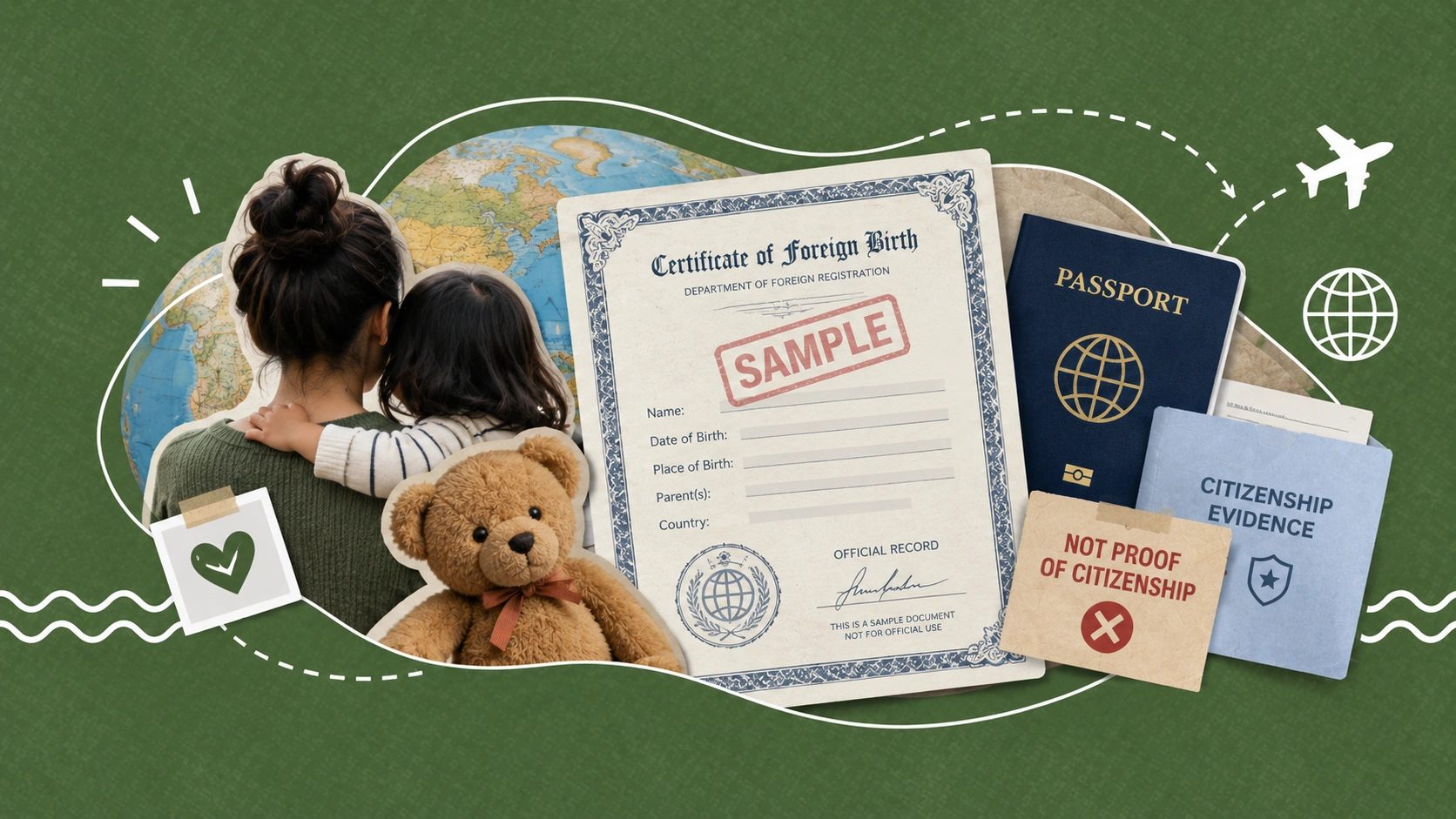
For naturalized U.S. citizens, the Certificate of Naturalization (Form N-550) or Certificate of Citizenship (Form N-560) issued by U.S. Citizenship and Immigration Services (USCIS) serves as proof of citizenship.
4. Consular Report of Birth Abroad
For U.S. citizens born outside the country to U.S.-citizen parents, the Consular Report of Birth Abroad (CRBA, Form FS-240) serves as proof of citizenship.
What About a Florida Real ID?
A Florida Real ID driver’s license is required to fly domestically and enter federal facilities, but a Real ID typically does not serve as standalone proof of U.S. citizenship for voter registration purposes, because it can also be issued to non-citizens (such as lawful permanent residents and certain visa holders).
To register to vote under Florida’s SAVE Act, you’ll generally need to pair your Real ID with one of the citizenship documents above — or present a citizenship document instead. For most Floridians, the easiest combination is a Real ID for identity plus a certified birth certificate for citizenship.
For a full breakdown of what Real ID is and isn’t, see our guide on what is a Real ID, requirements, cost & how to get one, and our FAQ on whether you need a birth certificate to get a Real ID in Florida.
Documents That Generally Are NOT Sufficient on Their Own
HB 991 also tightens the list of acceptable IDs at the polls. The following documents generally do not establish U.S. citizenship on their own for SAVE Act purposes:
- Florida driver’s license (non–Real ID)
- Florida Real ID driver’s license or ID card (typically needs additional citizenship proof)
- Social Security card
- Voter registration card from another state
- Student ID cards (notably narrowed under HB 991)
- Utility bills, bank statements, or other secondary documents
These documents may help establish identity or residency, but they generally do not prove U.S. citizenship under the Florida SAVE Act. See our complete guide to acceptable forms of ID in the U.S. for context on when each document is appropriate.
When Does the Florida SAVE Act Take Effect?
The law takes effect on January 1, 2027. Voter registrations submitted on or after that date fall under the new documentary proof-of-citizenship rules.
That gives Florida residents several months — from now through the end of 2026 — to locate their citizenship documents, order replacements if needed, and be ready before the law kicks in.
For the most current and official information, voters should visit the Florida Division of Elections voter registration page or contact their county supervisor of elections.
What Florida Voters Should Do Right Now
1. Check Your Existing Registration
Visit the Florida Division of Elections website to verify that your voter registration is active and up to date. Current voters are not automatically removed under the new law, but confirming your record is active — and your citizenship status is verified — is the simplest way to avoid surprises when HB 991 takes effect in 2027.
2. Locate Your Citizenship Document
Find your certified U.S. birth certificate, U.S. passport, or Certificate of Naturalization. Make sure the certificate is a certified copy (with official seal) and not an informational copy, photocopy, or hospital souvenir.
3. Request a Certified Birth Certificate If You Don’t Have One
If you don’t already have a certified birth certificate, it’s best to request one well before January 2027 to avoid delays. Demand for certified birth certificates typically spikes around election deadlines, and processing times at state vital records offices can slow accordingly.
A certified birth certificate is the easiest and most versatile document for meeting the SAVE Act requirement — it’s less expensive than a passport, doesn’t require an application approval, and also covers Real ID, passport applications, Social Security updates, and more.
For Florida-born voters, Vital Records Online can help you request your certified Florida birth certificate. If you were born in another state, order from the state where you were born. Customers in California and Montana benefit from VRO’s state-approved electronic filing for faster processing.
4. Consider a Passport If You Travel Internationally
A U.S. passport is a versatile single document for proving identity and citizenship. If you don’t have one and plan to travel internationally anyway, applying for a passport is worth considering — but note it costs significantly more than a birth certificate and has a longer processing window. For most voters, a certified birth certificate alone is sufficient for the SAVE Act.
5. Register or Update Your Registration Before the Deadline
You can register to vote or update your information through the Florida Division of Elections. The book-closing deadline for each election is 29 days before election day.
Special Situations
Naturalized Citizens
If you became a U.S. citizen through naturalization, your Certificate of Naturalization is your primary proof of citizenship. A U.S. passport issued after naturalization also works.
U.S. Citizens Born Abroad
If you were born to U.S.-citizen parents outside the United States, you may have a Consular Report of Birth Abroad (CRBA). This document, along with a U.S. passport, serves as proof of citizenship.
Name Change Since Birth
If your current legal name differs from the name on your birth certificate — due to marriage, divorce, or a court-ordered name change — you may also need to provide a certified marriage certificate, divorce certificate, or court order connecting your birth name to your current legal name.
Florida Residents Who Can’t Find Their Birth Certificate
If you were born in Florida and need a replacement certified copy, VRO can help you request one. If you were born in another state, you’ll request it from that state’s vital records office.
How VRO Can Help Florida Voters Prepare
For most Florida voters, the fastest and most reliable way to meet the SAVE Act’s proof-of-citizenship requirement is with a certified U.S. birth certificate. Vital Records Online helps Florida residents get one without the paperwork headache.
We:
- Prepare complete applications for certified Florida birth certificates
- Review every application before submission to prevent rejection
- Offer expedited handling and a 2-Day Air return envelope for faster delivery
- Handle out-of-state requests for voters born in other states
- Provide customer support throughout the process
If you don’t already have a certified birth certificate, request one well before January 2027 to avoid delays. Processing times slow as election deadlines approach.
👉 Start your Florida birth certificate request through VRO
{ “@context”: “https://schema.org”, “@type”: “FAQPage”, “mainEntity”: [ { “@type”: “Question”, “name”: “What documents do I need to register to vote in Florida in 2027?”, “acceptedAnswer”: { “@type”: “Answer”, “text”: “Starting January 1, 2027, you’ll need documentary proof of U.S. citizenship when registering or updating your Florida voter registration. Accepted documents include a certified U.S. birth certificate, a valid U.S. passport or passport card, a Certificate of Naturalization (Form N-550), a Certificate of Citizenship (Form N-560), or a Consular Report of Birth Abroad (Form FS-240). You’ll also need a government-issued photo ID, such as a Florida Real ID driver’s license, for identity verification at the polls.” } }, { “@type”: “Question”, “name”: “When does the Florida SAVE Act take effect?”, “acceptedAnswer”: { “@type”: “Answer”, “text”: “The law was signed by Governor DeSantis on April 1, 2026, and takes effect on January 1, 2027. Voter registrations submitted on or after that date fall under the new proof-of-citizenship rules.” } }, { “@type”: “Question”, “name”: “Does the Florida SAVE Act apply to existing registered voters?”, “acceptedAnswer”: { “@type”: “Answer”, “text”: “Existing registered voters are not automatically removed from the rolls. However, if state or federal records cannot verify a voter’s citizenship, that voter may be required to submit additional documentation to remain registered. The safest move is to have a certified birth certificate, U.S. passport, or Certificate of Naturalization ready in case it’s requested.” } }, { “@type”: “Question”, “name”: “Do I need a birth certificate to vote in Florida?”, “acceptedAnswer”: { “@type”: “Answer”, “text”: “A certified U.S. birth certificate isn’t the only way to prove citizenship under the Florida SAVE Act — a U.S. passport or Certificate of Naturalization also works — but for most voters it’s the easiest and lowest-cost option. If you don’t have a passport or naturalization certificate, a certified birth certificate is the simplest way to meet the requirement.” } }, { “@type”: “Question”, “name”: “Can I use my Florida driver’s license to register to vote?”, “acceptedAnswer”: { “@type”: “Answer”, “text”: “A Florida driver’s license establishes identity and residency, but it does not, on its own, prove U.S. citizenship under HB 991. You’ll need to provide a birth certificate, passport, or Certificate of Naturalization alongside your ID.” } }, { “@type”: “Question”, “name”: “Is a Real ID enough to register to vote in Florida?”, “acceptedAnswer”: { “@type”: “Answer”, “text”: “A Florida Real ID confirms your identity and lawful presence but typically does not, by itself, prove U.S. citizenship for SAVE Act purposes — because Real IDs can also be issued to non-citizens. You’ll generally need a birth certificate, passport, or Certificate of Naturalization in addition to your Real ID.” } }, { “@type”: “Question”, “name”: “What if I don’t have my birth certificate?”, “acceptedAnswer”: { “@type”: “Answer”, “text”: “Order a certified replacement copy. If you were born in Florida, Vital Records Online can help you request one. If you were born elsewhere, request it from that state’s vital records office. It’s best to do this well before the January 1, 2027 deadline so you aren’t caught in a processing backlog.” } }, { “@type”: “Question”, “name”: “How long does it take to get a certified birth certificate in Florida?”, “acceptedAnswer”: { “@type”: “Answer”, “text”: “Florida typically processes certified birth certificate requests in about 2 to 3 weeks through standard mail. With VRO’s expedited handling and 2-Day Air return envelope, delivery can be significantly faster.” } } ] }
Frequently Asked Questions
What documents do I need to register to vote in Florida in 2027?
Starting January 1, 2027, you’ll need documentary proof of U.S. citizenship when registering or updating your Florida voter registration. Accepted documents include a certified U.S. birth certificate, a valid U.S. passport or passport card, a Certificate of Naturalization (Form N-550), a Certificate of Citizenship (Form N-560), or a Consular Report of Birth Abroad (Form FS-240). You’ll also need a government-issued photo ID — such as a Florida Real ID driver’s license — for identity verification at the polls.
When does the Florida SAVE Act take effect?
The law was signed by Governor DeSantis on April 1, 2026, and takes effect on January 1, 2027. Voter registrations submitted on or after that date fall under the new proof-of-citizenship rules.
Does the Florida SAVE Act apply to existing registered voters?
Existing registered voters are not automatically removed from the rolls. However, if state or federal records cannot verify a voter’s citizenship, that voter may be required to submit additional documentation to remain registered. The safest move is to have a certified birth certificate, U.S. passport, or Certificate of Naturalization ready in case it’s requested.
Do I need a birth certificate to vote in Florida?
A certified U.S. birth certificate isn’t the only way to prove citizenship under the Florida SAVE Act — a U.S. passport or Certificate of Naturalization also works — but for most voters it’s the easiest and lowest-cost option. If you don’t have a passport or naturalization certificate, a certified birth certificate is the simplest way to meet the requirement.
Can I use my Florida driver’s license to register to vote?
A Florida driver’s license establishes identity and residency, but it does not, on its own, prove U.S. citizenship under HB 991. You’ll need to provide a birth certificate, passport, or Certificate of Naturalization alongside your ID.
Is a Real ID enough to register to vote in Florida?
A Florida Real ID confirms your identity and lawful presence but typically does not, by itself, prove U.S. citizenship for SAVE Act purposes — because Real IDs can also be issued to non-citizens. You’ll generally need a birth certificate, passport, or Certificate of Naturalization in addition to your Real ID.
What if I don’t have my birth certificate?
Order a certified replacement copy. If you were born in Florida, VRO can help you request one. If you were born elsewhere, request it from that state’s vital records office. It’s best to do this well before the January 1, 2027 deadline so you aren’t caught in a processing backlog.
How long does it take to get a certified birth certificate in Florida?
Florida typically processes certified birth certificate requests in about 2 to 3 weeks through standard mail. With VRO’s expedited handling and 2-Day Air return envelope, delivery can be significantly faster. See our state-by-state processing times guide.
Sources and Further Reading
- NBC News — Gov. Ron DeSantis signs Florida’s version of the SAVE Act
- News-Press — Florida SAVE Act: What you need to vote
- Florida Division of Elections — Register to Vote or Update Your Information
Related Guides
- What Is a REAL ID? Requirements, Cost & How to Get One (2026)
- 2 Forms of ID: Complete Guide to Acceptable Identification
- Can You Use Your Birth Certificate as Proof of Citizenship?
- What Birth Certificate Do You Need for a Passport?
- Do You Need a Birth Certificate for a Real ID?
- Florida Vital Records