The Fastest Passport in America Requires a Death Certificate
A relative dies overseas, or is dying, and someone in the family has no passport. This is the one passport scenario with no slack in it at all, and the State Department has a specific answer for it: the life-or-death emergency appointment, the fastest route to a passport that exists in the United States.
It is also the one scenario where the document the Department asks for at the counter is a document families often cannot produce in the time available. This article is about that gap: what the Department accepts as proof, which of those documents a family can realistically obtain the same day, and the one preparation step that decides whether a household gets through this in 48 hours or not at all.
This is not the path for a passport lost or stolen while you are already abroad, which is a different emergency handled at an embassy. And if the relative who died was a U.S. citizen who died overseas, the family also faces a separate document question about the Consular Report of Death Abroad, which is not covered here.
What Qualifies as Life-or-Death
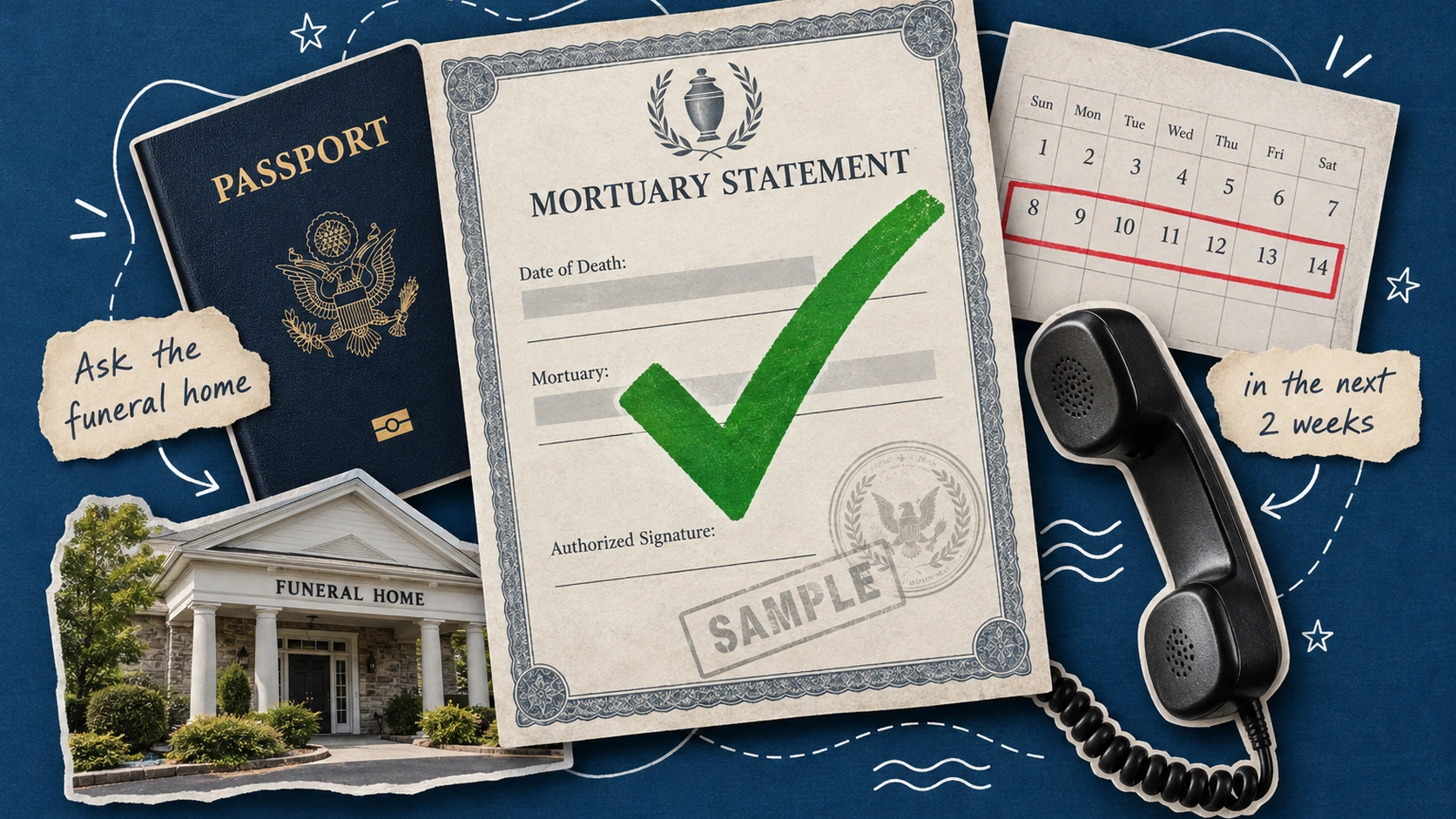
The Department defines this narrowly. A life-or-death emergency is a serious illness, injury, or death in your immediate family that requires you to travel outside the United States "in the next 2 weeks." You can schedule the appointment "up to 2 weeks before your international travel."
Two weeks is the whole window, in both directions. That single fact governs everything else in this article, including why the obvious document is usually the wrong one to chase.
The Relative List Is Shorter Than People Assume
The Department publishes exactly who counts as immediate family for this purpose: "Parent or legal guardians, children, spouses, siblings, grandparents."
And it states the exclusion directly: "aunts, uncles, cousins, or other relatives" do not qualify.
This is worth reading twice before anyone calls, because it excludes relationships that families experience as immediate. An aunt who raised you, a cousin you grew up beside, a parent-in-law: none of them is on the list. Grandparents are, which surprises people in the other direction. If the relationship is not on the list, this appointment is not available, and the honest planning answer is the ordinary expedited route rather than a phone call that will not succeed.
The Three Documents, and the One You Can Actually Get Today
The Department accepts one of three proofs:
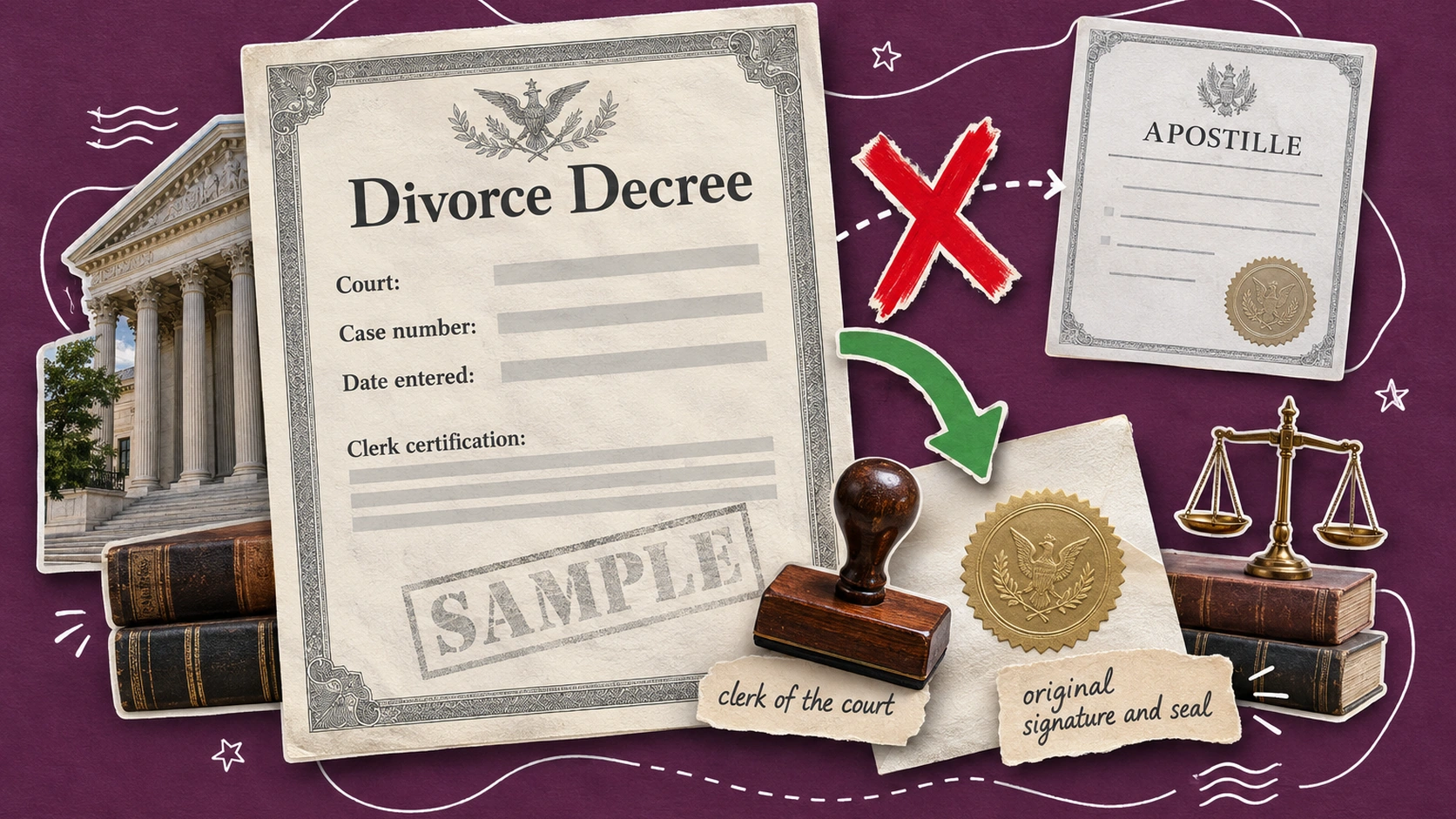
- a death certificate;
- a statement from a mortuary;
- a letter from the hospital, which "must be on hospital letterhead, signed by a doctor, and explain your relative's medical condition."
Now put that menu against the two-week clock, because this is the part no checklist explains.
A certified death certificate takes longer than this appointment is built for in most states. The record has to be registered first, which depends on a medical certifier completing the cause of death, and only then can certified copies be issued. Our guide to how long a death certificate takes covers why, and the registration sequence explains the mechanism. For a death that happened yesterday, the certificate is frequently not available yet at any price.
The mortuary statement is the document to ask for. The funeral home is already involved, it can produce a signed statement the same day, and it is on the Department's list as an equal alternative rather than a fallback. For an illness rather than a death, the hospital letter plays the same role, and the three requirements the Department names (letterhead, a doctor's signature, an explanation of the condition) are what to specify when you ask for it.
We want to be direct about the implication, because it runs against what a vital records company might be expected to say: do not try to order a certified death certificate in order to make this appointment. On this timeline it is the wrong instruction. Ask the funeral home for a statement.
The Numbers, Including the One for 2 a.m.
Appointments are made by phone, through the National Passport Information Center:
- 877-487-2778, weekdays 8:00 a.m. to 8:00 p.m. Eastern.
- 888-874-7793 for TDD/TTY.
- 202-647-4000 on weekends, federal holidays, and after 8:00 p.m. Eastern.
That last number is the detail worth writing down, because deaths do not arrange themselves around business hours. A family that learns of a death at 11 p.m. on a Saturday does not have to wait until Monday to start.
What the Department Does Not Publish
Two honest gaps. There is no published processing time for the emergency appointment itself, so nobody should promise a family a number of hours. And nothing published describes what happens if an appointment request is refused. If you are told the circumstances do not qualify, the question to ask on that call is what the next fastest option is for your specific travel date.
The details above come from the Department's own page on life-or-death emergencies. Passport URLs were reorganized in the 2026 site redesign, so confirm the relative list and the accepted documents on the Department's current page before relying on them, and treat the phone numbers the same way.
Before You Need It
Here is the part that actually changes outcomes, and it belongs to the weeks before an emergency rather than the hours after one.
The households that get through this fastest are the ones that already held certified copies of the records they would be asked for. Not for this appointment, which takes a mortuary statement, but for everything that follows it: the estate, the insurer, the pension, the bank, the airline in some cases, and the foreign authority if the death happened abroad. Families routinely discover they need five or six certified copies and have none.
When a relative is seriously ill is an uncomfortable but genuinely better time to put the paperwork in order than the week after a death, when every office involved is slower and the family has less capacity to deal with it. If you are in that position, certified copies of a death certificate can be ordered from the state where the death occurred once the record exists, and our checklist for what to do when a parent dies sets out what else will be asked for. Vital Records Online is a third-party service and not a government agency; certificates are issued by the state's vital records office, and the Department of State alone schedules and decides emergency appointments.
Frequently Asked Questions
What counts as a life-or-death emergency for a passport? A serious illness, injury, or death in your immediate family that requires international travel within the next two weeks.
Which relatives qualify? Parents or legal guardians, children, spouses, siblings, and grandparents. The Department states that aunts, uncles, cousins, and other relatives do not qualify.
Do I need a death certificate for the emergency appointment? Not necessarily. The Department accepts a death certificate, a statement from a mortuary, or a hospital letter on letterhead signed by a doctor. The mortuary statement is usually the only one available quickly enough.
Can I make the appointment outside business hours? Yes. The National Passport Information Center line runs weekdays 8:00 a.m. to 8:00 p.m. Eastern, with a separate number for weekends, holidays, and after 8:00 p.m.
How fast will the passport be issued? The Department publishes no processing time for the emergency appointment, so no specific turnaround should be assumed or promised.