How to Get a Notarized Copy of a Birth Certificate
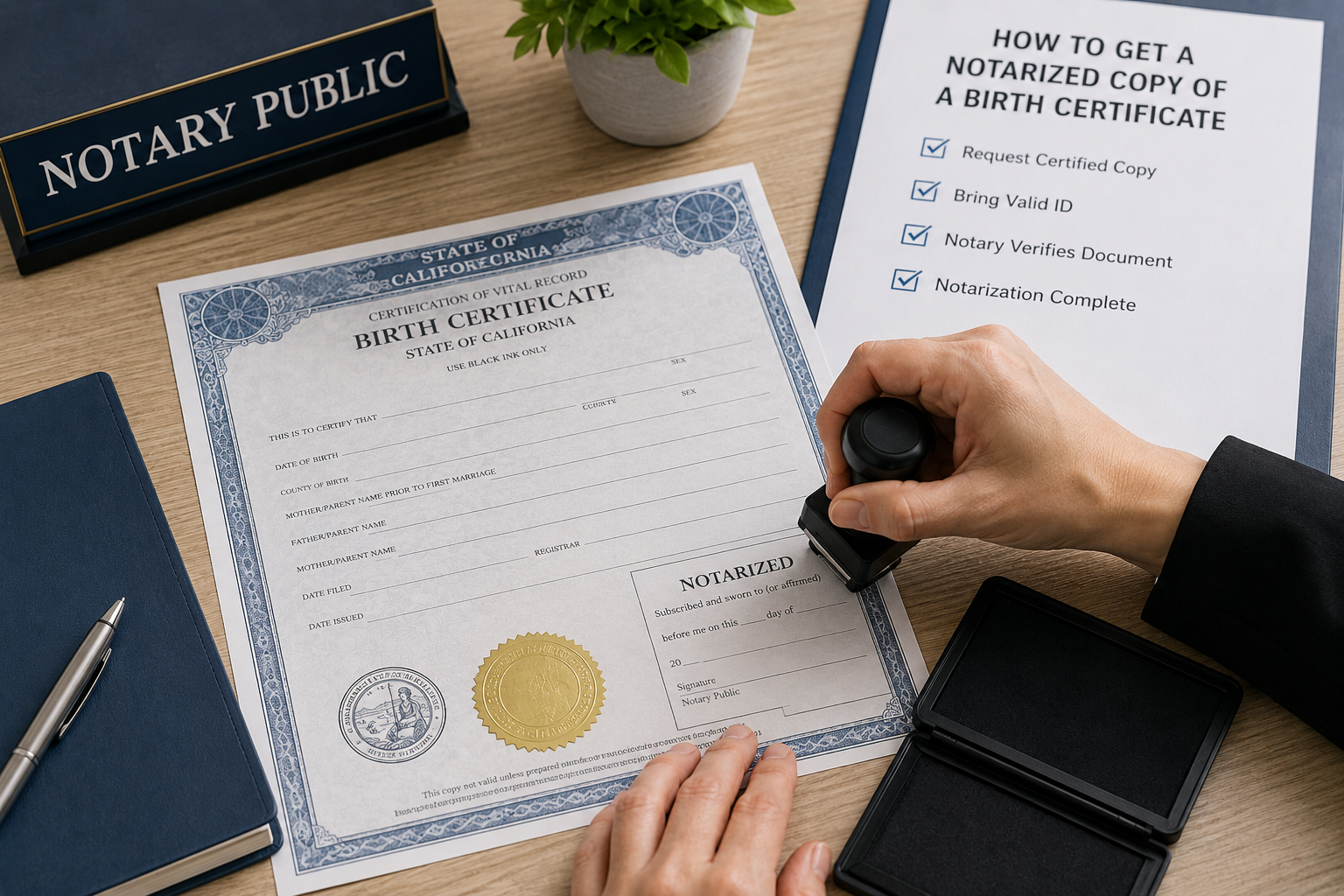
If someone has asked you for a notarized copy of a birth certificate, it helps to know exactly what they mean — because the term gets used loosely, and the right document depends on the situation. This guide clears up the confusion and shows you the fastest way to get what you actually need.
First, an important distinction
There are two different things people call a “notarized birth certificate,” and they are not interchangeable:
- A certified copy is an official duplicate issued by the state or county vital records office. It carries a raised or embossed seal and the registrar’s signature. For most legal and government purposes — passports, Social Security, school enrollment, REAL ID — this is what’s required, and a notary cannot replace it.
- A notarized copy is a regular photocopy accompanied by a notary’s statement. Importantly, in most U.S. states a notary cannot certify a copy of a vital record, because birth certificates are government-issued records. Notaries usually notarize a signature or an affidavit — not the certificate itself.
The practical takeaway: when an institution says “notarized,” they very often mean certified. When in doubt, ask whether they need a certified copy from the issuing office or a notarized affidavit.
When notarization actually comes up with birth certificates
Notarization does play a legitimate role in a few birth-certificate scenarios:
- Application forms. Some states require the request form for a certified copy to be signed in front of a notary to verify the requester’s identity.
- Affidavits and sworn statements. Correcting or amending a record, or requesting one on behalf of someone else, can require a notarized affidavit.
- International or translation use. A notarized translation of a birth certificate is sometimes requested for foreign institutions (though for international legal use, an apostille is usually what’s needed).
How to get what you need
If you need a certified copy
Order one from the issuing state or county. You can do this in person, by mail, or online. VRO’s guided birth certificate service walks you through your state’s exact requirements and files the application for you — and for states that require the application to be notarized, VRO offers secure online notarization so you can complete that step from home, without booking an in-person appointment.
If you genuinely need notarization
- Confirm with the requesting party whether they need a certified copy, a notarized application, or a notarized affidavit.
- If it’s a signature or affidavit, you can use a remote online notary — no appointment or travel required.
- Keep the original certified copy safe; provide notarized affidavits or copies only where specifically requested.
How to make sure your copy is legitimate
A valid certified copy has a registrar’s signature and an embossed, raised, or multicolor seal — not just a printed stamp. If you’re unsure, our guide on how to know if a birth certificate is official explains exactly what to look for. You may also want to confirm whether you need the long form or short form, since some agencies only accept the long-form version.
Note: Vital Records Online is a privately owned service that helps you prepare and file applications, including remote notarization where a state requires it. We are not a government agency.