Social Security Fairness Act: What It Means and the Vital Records You Need to Claim Your Benefits
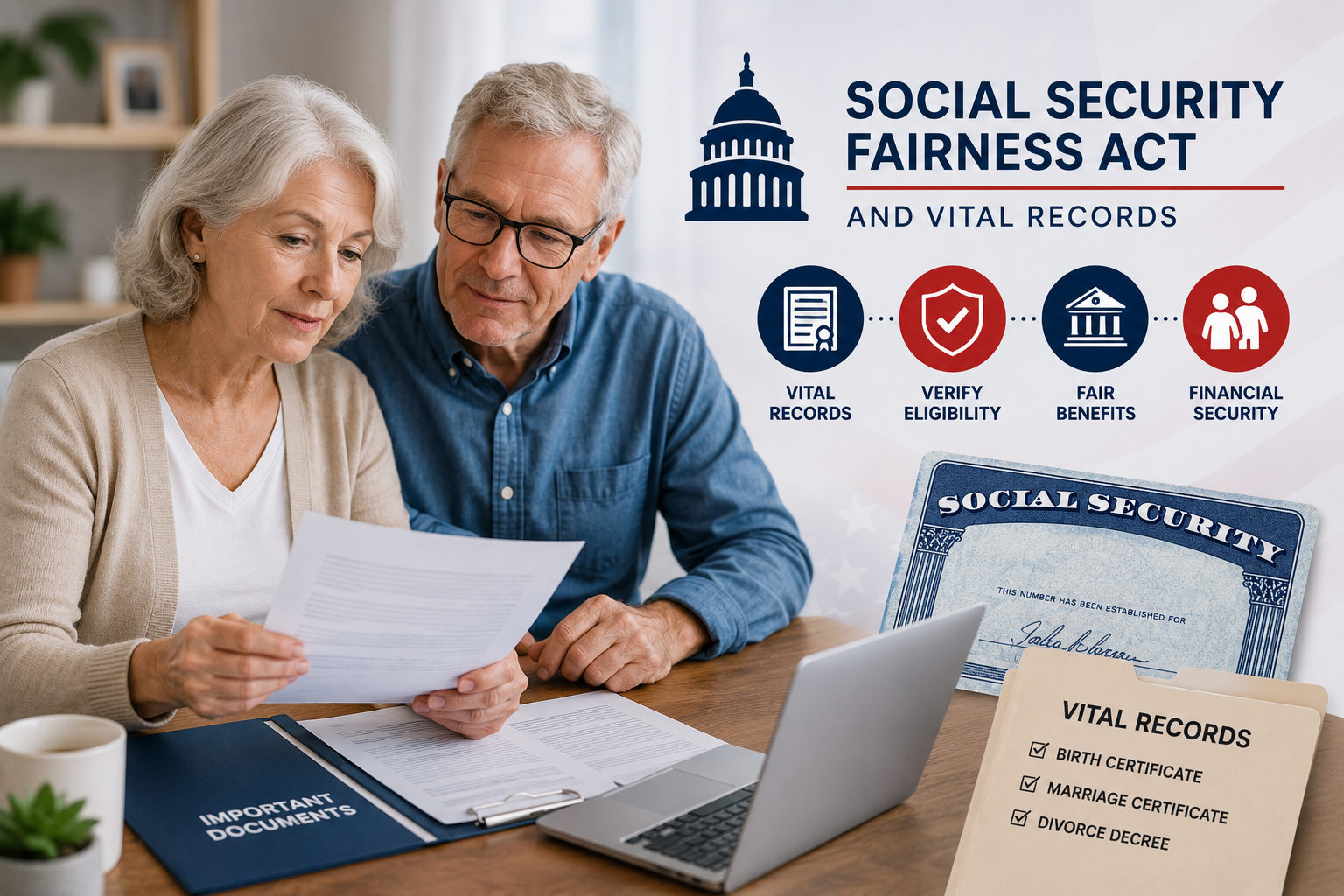
If you’re a teacher, firefighter, police officer, postal worker, or other public-sector employee — or the spouse or survivor of one — the Social Security Fairness Act may have just made you eligible for higher Social Security benefits, or for benefits you were previously denied entirely. For many, the next step to claiming them involves a document you may not have on hand: a certified marriage or death certificate.
Here’s a plain-English explanation of what the law changed, who it affects, where things stand in 2026, and the vital records you may need to claim what you’re owed.
What Is the Social Security Fairness Act?
Signed into law on January 5, 2025, the Social Security Fairness Act permanently repealed two long-criticized rules that reduced Social Security benefits for people who also receive a public pension from work not covered by Social Security:
- The Windfall Elimination Provision (WEP), which reduced a worker’s own Social Security benefit.
- The Government Pension Offset (GPO), which reduced — and often eliminated — spousal and survivor benefits.
Both provisions stopped applying as of benefits payable for January 2024 (December 2023 was the last month they applied). In practical terms, millions of public servants who saw their benefits slashed for decades are now eligible for the full amount.
Who Is Affected?
About 3.2 million people are affected, including teachers, firefighters, police officers, and many state, local, and federal employees whose pensions came from non-covered employment:
- Roughly 2.8 million workers were subject to the WEP, with an average benefit reduction of about $480 per month.
- Roughly 735,000 people were affected by the GPO, which cut spousal and survivor benefits by an average of about $700 per month.
The GPO group matters most for this discussion: many of these spouses and widows or widowers received nothing from Social Security before — so many never applied at all. Now that the offset is gone, they may need to file a new claim.
Where Things Stand in 2026
The Social Security Administration moved quickly. It began adjusting monthly payments on February 25, 2025, and by July 2025 had issued more than 3.1 million payments totaling roughly $17 billion — months ahead of schedule. Most beneficiaries who were already receiving Social Security saw their monthly amount rise automatically, plus a one-time retroactive payment covering the increase back to January 2024.
As of 2026, the SSA is still working through more complex cases — particularly those involving spousal and survivor benefits where a new application or additional documentation is required. If you fall into that group, having your paperwork ready can prevent further delay.
The Vital Records You May Need to Claim Your Benefits
If your monthly benefit simply increased, you likely didn’t need to do anything. But if you’re newly eligible — especially for spousal or survivor benefits that the GPO used to wipe out — you may need to file a claim and prove your relationship. That’s where certified vital records come in:
- To claim your own retirement benefit: a certified birth certificate to establish your age and identity.
- To claim spousal benefits: a certified marriage certificate proving your marriage.
- To claim survivor (widow/widower) benefits: your spouse’s certified death certificate, plus your marriage certificate to establish the relationship.
Because a survivor benefits application hinges on documenting your relationship to the deceased, these records are often the difference between a smooth claim and a stalled one. For more on what the SSA expects, see our overview of the documents needed to apply for Social Security benefits.
What You Should Do Now
- Confirm whether you were affected. If you receive a public pension from non-covered work, or you’re the spouse or survivor of someone who did, you may now qualify for new or higher benefits.
- Make sure the SSA can reach you. Verify that your mailing address and direct-deposit details are current with Social Security.
- Gather your vital records. Locate certified copies of your birth, marriage, and (if applicable) a spouse’s death certificate before you file.
- Replace anything missing. If a certificate is lost or you never had a certified copy, order one now so it doesn’t delay your claim.
Frequently Asked Questions
Do I need to apply to get my higher benefit?
If you were already receiving Social Security, the increase and back payment were generally applied automatically. If you never received benefits because the GPO eliminated them, you may need to file a new application.
Will I get back pay?
Eligible beneficiaries receive a one-time retroactive payment covering the increase back to January 2024, when the WEP and GPO stopped applying.
What documents do I need to claim survivor benefits?
Typically your spouse’s certified death certificate and your marriage certificate, along with proof of your own identity. Requirements can vary, so confirm with the SSA.
Where can I check my status?
Contact the Social Security Administration directly or review the official Social Security Fairness Act page on SSA.gov.
Have Your Documents Ready Before You File
The Social Security Fairness Act corrected a decades-old reduction that affected millions of public servants and their families — but claiming spousal or survivor benefits still comes down to proving your relationships with certified records. If you need a certified marriage certificate, birth certificate, or a loved one’s death certificate, Vital Records Online can help you request them quickly and securely, so missing paperwork doesn’t stand between you and the benefits you’ve earned.
This article is for general informational purposes only and is not financial, legal, or tax advice. Benefit eligibility and documentation requirements vary by individual situation. For guidance specific to your case, consult the Social Security Administration or a qualified advisor.