Baby Savings Accounts in 2026: How “Trump Accounts” Work and What You Need to Open One

For the first time, the federal government is giving newborn Americans a financial head start at birth. The new Trump Account — often searched as a “baby savings account” or “newborn savings account” — is a tax-advantaged investment account for children, and eligible babies receive a one-time $1,000 deposit from the U.S. Treasury to get started.
If you’re a new or expecting parent, this is one of the most consequential savings opportunities to come along in years. But before your child can be enrolled or claim that $1,000, there’s a foundational step many parents overlook: your child needs a valid Social Security number, and that depends on having their birth officially registered and a certified birth certificate on hand.
Here’s a complete, up-to-date guide to how Trump Accounts work in 2026, who qualifies, how to open one, and the documents you’ll need first.
What Is a Trump Account (Baby Savings Account)?
A Trump Account is a new type of tax-deferred savings and investment account for children, created under the 2025 federal tax law often referred to as the “Working Families Tax Cuts.” You may also see it called a “Trump account for kids,” a “MAGA baby account,” or simply a baby or newborn savings account.
In structure, a Trump Account works much like an individual retirement account (IRA) for a child. Money contributed to the account is invested and grows over time, and the funds are generally locked until the child reaches adulthood. What makes the program unique is the government seed deposit: as part of a pilot program, the Treasury will deposit $1,000 into the account of every eligible child born during a specific window.
According to the IRS, the response has already been substantial — roughly 4 million children have been signed up, with about 1 million families claiming the $1,000 pilot contribution.
The $1,000 Seed Deposit: Who Qualifies?
The headline benefit is the one-time $1,000 federal contribution. To qualify for it, a child must meet all of the following conditions:
- Born between January 1, 2025, and December 31, 2028. This is a four-year pilot window. Children born outside these years can still have a Trump Account opened for them, but they do not receive the $1,000 government seed.
- Be a U.S. citizen. The child must be a United States citizen at birth.
- Have a valid Social Security number (SSN). No SSN, no account and no seed deposit. (Wondering how the two relate? See whether birth certificates include a Social Security number.)
- Have no prior pilot election. The $1,000 can only be claimed once per eligible child.
The $1,000 is a true gift — it does not count against your annual contribution limit and you don’t have to match it. It simply gives your child’s account a starting balance that can grow for 18 years.
Key Dates and Timeline
The program rolls out on a specific schedule, so timing matters:
- May 2026: The IRS begins sending account activation information to families who have registered.
- July 4, 2026: Contributions to Trump Accounts cannot be made before this date.
- July 5, 2026: Accounts officially go live and become active.
An official Trump Accounts app is available in the Apple App Store and on Google Play, and families can also register online at trumpaccounts.gov.
How Much Can You Contribute?
Beyond the government seed, families can add their own money:
- Up to $5,000 per year can be contributed to a child’s Trump Account (this limit is adjusted for inflation after 2027).
- Employers can contribute up to $2,500 per year on behalf of an employee’s child — but that amount counts toward the same $5,000 annual cap.
- Contributions are not limited by the child’s own income, which makes the account practical for babies and young children who don’t earn wages.
Anyone — parents, grandparents, relatives, and family friends — can contribute, making the account a natural choice for birthday and holiday gifts that grow over time.
How the Money Is Invested — and When It Can Be Withdrawn
Until the child turns 18, the funds are invested in low-cost U.S. stock index funds. After the child reaches 18, the account converts and follows traditional IRA rules.
Withdrawal rules are strict, and parents should understand them before contributing heavily:
- Money generally cannot be withdrawn before January 1 of the year the child turns 18.
- After 18, the account behaves like a traditional IRA. Earnings withdrawn before age 59½ are typically taxed as ordinary income and may carry a 10% early-withdrawal penalty, unless used for a qualifying exception such as higher-education expenses.
How to Open a Trump Account and Claim the $1,000
There are two main paths to enroll your child and claim the seed deposit:
- File IRS Form 4547 with your 2025 federal tax return to claim the pilot contribution, or
- Register online at trumpaccounts.gov (or through the official Trump Accounts app).
In both cases, you will need your child’s legal name, date of birth, and — critically — their Social Security number. This is where many parents hit a snag, and where your vital records come in.
The First Document You Actually Need: A Certified Birth Certificate
You can’t open a Trump Account or claim the $1,000 without a valid SSN for your child. And an SSN, in turn, depends on your child’s birth being officially registered.
For most families this happens automatically. Through a process called Enumeration at Birth, hospitals and birthing centers send your baby’s birth registration information to the Social Security Administration, which assigns an SSN and mails the card — usually within a few weeks. About 99% of newborn SSNs are issued this way.
But not every family is covered by that automatic process. You may need to apply for your child’s SSN separately — using Form SS-5 and a certified copy of the birth certificate as proof of age, identity, and citizenship — if any of the following apply:
- You did not request an SSN during the hospital birth-registration process.
- Your baby was born at home or outside a hospital setting. (Here’s how to get a birth certificate for a home birth.)
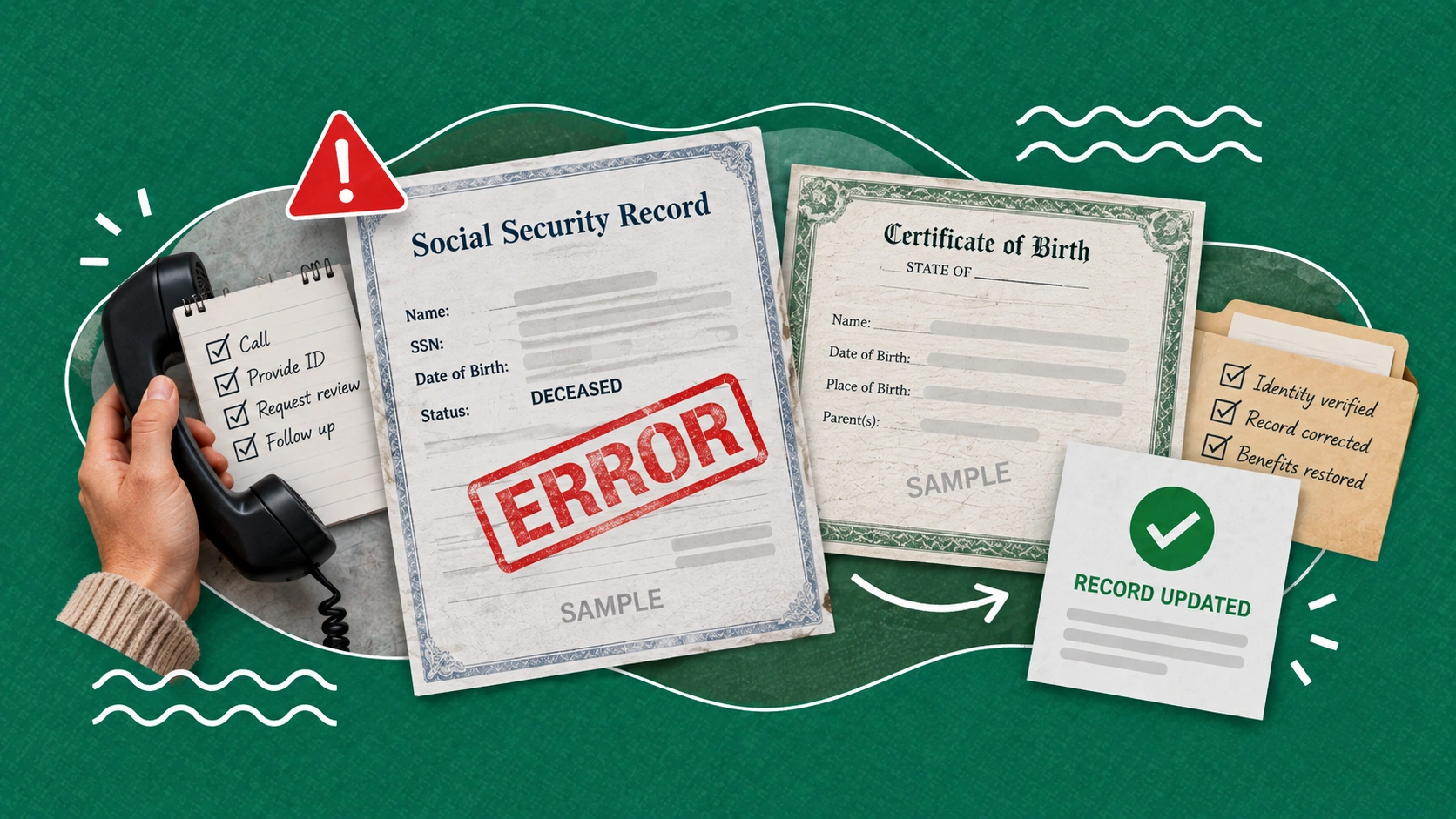
- The card never arrived, or the information needs to be corrected.
- You need to verify your child’s citizenship or identity to confirm eligibility for the program.
In short: a certified birth certificate is the foundation document that unlocks the SSN, which in turn unlocks the Trump Account and the $1,000 seed. If you don’t already have a certified copy of your child’s birth certificate — or you’ve misplaced the one you received — it’s worth ordering one now (and expediting it if needed) so a missing document doesn’t cost you the deadline.
Trump Account vs. 529 Plan: What’s the Difference?
Many parents already saving for college wonder whether a Trump Account replaces a 529 plan. They serve different purposes, and many families use both.
| Feature | Trump Account | 529 Plan |
|---|---|---|
| $1,000 government seed | Yes (for eligible 2025–2028 births) | No |
| Annual contribution limit | $5,000 | Much higher (gift-tax limits apply, e.g., $19,000 per giver) |
| Tax treatment of earnings | Taxed as ordinary income on withdrawal | Tax-free for qualified education expenses |
| Investment options | U.S. stock index funds only (until 18) | Diversified, age-based portfolios |
| Access before 18 | Generally not allowed | Allowed for qualified education costs |
| Primary purpose | Long-term, retirement-style savings | Education savings |
The takeaway: the Trump Account’s standout feature is the free $1,000 and its long-horizon, IRA-style growth. A 529 remains the stronger vehicle for tax-free college savings. For babies born in the 2025–2028 window, claiming the free $1,000 is close to a no-brainer — whether or not you also keep a 529.
Frequently Asked Questions
Is the $1,000 really free?
Yes. For eligible children born between 2025 and 2028, the $1,000 is a one-time government deposit. You don’t repay it and it doesn’t reduce how much you can contribute yourself.
My baby was born in 2024. Can I still open an account?
A Trump Account can be opened for children outside the pilot window, but only children born from 2025 through 2028 receive the $1,000 seed deposit.
What if my child doesn’t have a Social Security number yet?
You’ll need to obtain one before enrolling. If it wasn’t issued automatically at birth, apply with the Social Security Administration using Form SS-5 and a certified copy of your child’s birth certificate.
Can grandparents and relatives contribute?
Yes. Anyone can contribute, up to the combined $5,000 annual limit per child.
When can my child use the money?
Funds are generally locked until the year the child turns 18, after which traditional IRA rules apply.
Don’t Let a Missing Document Cost You $1,000
The Trump Account program offers eligible newborns a rare, government-funded financial head start — but every step depends on your child being properly documented. A valid Social Security number is required to enroll, and a certified birth certificate is the document that establishes your child’s identity, age, and citizenship behind that number.
If you don’t have a certified copy of your child’s birth certificate, Vital Records Online can help you request one quickly and securely, so you’re ready to enroll and claim every dollar your child is entitled to.
This article is for general informational purposes only and is not financial, tax, or legal advice. Program rules and dates are subject to change. For the most current details on Trump Accounts, consult the IRS and a qualified financial or tax professional.