TSA's $45 ConfirmID Fee: What It Costs to Fly Without a REAL ID, and the Cheaper Fix
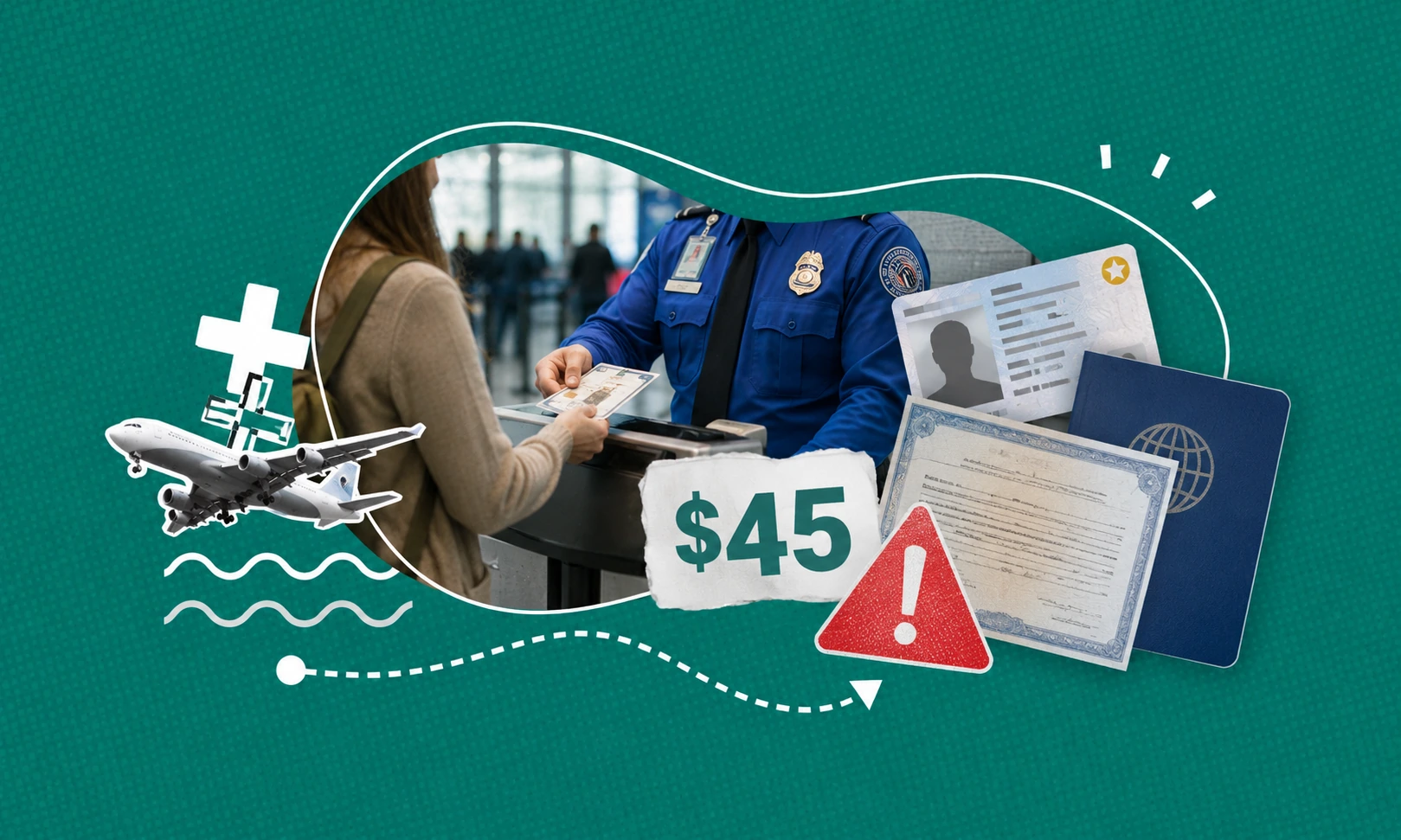
If you show up at the airport without an acceptable ID, you are no longer simply turned away or waved through at an officer's discretion. Since February 1, 2026, TSA charges a $45 ConfirmID fee for travelers 18 and older who cannot present acceptable identification, and paying it buys an attempt at verification, not a guaranteed trip through security.
This article is about the fee and what it does and does not get you. It is not an explainer on REAL ID. For that, see what a REAL ID is and how to obtain one. Details below were verified on Pay.gov, the U.S. Treasury payment system that processes the fee, on August 31, 2026.
What the $45 Actually Buys
The fee is described plainly by the government: if you cannot provide required acceptable ID such as a passport or REAL ID, you can pay $45 to use TSA ConfirmID, and TSA will then attempt to verify your identity so you can go through security. Three constraints come attached, and each one surprises people.
- It expires in ten days. The payment is valid for 10 days from the travel start date you enter when you pay. Travel after that window and you pay again.
- You have to carry the receipt. You must bring a printed or electronic copy of your ConfirmID payment receipt and show it at the TSA checkpoint each time you travel without acceptable ID during that 10-day period.
- It is per traveler. Each traveler 18 or older without acceptable ID must complete the process separately. A family of three adults is three fees.
There Is No Guarantee It Works
This is the part worth sitting with. The government's own language is that TSA "will then attempt to verify your identity so you can go through security; however, there is no guarantee TSA can do so."
You are not buying passage. You are buying an attempt. And the stated consequence of not using ConfirmID is equally direct: if you choose not to use it and do not have acceptable ID, you may not be allowed through security and may miss your flight. So the $45 improves your odds without settling them.
Why This Is a Toll, Not a Fix
Think about what you own after paying. Ten days from now, nothing. The next trip starts the same conversation, and costs the same $45 again, with the same absence of a guarantee.
Now think about what you own after sorting out the underlying document. A compliant ID is a one-time errand that ends the problem for years. It works at every checkpoint, every trip, without a receipt to keep track of and without a payment window running in the background.
That is the entire comparison worth making: a recurring toll against a one-time errand. One of them scales with how often you fly. The other does not.
The Document Most People Are Actually Missing
Here is the practical bottleneck. Most people who cannot get a compliant license are not stuck at the airport; they are stuck at the DMV, and the item they are missing is a certified birth certificate.
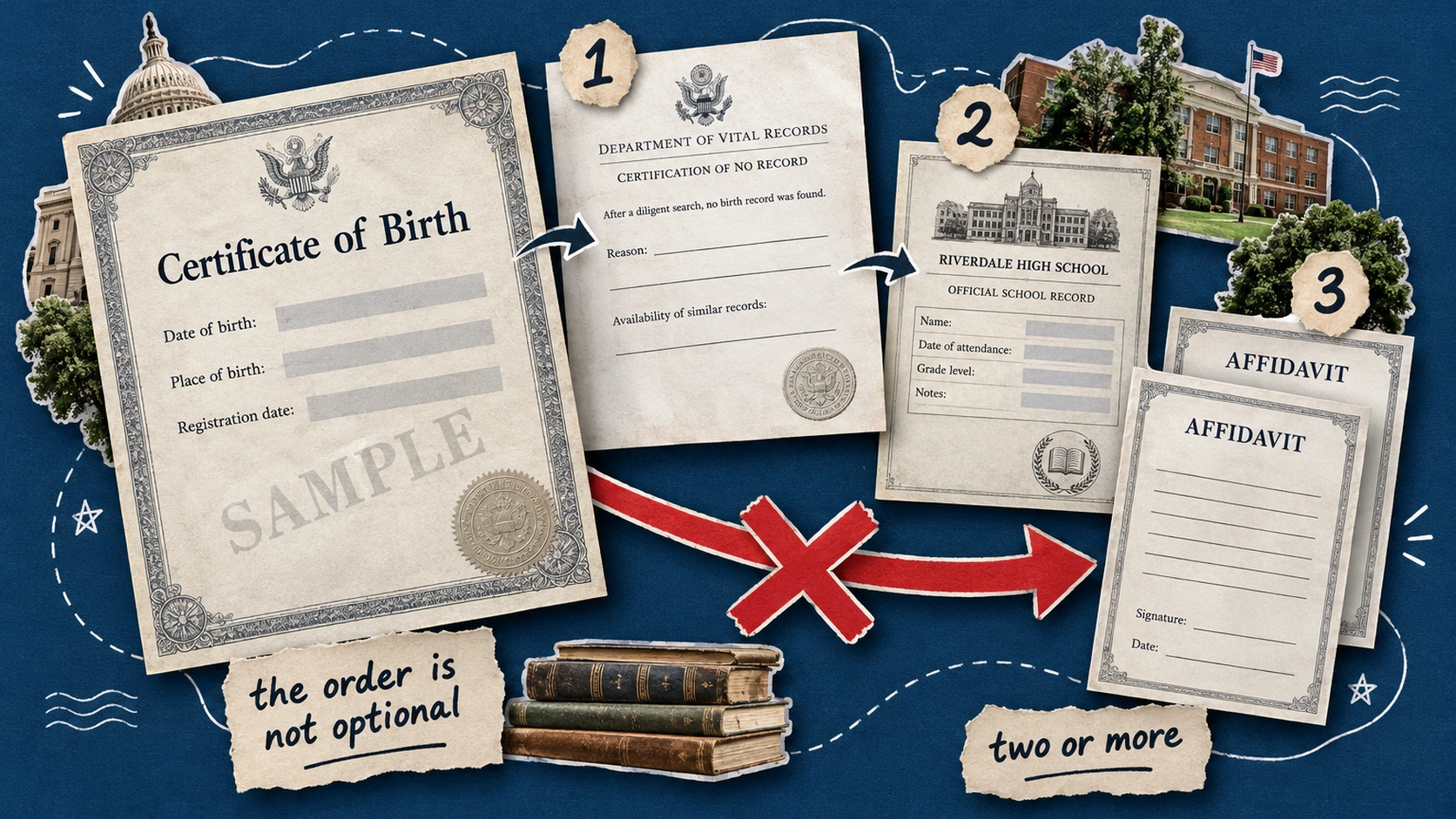
State motor vehicle agencies generally require proof of identity and lawful status to issue a compliant credential, and a certified birth certificate is the document that most often satisfies it for U.S.-born applicants. A photocopy will not do, and neither will the decorative hospital certificate with the footprints. Our overview of acceptable forms of U.S. ID and the FAQ on whether you need a birth certificate for a REAL ID cover what the DMV expects.
If your name has changed since birth, the birth certificate alone will not be enough; you will need the documents that link your birth name to your current one. Our guide on building the document chain the DMV will accept covers that case.
A Warning About Timing
If you are flying next week, do not treat any document as a same-week rescue. Government processing takes the time it takes, and nothing about ordering a record today changes what you can present at a checkpoint on Friday. For an imminent trip without acceptable ID, ConfirmID may be the only option available to you, and that is exactly the situation the fee is designed for.
The document is the answer to the next trip, and the one after that. Treat the two decisions separately rather than hoping one solves the other.
Details Worth Knowing Before You Pay
- Children under 18 do not need ID for domestic flights. The fee applies to travelers 18 and older.
- Someone else can pay for you, but the traveler's information must be entered correctly.
- Payment runs through Pay.gov and accepts a bank account, debit or credit card, PayPal, or Venmo.
- You can pay in advance or at the airport, though paying in advance means one less thing going wrong at the checkpoint.
- Watch the email address you enter. The receipt arrives by email from Pay.gov, and the receipt is what you have to show.
The government's own advice on the payment page is blunt about the long-term answer: to avoid paying this fee in the future, get a REAL ID.
If the missing piece is your birth certificate, you can order a certified copy and take it to your DMV appointment. Vital Records Online is a third-party service and not a government agency; you can also apply directly to your state's vital records office.
Frequently Asked Questions
How much is the TSA ConfirmID fee? $45, for air travelers 18 and older who do not have an acceptable form of identification.
How long is the ConfirmID payment good for? Ten days from the travel start date you enter when you pay. Traveling after it expires means paying again.
Does paying guarantee I get through security? No. TSA states it will attempt to verify your identity and that there is no guarantee it can do so.
Do I need to show anything at the checkpoint? Yes. Bring a printed or electronic copy of your payment receipt and show it each time you travel without acceptable ID during the 10-day window.
Do children need to pay? No. Children under 18 do not need ID for domestic flights. Check with your airline about unaccompanied minors.