Apostilling a Death Certificate: Settling an Estate, Pension, or Property Abroad
A bank in Lisbon has frozen an account. A pension office in Manila has stopped payments and wants proof. A land registry in Guadalajara will not transfer a title. In each case someone has told the family the same thing: send the death certificate, apostilled. And in each case a clock started running before the family had any idea a clock existed.
This article is about the death case specifically: the sequencing, the extra copies, and the order the steps have to happen in. It assumes you already know what an apostille is and which authority issues one; our guide to apostilles for U.S. vital records used abroad covers both, and the death certificate apostille glossary entry defines the term.
Why "Certified" Is Not Enough
Families reasonably assume that a certified copy, the real thing with a raised seal and the registrar's signature, is the strongest version of the document and therefore sufficient anywhere. Inside the United States that is true.
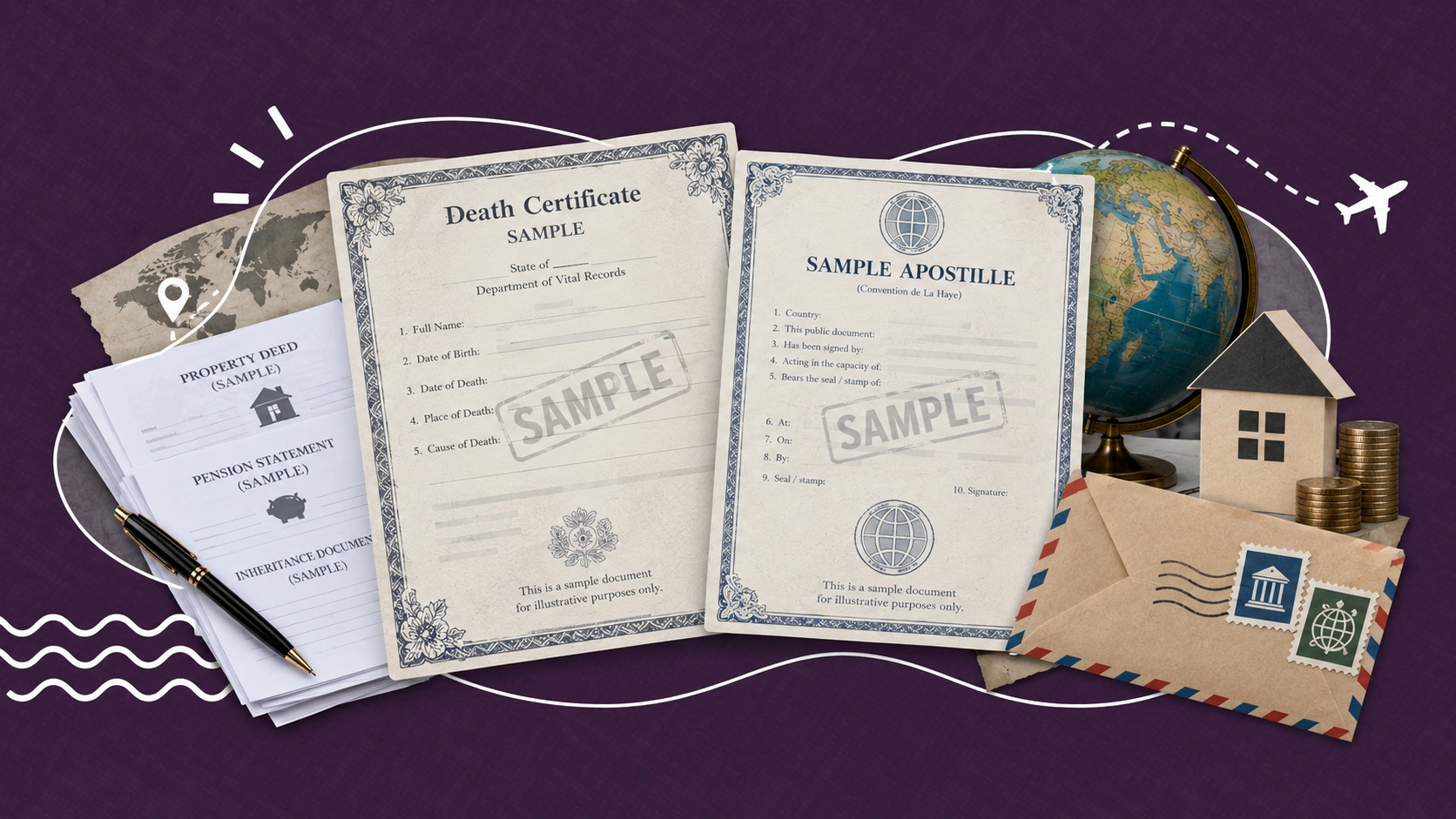
A foreign institution has a different problem. It has no way to know what a certified death certificate from Ohio or New Mexico is supposed to look like, whose signature belongs on it, or whether the seal is genuine. The apostille solves exactly that: it is a standardized certificate from a competent authority attesting that the signature and seal on your document are authentic.
So certification and authentication answer two different questions. Certification says the record is a true copy of what the state holds. The apostille says the official who certified it was who they claimed to be. A foreign registrar needs the second one, and no number of certified copies substitutes for it.
The Sequencing Problem That Is Specific to Death
Here is what makes the death case harder than a birth or marriage apostille, and it is structural rather than bureaucratic.
With a birth certificate, the record has existed for decades. You order a certified copy and the only wait is the state's processing time. With a death, the record does not exist yet when the foreign deadline starts running. The sequence is:
- The death is registered by the state, on the state's timeline.
- A certified copy becomes orderable, and you wait for it.
- Only then can the certified copy go to the competent authority for the apostille, and you wait again.
- Then it travels internationally, and you wait a third time.
Three sequential waits, none of which can be run in parallel, and the foreign institution started counting from the date of death. Families routinely discover the apostille requirement at step three, having assumed the certified copy in their hand was the finish line.
What to Do About It
Two things, both early. First, ask the foreign institution what it requires in writing, at the first contact, before you order anything, specifically whether it needs an apostille, whether it needs a translation, and in what order. Second, tell them the document is in process. An institution that knows a certified copy is pending will often hold a file open that it would otherwise close.
Our FAQ on how long after a death you can get a death certificate covers the first wait, and the state processing time reference shows how much that varies.
Order More Copies Than You Think You Need
This is the single most useful instruction in this article, and the reason is not the one people assume.
An apostille is affixed to a specific certified copy, and the foreign agency keeps it. That copy is gone. It does not come back, it cannot be photocopied into a second usable original, and if a second foreign institution needs one, the entire chain starts again from the state vital records office.
So count the destinations before you order: the bank, the pension administrator, the land registry, the court, the insurer, and any U.S. institution that will want an unapostilled certified copy for domestic use. Order for all of them at once. A second order means a second state processing wait, a second apostille wait, and a second international mailing, on a deadline that has already been running for weeks.
This is also why ordering "one for the file" is a false economy in cross-border estates. Domestic matters and foreign matters each consume their own copies.
Translation Usually Comes After the Apostille, Not Before
Many receiving countries require a certified translation, and the order matters more than it seems.
The apostille is itself a document with text on it. A receiving authority that wants everything in its own language typically wants the certificate and the apostille translated, which means the translation cannot be done until the apostille exists. Translating first and apostilling after usually produces a file that has to be redone.
The apostille does not create the translation requirement and does not satisfy it. That requirement comes from the receiving country, along with rules about who is qualified to translate and how the translation must be certified. Ask, in the same first conversation, whether they want the apostille translated too.
Non-Hague Destinations Are a Different Route
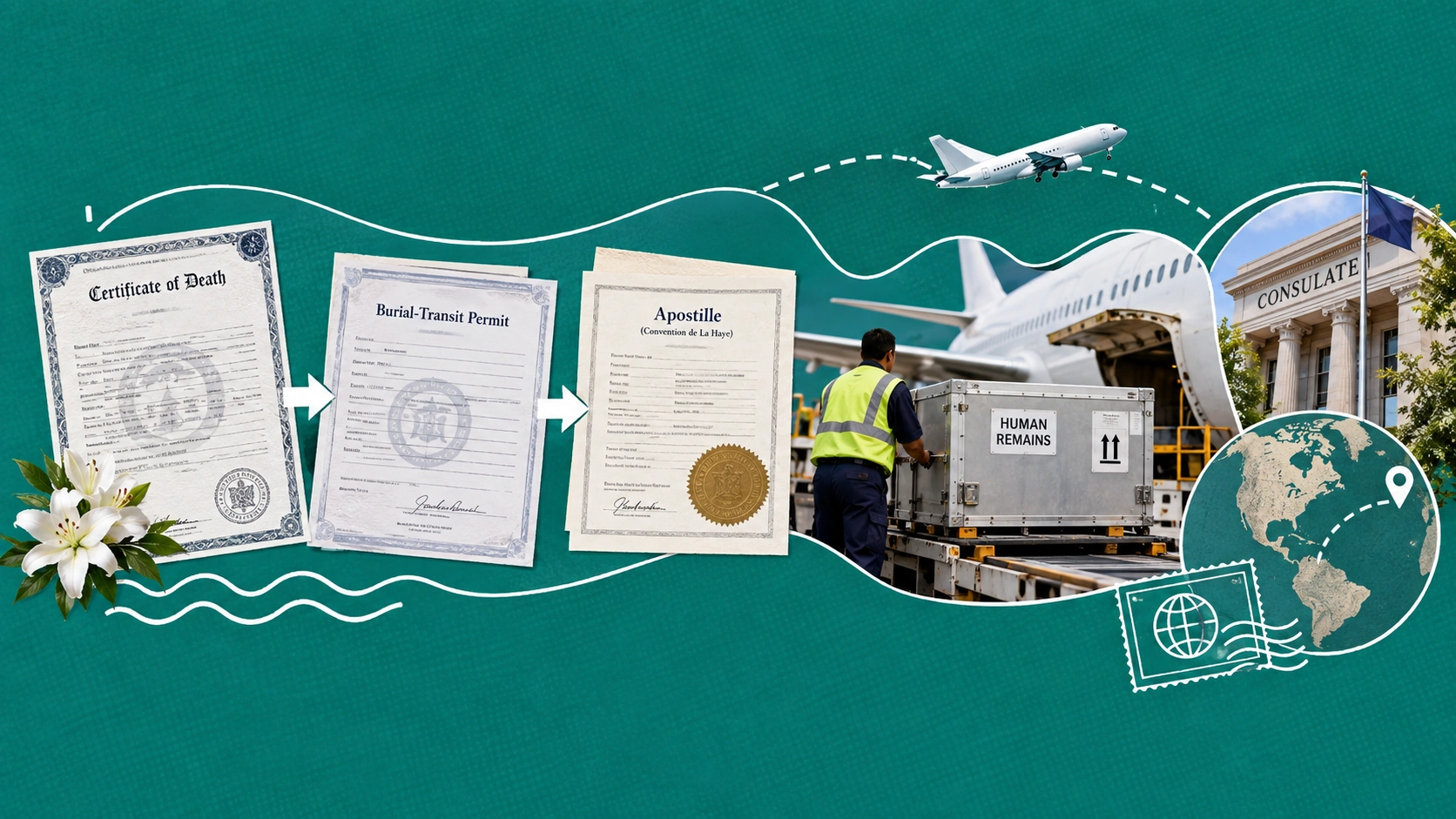
Everything above assumes the destination country is in the Hague Apostille Convention. If it is not, the document goes through legalization instead, generally authentication followed by certification at that country's embassy or consulate, which adds steps and time.
Confirm the destination country's status before you plan the timeline, because the two routes are not interchangeable and submitting the wrong one is a full restart.
Before You Start
- Get the requirement in writing from the foreign institution: apostille or legalization, translation or not, and in what order.
- Count every destination and order that many certified copies at once.
- Confirm fees and turnaround with the competent authority in the issuing state. These vary by state and change; do not plan around a figure you read somewhere.
- Tell the foreign institution the document is in process so a deadline does not lapse silently.
The one thing you can start immediately is the certified copy, because nothing else can happen until it exists. You can order certified death certificates from the state where the death occurred, and our apostille services can help prepare them for the receiving country. Our estate planning resources cover the other documents a cross-border estate tends to require. Vital Records Online is a third-party service and not a government agency.
Frequently Asked Questions
Why does a foreign bank need an apostille instead of a certified copy? A certified copy proves the record is a true copy of what the state holds. The apostille proves the official who certified it was genuine, which is what a foreign institution cannot otherwise verify.
How many certified copies should I order? One for every institution that will keep one, plus copies for domestic use. The apostilled copy is kept by the foreign agency and does not come back.
Should the translation be done before or after the apostille? Usually after, because a receiving authority that wants everything in its language generally wants the apostille translated too. Confirm with them first.
Can I apostille a photocopy of the death certificate? Generally no. An apostille attaches to a current certified copy issued by the vital records office.
What if the country is not in the Hague Convention? The document goes through legalization instead, which typically adds an embassy or consular step. Confirm the country's status before planning your timeline.