How to Get an Apostille for U.S. Vital Records Used Abroad
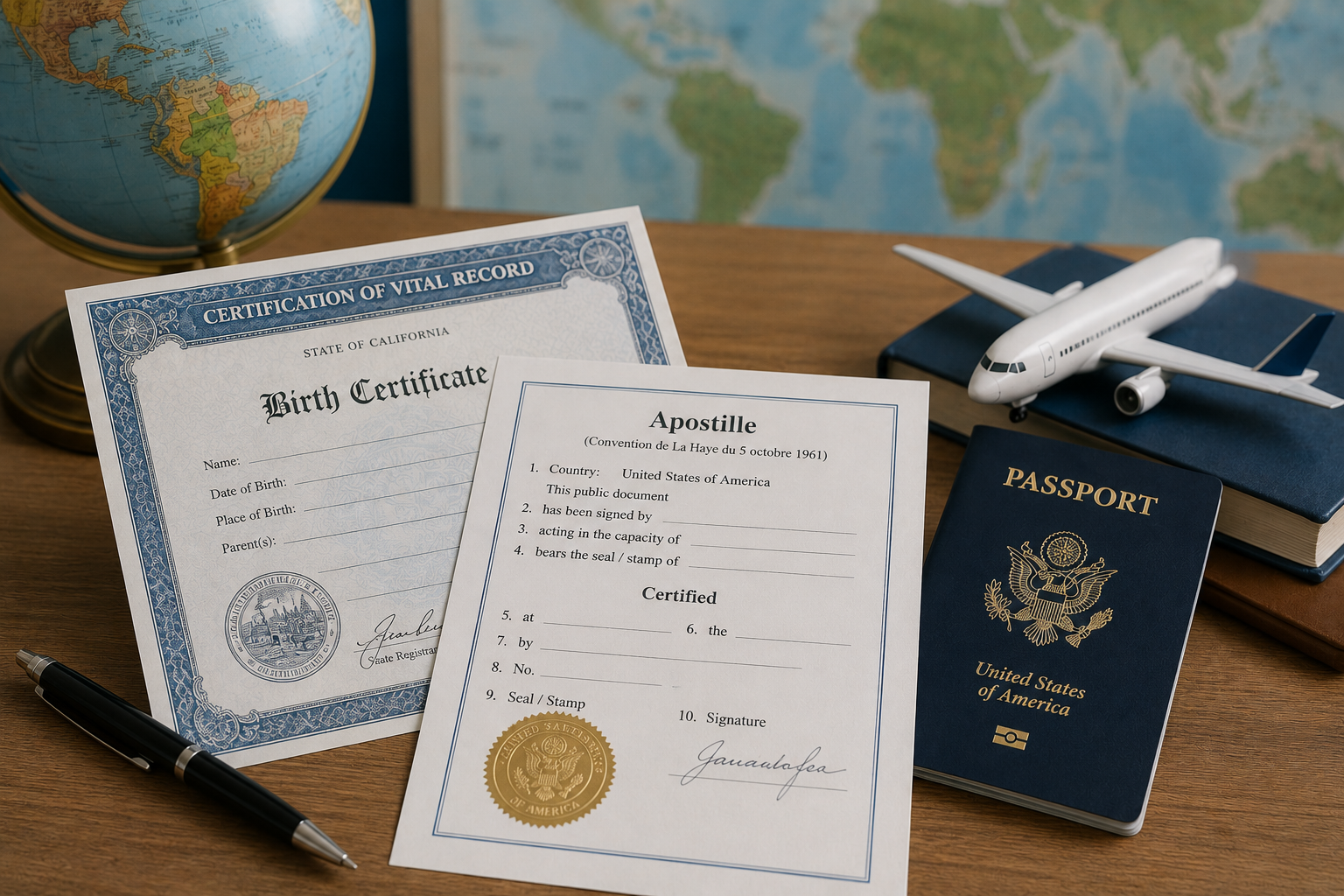
If you plan to use a U.S. birth, marriage, or death certificate in another country, you will often be asked to have it apostilled. An apostille is a certificate that authenticates a U.S. public document so it is recognized in another country that belongs to the Hague Apostille Convention. It confirms that the signature, seal, or stamp on your record is genuine, which lets foreign authorities accept your document without further verification.
This guide explains what an apostille is, when you need one, and the step-by-step process for getting your vital records ready for international use. Keep in mind that the exact competent authority and steps vary by state and by destination country.
What Is an Apostille?
An apostille is a standardized authentication certificate created under the Hague Apostille Convention. Rather than proving the facts inside your document, it verifies that the official who signed or sealed the record had the authority to do so.
- What it applies to: Certified public documents such as birth, marriage, and death certificates, as well as some other government-issued records.
- What it does: Allows a document issued in the United States to be accepted in another member country without additional layers of certification.
- What it is not: An apostille does not translate your document or change its contents. It only certifies the authenticity of the signature and seal.
When Do You Need an Apostille?
You typically need an apostille whenever a foreign government, employer, school, or court asks for proof that your U.S. document is authentic. Common situations include:
- Marrying abroad: Many countries require an apostilled birth certificate and sometimes proof of single status.
- Claiming dual citizenship: Ancestry-based citizenship applications often rely on apostilled vital records.
- Living, working, or studying overseas: Residency, work, and student visa applications frequently request authenticated documents.
- International adoption: Adoption cases usually involve several apostilled records.
- Overseas legal matters: Estates, property, and court proceedings abroad may require authenticated U.S. certificates.
How to Get an Apostille: Step by Step
The process generally follows two main stages: obtaining a proper certified copy, and submitting it to the correct competent authority.
- Step 1 – Get a certified copy of the record: Request a certified copy of the vital record from the issuing state or county vital records office. A photocopy or a plain “informational” copy usually cannot be apostilled; you generally need a certified copy that carries the registrar’s signature.
- Step 2 – Identify the competent authority: For state-issued vital records, this is usually that state’s Secretary of State office. Some states require the county clerk or state registrar to certify the signature first before the Secretary of State will issue the apostille.
- Step 3 – Submit for federal documents when needed: For U.S. federal documents, the competent authority is the U.S. Department of State Office of Authentications, not a state office.
- Step 4 – Follow the destination country’s requirements: Confirm whether the country accepts an apostille or requires additional steps, and whether a certified translation is needed.
Because requirements differ, it helps to confirm the process with your state’s Secretary of State and to review the guidance from the HCCH Apostille Section before you submit anything.
Hague vs. Non-Hague Countries: Apostille or Legalization
Whether you need an apostille or a longer process depends on the destination country’s membership in the Hague Apostille Convention.
- Hague member countries: A single apostille is enough for your document to be recognized.
- Non-Hague countries: If the destination country is not part of the Convention, you need legalization instead. This usually involves authentication of the document plus additional certification by that country’s embassy or consulate.
- Why it matters: Submitting the wrong type of certification can cause delays, so confirm the country’s status before you begin.
Common Uses for Apostilled Vital Records
Apostilled certificates show up across many international milestones, including marrying abroad, claiming dual citizenship, securing foreign residency or a work permit, enrolling in overseas study, completing an international adoption, and resolving legal matters in another country. In each case, having a properly certified copy first is essential. If you still need the underlying record, you can start with a certified birth certificate before requesting the apostille.
Government Authorities vs. VRO’s Optional Help
Apostilles and authentications are issued only by government competent authorities: your state’s Secretary of State for state vital records, and the U.S. Department of State for federal documents. Vital Records Online is a third-party service and is not a government agency. VRO offers optional apostille assistance and can help you obtain the underlying certified record, but the apostille itself is always issued by the appropriate government office. Using VRO’s apostille services is entirely optional, and you may work directly with the government channels if you prefer.
Frequently Asked Questions
Can I apostille a photocopy of my birth certificate?
Usually no. A photocopy or plain informational copy generally cannot be apostilled. You typically need a certified copy that carries the registrar’s signature.
Who issues the apostille for a state birth certificate?
For state-issued vital records, the competent authority is usually that state’s Secretary of State office. Some states first require the county clerk or state registrar to certify the signature.
What if the country I’m moving to is not in the Hague Convention?
You will need legalization instead of an apostille. This typically includes authentication plus certification by that country’s embassy or consulate.
Does an apostille expire?
An apostille itself does not usually have a fixed expiration, but the receiving country or institution may request a recently issued certified record. Always check the specific requirements of the authority requesting it.
Related Guides
- Single Status Affidavit: What You Need to Marry Abroad
- Moving Abroad: Why You May Need U.S. Vital Records Internationally
- How to Get a Notarized Copy of a Birth Certificate
Ready to use your U.S. vital records abroad? Get started with Vital Records Online’s apostille services for optional, streamlined help obtaining your certified record and preparing it for international use.