What to Do When a Parent Dies: A Step-by-Step Document Checklist
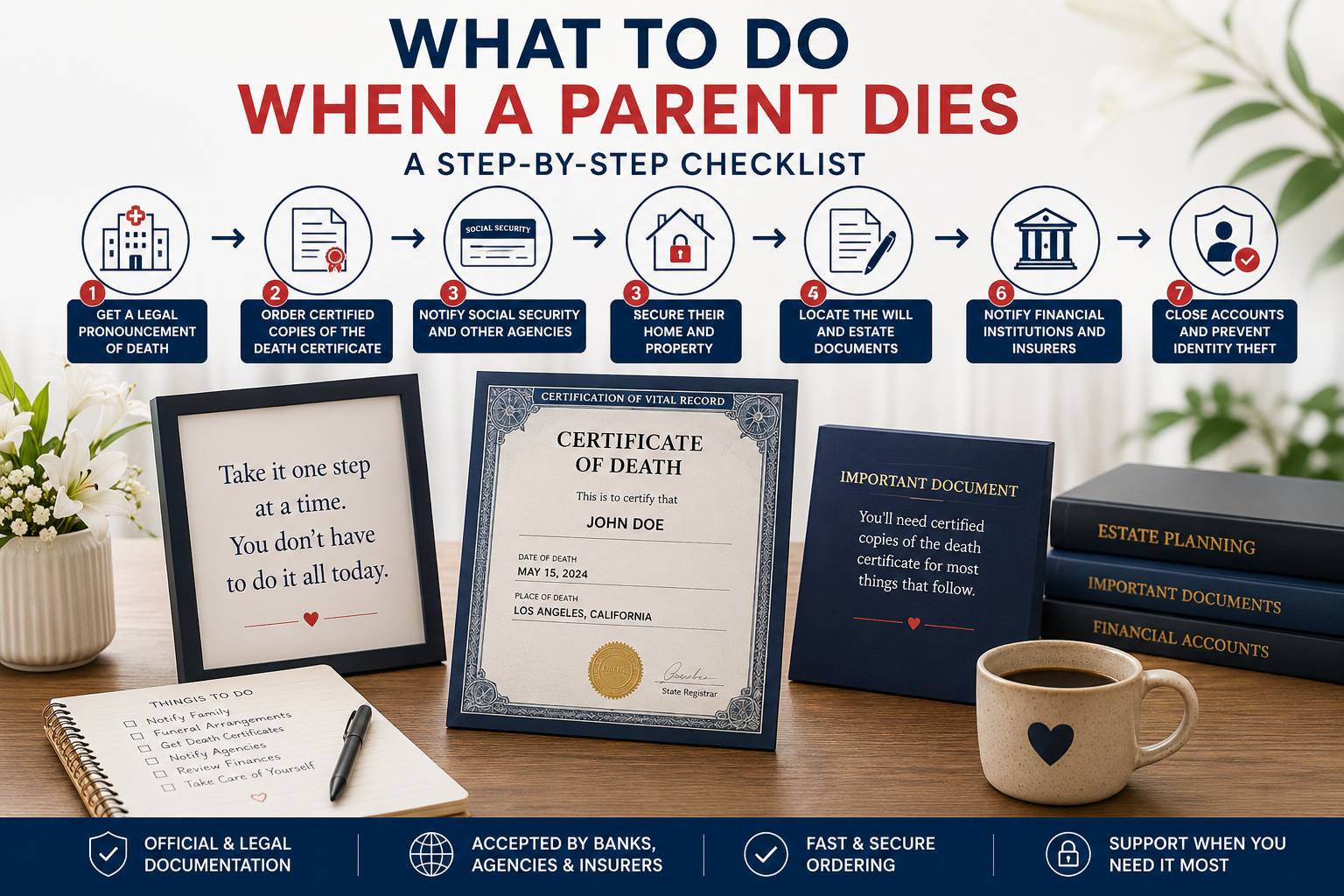
Losing a parent is one of the hardest experiences in life, and the wave of paperwork that follows can feel cruel in its timing. Knowing the steps ahead of time, and understanding which document unlocks the rest, can make an overwhelming process a little more manageable. Here’s a practical checklist for what to do when a parent dies.
1. Get a Legal Pronouncement of Death
Before anything else, the death must be officially pronounced. If your parent passed in a hospital or care facility, staff will handle this. If they died at home without hospice, call 911 so a medical professional or coroner can make the pronouncement. This step is what sets the official record, and the death certificate, in motion.
2. Order Certified Copies of the Death Certificate
This is the single most important document you’ll need, and nearly every step that follows depends on it. The funeral home often helps file for the initial certificate, but you’ll want multiple certified copies; most families need between 4 and 10.
You’ll need a certified death certificate to close accounts, claim insurance, settle the estate, and notify government agencies. To estimate how many to order, see our guide on how many death certificates you’ll need, and our overview of the real-life uses of a death certificate.
3. Notify Social Security and Other Agencies
Report the death to the Social Security Administration (the funeral home can often do this, or you can contact the SSA directly). If a surviving spouse or dependent is involved, this also starts the conversation about survivor benefits. Recent changes under the Social Security Fairness Act may affect what a surviving spouse is owed. You’ll also want to notify the IRS, the DMV, and any agency that issued benefits.
4. Secure Their Home and Property
Lock up the home, collect mail, and safeguard valuables, vehicles, and pets. If the home will sit empty, make sure it stays insured and maintained. Avoid distributing or removing belongings until the estate process is clear.
5. Locate the Will and Estate Documents
Find your parent’s will, trust, or estate plan, along with the name of the executor or attorney. These documents determine how the estate is handled and who has authority to act. If there’s no will, the estate will generally go through probate under your state’s laws.
6. Notify Financial Institutions and Insurers
With certified death certificates in hand, contact:
- Banks and credit unions
- Life insurance companies
- Pension plans and retirement accounts
- Credit card companies and lenders
- Their employer (for final pay, benefits, or workplace life insurance)
Each will typically require a certified copy of the death certificate, which is exactly why ordering several upfront saves time and stress.
7. Close Accounts and Prevent Identity Theft
Cancel subscriptions, close or transfer utility accounts, and notify the three credit bureaus to flag the account, which helps prevent fraud against the deceased. Keep a log of who you’ve contacted and the date.
A Note on Timing and Self-Care
You don’t have to do everything at once. The legal pronouncement and death certificate come first; most other tasks can follow over the weeks ahead. Lean on the funeral director, the estate attorney, and family members, and give yourself grace during a difficult time.
Frequently Asked Questions
How many death certificates should I order?
Most families need 4 to 10 certified copies, depending on how many institutions must be notified. It’s usually easier to order extra upfront than to request more later.
Who can request a parent’s death certificate?
Immediate family members typically have priority access. Rules on who can request a certified copy vary by state.
What’s the first thing to do when a parent dies?
Obtain a legal pronouncement of death, then arrange for certified copies of the death certificate, since nearly every other task depends on it.
Start With the Document Everything Depends On
When a parent passes, the certified death certificate is the key that unlocks almost every other step, from claiming benefits to settling the estate. If you need certified copies, Vital Records Online can help you request them quickly and securely, so paperwork is one less burden during a painful time.
This article is for general informational purposes only and is not legal or financial advice. Procedures vary by state and individual circumstances. Consider consulting an estate attorney or financial advisor for guidance specific to your situation.