Italian Citizenship by Descent After the 2025 Decree: Which Records Still Qualify
For decades, Italian citizenship by descent worked without a generational limit. Great-grandparent and even great-great-grandparent claims were routinely processed, and the practical constraint was paperwork rather than eligibility. That ended in March 2025, and the rules that replaced it are narrower, dated, and now backed by a ruling from Italy's Constitutional Court.
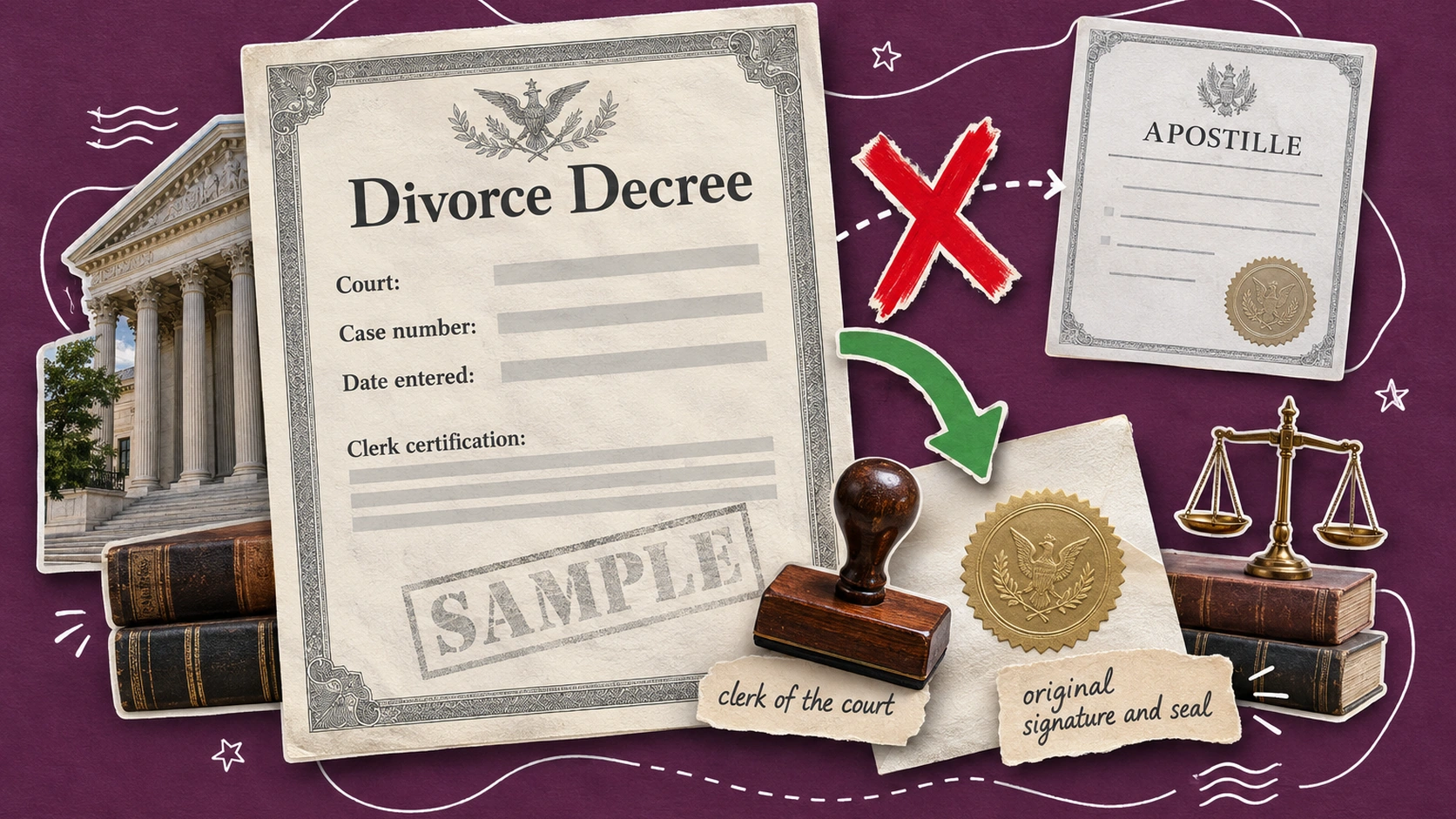
This guide covers what changed, who still qualifies, and the exact document chain a qualifying claim requires. It assumes you already know what an apostille is; if you do not, start with our guide to apostilles for U.S. vital records used abroad, and our overview of claiming dual citizenship through parents or grandparents covers ancestry claims generally.
Italian nationality law is in active development and this is not legal advice. Verify the current position with the Italian consulate for your jurisdiction or an Italian nationality lawyer before you spend money on records. The status described here was accurate as of August 2026.
What Decree-Law 36/2025 Changed
In March 2025 Italy issued Decree-Law 36/2025, often called the Tajani Decree, which was later converted into Law 74/2025. It inserted a new Article 3-bis into Law 91/1992, the statute governing Italian citizenship.
The core change is a generational limit. Automatic recognition of citizenship by descent is now confined to the second generation: the applicant must have at least a parent or a grandparent who was born in Italy and held Italian citizenship. A claim resting on a great-grandparent, which was ordinary practice before, no longer supports automatic administrative recognition.
The March 27, 2025 Cutoff Is the Decisive Date
The reform is not applied to everyone at once. Claims filed after March 27, 2025 are assessed under the new rules. Applications filed, or consulate appointments booked, before that date are still evaluated under the pre-reform rules.
This single date determines which body of law your file is judged under, which is why it matters more than any other fact in this article. If you began a claim before the cutoff, the older and broader rules may still apply to it. If you are starting now, they do not.
Where the Law Stands After the Court Challenges
The reform was challenged almost immediately, and two decisions from Italy's Constitutional Court have shaped where things stand.
- Sentenza no. 63/2026, made public on 12 March 2026. The Court rejected the constitutional challenges to Article 3-bis, holding the new limits compatible with the Italian Constitution and declaring the issues partly unfounded and partly inadmissible. The two-generation limit survived.
- Ordinanza no. 147/2026, decided 9 June 2026 and published 29 July 2026. In a separate case, the Court suspended proceedings and referred a preliminary question to the Court of Justice of the European Union, asking whether Articles 9 TEU and 20 TFEU preclude the new restrictions. That referral is pending.
The practical reading is straightforward. The law is in force and is being applied, and the domestic constitutional challenge failed. A European law question remains open, and no one can responsibly predict its outcome or timing. Plan around the rules as they exist today rather than around a hoped-for reversal.
The Record Chain a Qualifying Claim Needs
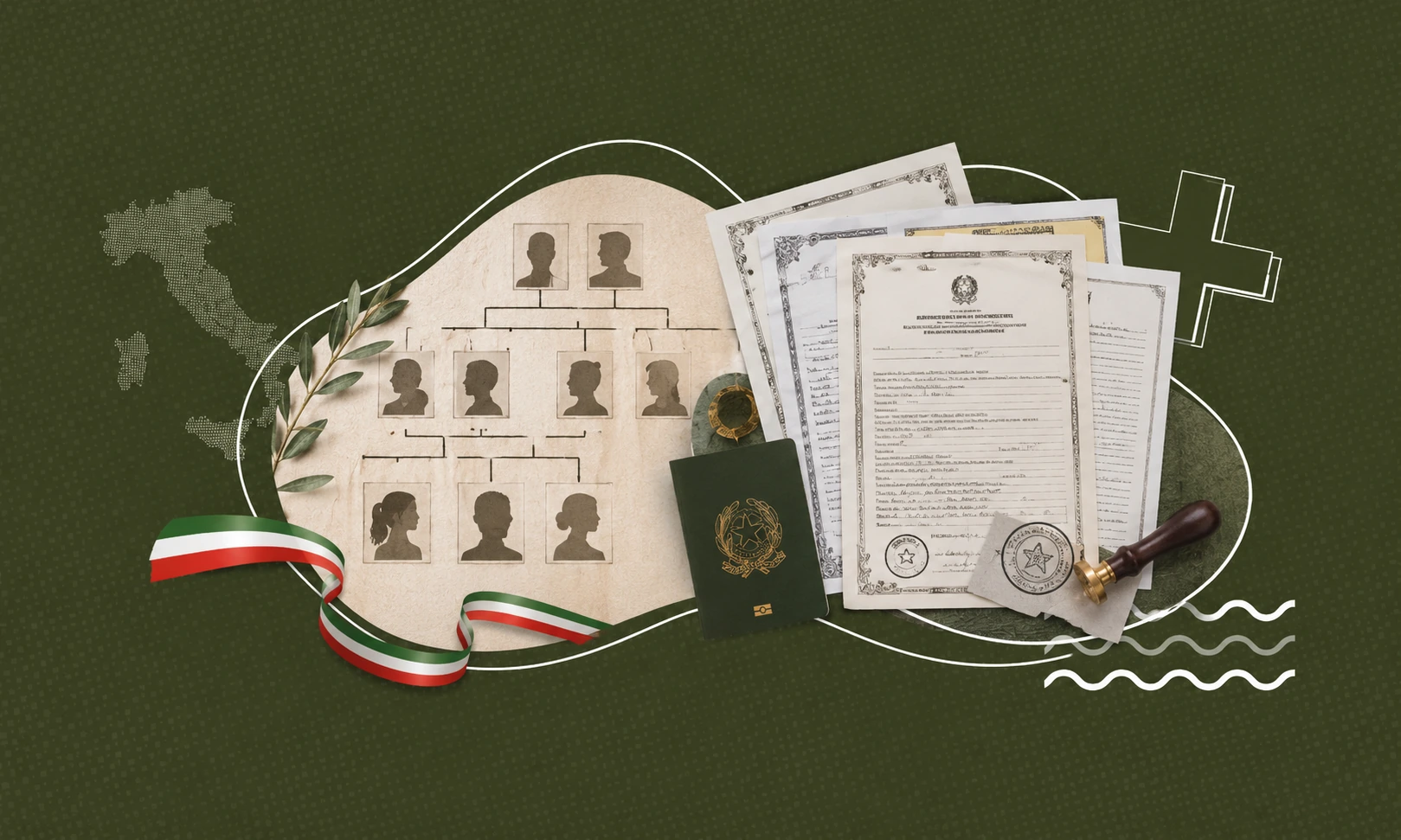
Even with a narrower eligibility rule, the documentary standard has not relaxed. A claim has to reconstruct an unbroken line from your Italian-born ancestor to you, and each generation in that line contributes its own records.
For each person in the chain, expect to provide:
- Birth record. For the Italian-born ancestor this is the Italian comune's record; for everyone after, it is the U.S. state birth certificate.
- Marriage record for each generation, which is what links one surname line to the next.
- Death record for each deceased person in the line.
- Naturalization record, or proof that no naturalization occurred. This is the item that decides many claims, because the timing of an ancestor's U.S. naturalization relative to the next birth in the line can break the chain entirely.
Every U.S. Record Needs an Apostille and a Certified Italian Translation
Each U.S. vital record in the file generally has to carry two additional layers: an apostille from the competent authority in the issuing state, and a certified translation into Italian. Not the birth certificate alone, and not just the oldest document. Each record.
Two consequences follow that people underestimate. First, cost and time scale with the number of generations and the number of states involved, since apostilles come from the state that issued the record. Second, records must be recent certified copies rather than the old family copies in a folder, because an apostille authenticates a current certified document.
The Naturalization Question Deserves Its Own Search
Of everything in the file, an ancestor's naturalization status is the most common point of failure and the most frequently guessed at. Family lore is not evidence. What you need is either the naturalization record itself or an official statement that no record was found, obtained from the relevant U.S. authority.
This search also tends to be the slowest item in the file, so start it first rather than last. If your research is still at the stage of identifying which ancestor was born in Italy and when they arrived, our genealogy records guide covers how to locate the underlying records.
Before You Order Anything
A short sequence prevents most of the wasted spending in this process.
- Confirm your generation count first. Establish whether your Italian-born ancestor is a parent or grandparent before ordering a single certificate.
- Check whether the March 27, 2025 cutoff applies to you, since a pre-cutoff filing or booked appointment changes which rules govern.
- Confirm requirements with your consulate. Consulates differ in how they want documents presented, and requirements change.
- Order records as fresh certified copies, because apostilles attach to current certified documents.
- Budget for translation of every document, not just the main ones.
Vital Records Online is a third-party service and not a government agency, and it does not adjudicate citizenship claims or provide legal advice. Once you know which records your file needs, you can order certified U.S. vital records and use our apostille services to prepare them for submission in Italy.
Frequently Asked Questions
Can I still claim Italian citizenship through a great-grandparent? Not through automatic administrative recognition under the rules in force since March 27, 2025, which require a parent or grandparent born in Italy who held Italian citizenship. Ask an Italian nationality lawyer about any other avenue that might apply to your circumstances.
What happens to applications filed before March 27, 2025? Applications filed, or consulate appointments booked, before that date are still evaluated under the pre-reform rules.
Did the Constitutional Court overturn the new limits? No. In sentenza no. 63/2026, made public on 12 March 2026, the Court rejected the constitutional challenges and upheld the limits. A separate referral to the Court of Justice of the European Union, made in ordinanza no. 147/2026, is still pending.
Does every document need an apostille and a translation? Generally yes. Each U.S. vital record in the chain normally requires an apostille from the issuing state and a certified translation into Italian.
Why does my ancestor's naturalization date matter? Because the timing of a naturalization relative to the next birth in the line can determine whether Italian citizenship passed down at all. It is the most common reason an otherwise complete file fails.