How to Prove a Foreign Divorce in the United States
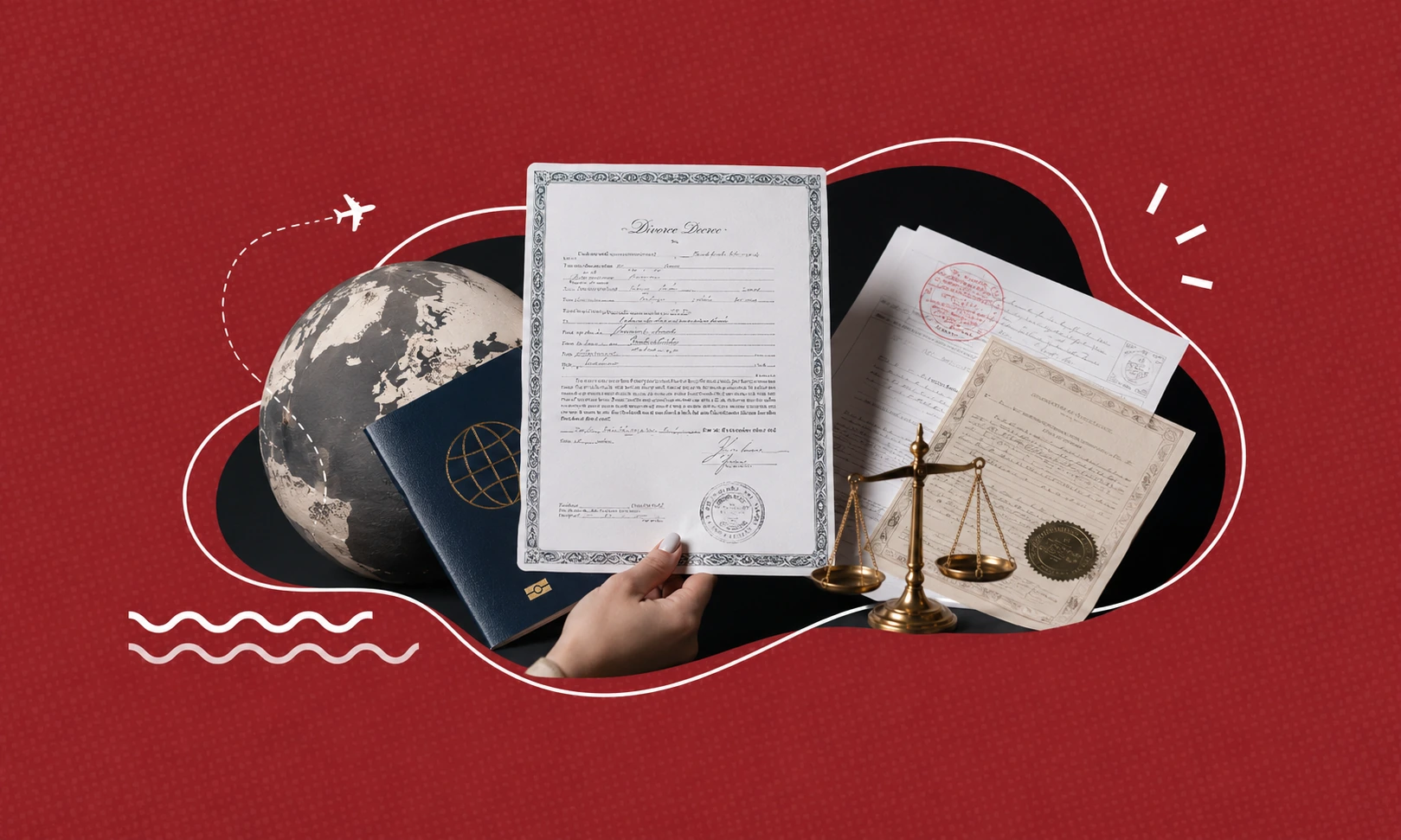
If your divorce was granted in another country, there is no federal office that stamps it as valid in the United States. There is no federal statute and no treaty governing whether a foreign divorce is recognized here, which makes it a question of state law answered one state at a time. That is unsettling to hear, but it is also the key to handling it correctly.
This guide explains the legal principle states use, what the paperwork usually has to look like, and where the question tends to surface. It describes how the process works rather than offering legal advice; if remarriage, immigration status, or property is riding on the answer, a family law attorney licensed in your state is the right person to confirm it.
Recognition Runs on Comity, Not a Federal Rule
The United States is not party to a treaty governing recognition of foreign court judgments, and Congress has not passed a statute covering it. Instead, states apply the doctrine of comity: the practice of one jurisdiction giving effect to the judicial acts of another out of mutual respect, rather than obligation.
Under comity, a foreign divorce decree is generally recognized when the proceeding was fair and the court had a legitimate basis for deciding the case. Courts commonly look at whether both parties had notice of the proceeding and a genuine opportunity to be heard, and whether at least one party was domiciled in that country at the time.
Why the Domicile Question Matters So Much
The domicile requirement is where foreign divorces most often fail. A state may decline to recognize a divorce if it is not satisfied that at least one spouse was actually domiciled in the country that granted it. Divorces obtained by briefly traveling to a country neither spouse lived in, sometimes without the other spouse participating at all, are the classic problem case.
Because comity is state law rather than a federal constitutional mandate, the same decree can be treated differently depending on where the question is raised. A divorce accepted without comment in one state may be challenged in another, and the answer often depends on which state's court is asked.
The Document Chain You Will Need
Whatever the state's legal test, you have to be able to put the divorce in front of someone in a form they can read and trust. In practice that means three layers.
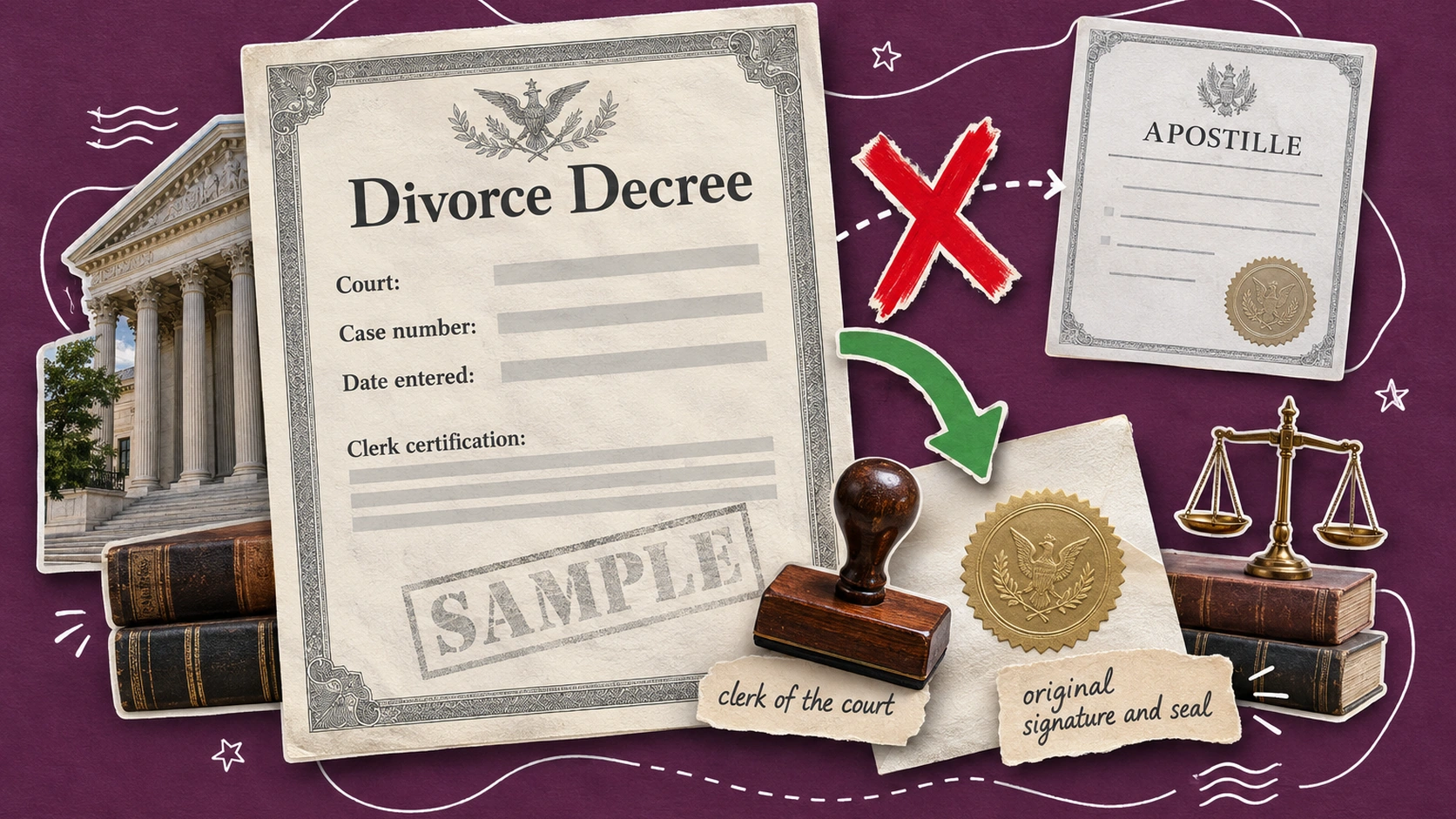
- A certified copy of the decree from the issuing court. A photocopy, a scan, or the copy you were handed years ago is usually not enough. Request a fresh certified copy from the court or registry that granted the divorce.
- A certified translation into English, if the decree is in another language. The translation normally must be complete and accompanied by the translator's certification of accuracy and competence.
- Authentication of the document itself. For a country in the Hague Apostille Convention, that means an apostille issued by that country's competent authority. For a non-member country, it means legalization, which typically involves authentication plus certification by the relevant embassy or consulate.
The authentication step is the one people skip, and it is often the one that gets the packet returned. Our guide on apostilles for U.S. vital records used abroad explains how the Hague and non-Hague routes differ; the same distinction applies in reverse when a foreign document has to be accepted here.
Decree Versus Certificate: They Are Not the Same Thing
Many countries issue something closer to a short civil-registry certificate confirming the dissolution, in addition to, or instead of, a full judgment. In the United States the parallel distinction is between the divorce decree, which is the court's full ruling, and the divorce certificate, which is a short vital record confirming that the divorce occurred.
Which one you need depends on who is asking. An agency confirming marital status may accept the shorter document, while a court, an immigration officer, or a title company deciding property rights will usually want the full decree with its terms. Our article on the difference between a divorce certificate and a divorce decree covers when each is appropriate, and the same reasoning applies to their foreign equivalents.
Where the Question Actually Comes Up
People rarely go looking for a ruling on their foreign divorce. It surfaces when something else requires it.
- Remarriage. This is the most common trigger, because a marriage license application asks how a prior marriage ended. If the foreign divorce is not recognized in that state, the new marriage may be invalid. Our FAQ on whether you need a divorce certificate to remarry covers what license clerks typically ask for.
- Immigration. Petitions based on a current marriage require proof that every prior marriage was properly ended.
- Social Security and pension claims, where marital history determines eligibility for spousal or survivor benefits.
- Estate administration, where a former spouse's status affects who inherits.
- Property and title, where a decree's terms determine ownership.
Marrying Abroad Raises the Mirror-Image Problem
If you are remarrying in another country rather than in the U.S., that country will want proof from you in its own preferred form, frequently including a single status affidavit and apostilled U.S. records. Our guide to the single status affidavit you need to marry abroad covers that side of the process.
How to Approach It Without Wasting Months
A sensible order of operations saves a great deal of back-and-forth.
- Ask the requesting institution what it needs before you order anything. A marriage license clerk, a benefits examiner, and an immigration officer do not want identical packets.
- Order a certified copy from the issuing court early, since foreign courts can be slow and some require a local representative.
- Confirm the country's Hague status before deciding between an apostille and legalization.
- Get the translation done after authentication where the receiving institution wants the apostille translated too.
- Keep the U.S. records ready as well, since most of these situations also require a birth or marriage certificate from a U.S. state.
Vital Records Online is a third-party service, not a government agency, and it cannot obtain a foreign court decree; only the issuing court can do that. What we can help with is the U.S. side of the file: you can order a certified divorce certificate for a divorce granted in a U.S. state, and our apostille services can help prepare U.S. records for use abroad.
Frequently Asked Questions
Is a divorce granted in another country automatically valid in the U.S.? No. There is no federal statute or treaty on the subject. States decide under the doctrine of comity, and the answer can differ by state.
Do I need to register my foreign divorce with a U.S. state? Most states have no registration process for foreign divorces. Recognition is decided if and when a court or agency has to rule on it, which is why the documentation matters more than any filing.
Will a state refuse to recognize my divorce? It can, particularly if neither spouse was domiciled in the granting country or if the other spouse never received notice and an opportunity to participate.
Does the decree need to be translated? If it is not in English, yes. Institutions generally require a complete certified translation with the translator's statement of accuracy.
Do I need an apostille on a foreign divorce decree? Usually some form of authentication is required. An apostille applies if the issuing country belongs to the Hague Apostille Convention; otherwise the document goes through legalization.