VA Burial and Survivor Benefits: The Records the VA Asks For, and the Two-Year Clock
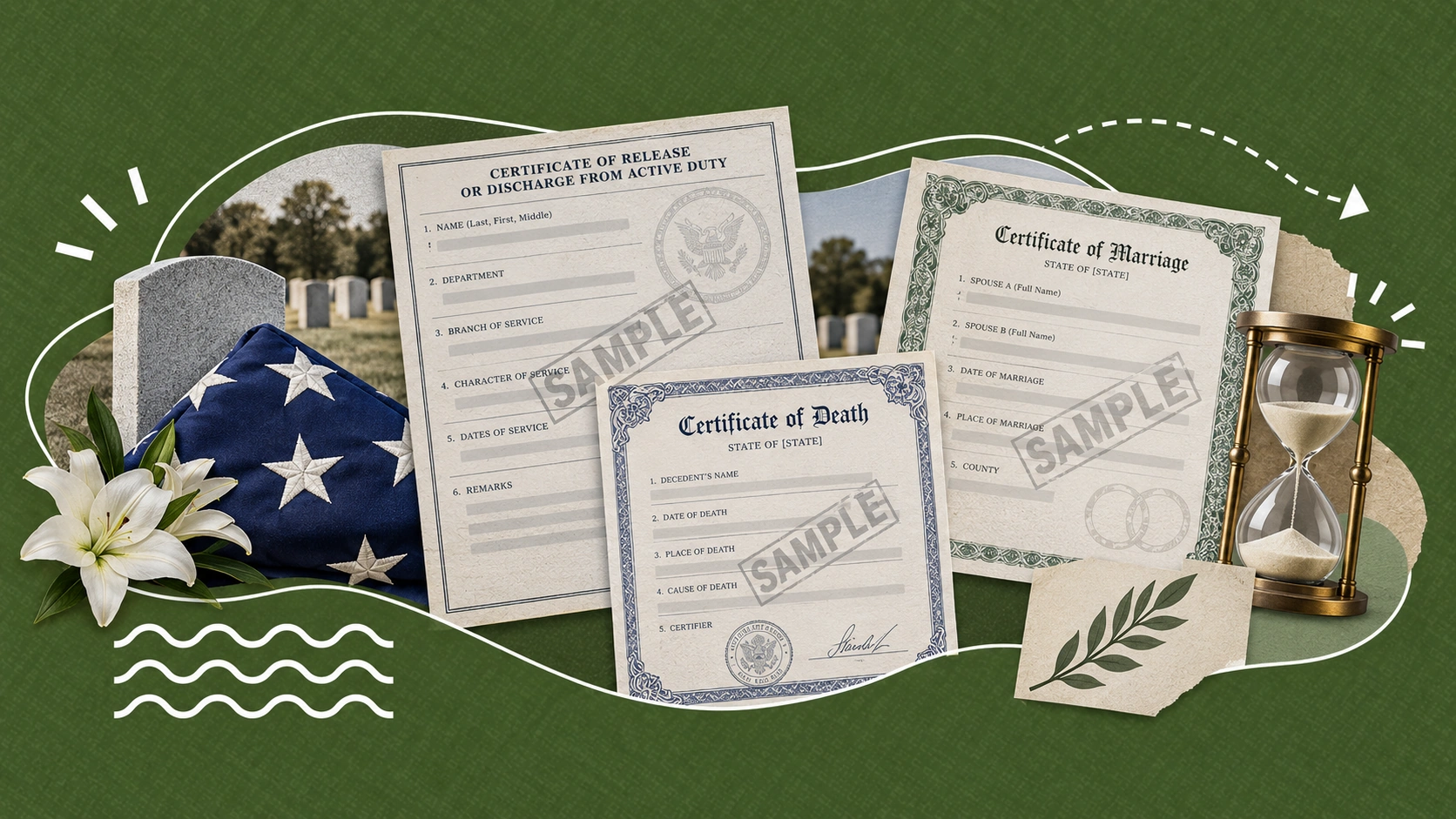
Military families are among the most likely to need three certificate types at once, and the VA claim is the one with a deadline attached. For a non-service-connected death, the burial allowance claim generally has to be filed within two years of burial: a clock that starts while the family is still in the first weeks of grief and nobody mentions.
This article covers what documents VA asks for on burial and survivor claims and which deadlines apply. It does not cover benefit amounts, which change and which we have not verified, and it does not adjudicate eligibility; VA decides who qualifies. Details below were verified against va.gov on September 8, 2026.
The Two-Year Clock, and Its Exceptions
The deadline depends entirely on how the veteran died, and the exceptions matter as much as the rule.
- Service-connected death: no time limit. If the death was service-connected, there is no filing deadline.
- Non-service-connected death: within 2 years after burial. This is the case most families are in.
- Exception: death under VA care. If the veteran died while in VA care, the two-year deadline does not apply.
- Exception: plot, interment, or transportation costs. A claim for these allowances is not subject to the two-year limit.
- Discharge upgrade: within 2 years after VA changes a dishonorable discharge to another status.
If you are reading this more than two years after a burial, do not assume you are out of time. Check which category applies before concluding anything, because two of the exceptions are common.
A Surviving Spouse May Not Need to File at All
One detail that saves families a claim: VA states that a surviving spouse does not need to file, as long as they are listed as the veteran's spouse on the veteran's profile. In that case VA automatically pays an eligible surviving spouse a set amount for plot, interment or transportation costs once it receives notice of the death.
The condition is being listed on the profile, so it is worth confirming that rather than assuming it. If you are not listed, the automatic payment does not reach you.
The Document That Decides the Claim
For the burial allowance, VA asks for the veteran's death certificate including the cause of death. Not simply a death certificate, one that states the cause.
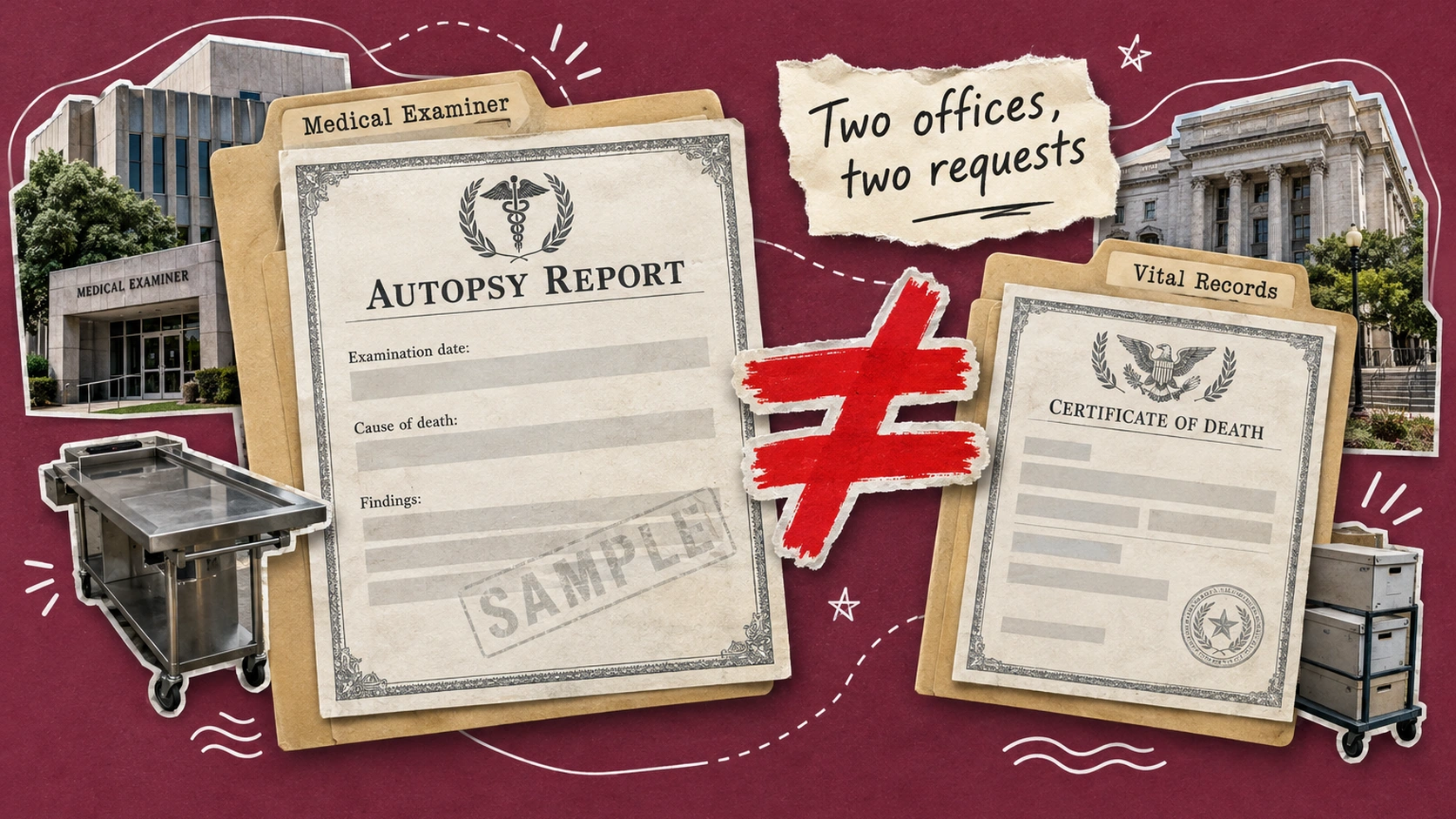
That phrasing has a consequence worth planning around. When a death falls under a medical examiner or coroner's jurisdiction, the certificate is often issued with the cause marked pending while toxicology or an investigation finishes. That certificate is valid and useful for many purposes, but it does not show a cause of death, so it may not satisfy this requirement.
If you are in that situation, our article on what a pending cause of death means and how to get the amended certificate explains how the final cause reaches the record and why you have to order a fresh certified copy to get it. Start that process early, and tell VA the certificate is pending rather than letting a deadline run quietly.
The Rest of the Burial Claim
- VA Form 21P-530EZ, the Application for Burial Benefits, if filing by mail.
- The veteran's DD214 or other separation documents covering all service periods. VA recommends this; if you do not have it, you can request the records.
- An itemized receipt if you are claiming transportation costs.
DIC and Survivors Pension: A Different List
For Dependency and Indemnity Compensation and for Survivors Pension, VA asks for both the DD214 or other separation documents and the veteran's death certificate showing cause of death. The cause-of-death requirement carries across both claim types.
A surviving spouse claiming Survivors Pension faces an additional requirement, and this is the one where people are most often wrongly told they do not qualify.
The One-Year Marriage Rule Has Alternatives
VA asks for one of three things:
- A marriage certificate or other evidence showing you were married to the veteran for at least one year immediately before their death; or
- Evidence of a child born before or during the marriage; or
- Evidence of marriage before a specific date tied to the relevant wartime period.
Those are alternatives, not a sequence. A surviving spouse married for eight months who had a child with the veteran does not fail the one-year test; they meet a different one. Anyone who has been told a short marriage disqualifies them should look at the other two paths before accepting that answer.
If Your Own Later Marriage Ended
One narrow case is worth naming because it surprises people. A surviving spouse who remarried and whose later marriage has since ended may be asked to document that it ended with a divorce decree or a death certificate when claiming DIC.
Beyond that, VA's evidence page does not address documentation of prior marriages generally, and we are not going to extrapolate a rule it does not state. Rules for another agency do not transfer. If your marital history is complicated, work from VA Form 21P-534EZ itself and ask VA directly.
What to Order, and How Many
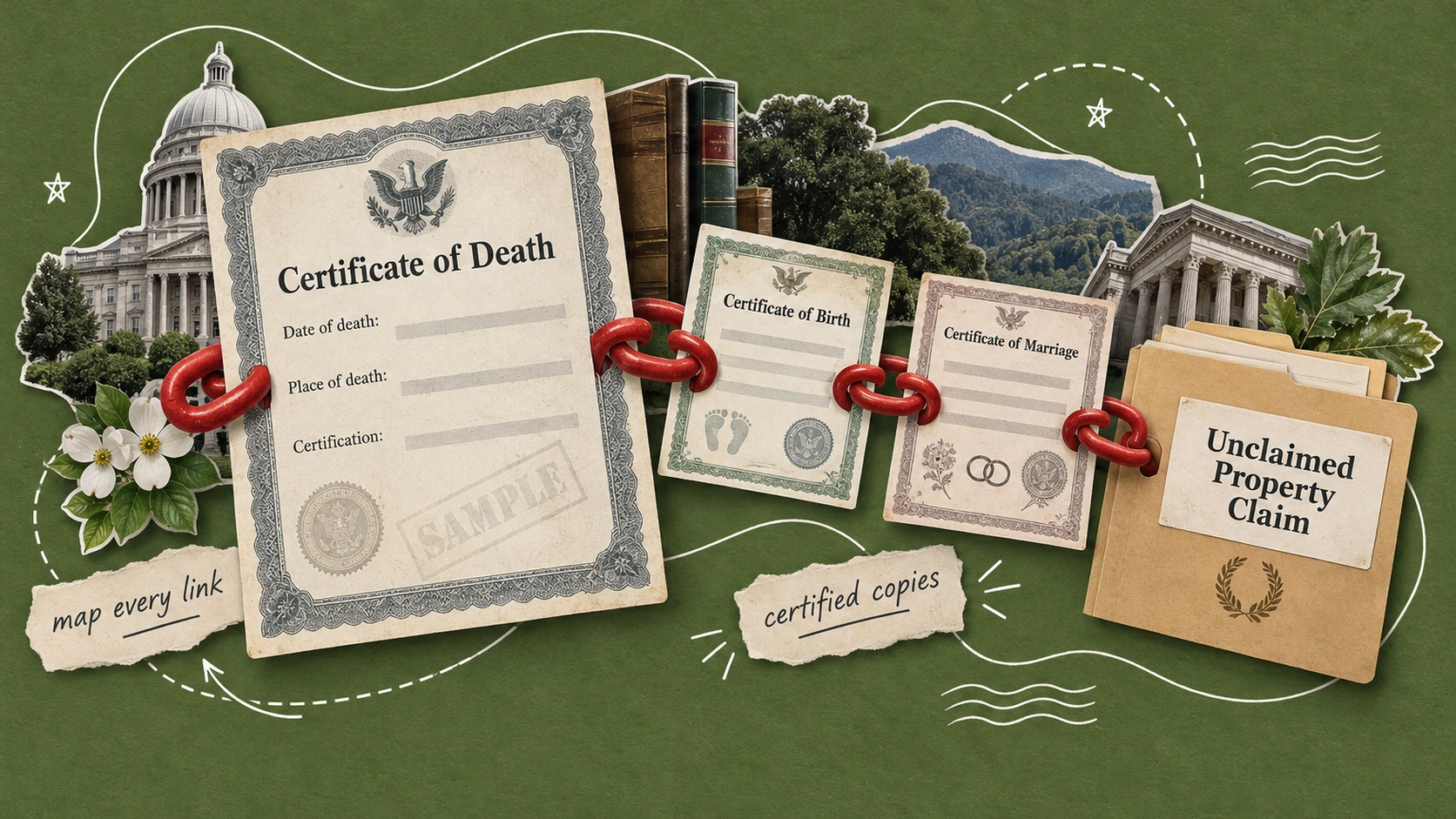
A VA claim rarely stands alone. The same family is usually also dealing with Social Security, a life insurer, a bank, and a county property office, and each of those keeps its own certified copy.
- Certified death certificates showing cause of death, in enough copies for every institution that will keep one.
- A certified marriage certificate, if a surviving spouse is claiming Survivors Pension and relying on the marriage evidence.
- The DD214, which is a military record rather than a vital record and comes from a different channel.
Ordering once for everything is meaningfully cheaper in time than reordering, and reordering restarts the state's processing wait. Our guide on getting free certified vital records copies for veterans benefits covers where reduced-cost or no-cost copies may be available, which is worth checking before you pay.
Start with the record the claim turns on: you can order certified death certificates from the state where the death occurred, and our estate planning resources cover what else tends to come up. Vital Records Online is a third-party service and not a government agency.
Frequently Asked Questions
How long do I have to file a VA burial allowance claim? Generally within two years after burial for a non-service-connected death. There is no time limit for a service-connected death, and the two-year limit does not apply if the veteran died under VA care or if you are claiming plot, interment or transportation costs.
Does the death certificate need to show the cause of death? Yes. VA asks for a death certificate including the cause of death for burial claims and for DIC and Survivors Pension.
What if the cause of death is still pending? A certificate with a pending cause does not show a cause of death and may not satisfy VA. Notify VA and order an updated certified copy once the medical examiner finalizes the cause.
Do I qualify if we were married less than a year? Possibly. VA accepts evidence of a child born before or during the marriage, or marriage before a date tied to the relevant wartime period, as alternatives to the one-year rule.
Does a surviving spouse always have to file? No. VA states a surviving spouse need not file as long as they are listed as the veteran's spouse on the veteran's profile, in which case VA automatically pays a set amount.