Social Security on an Ex-Spouse's Record: The Divorce Decree You'll Need Decades Later
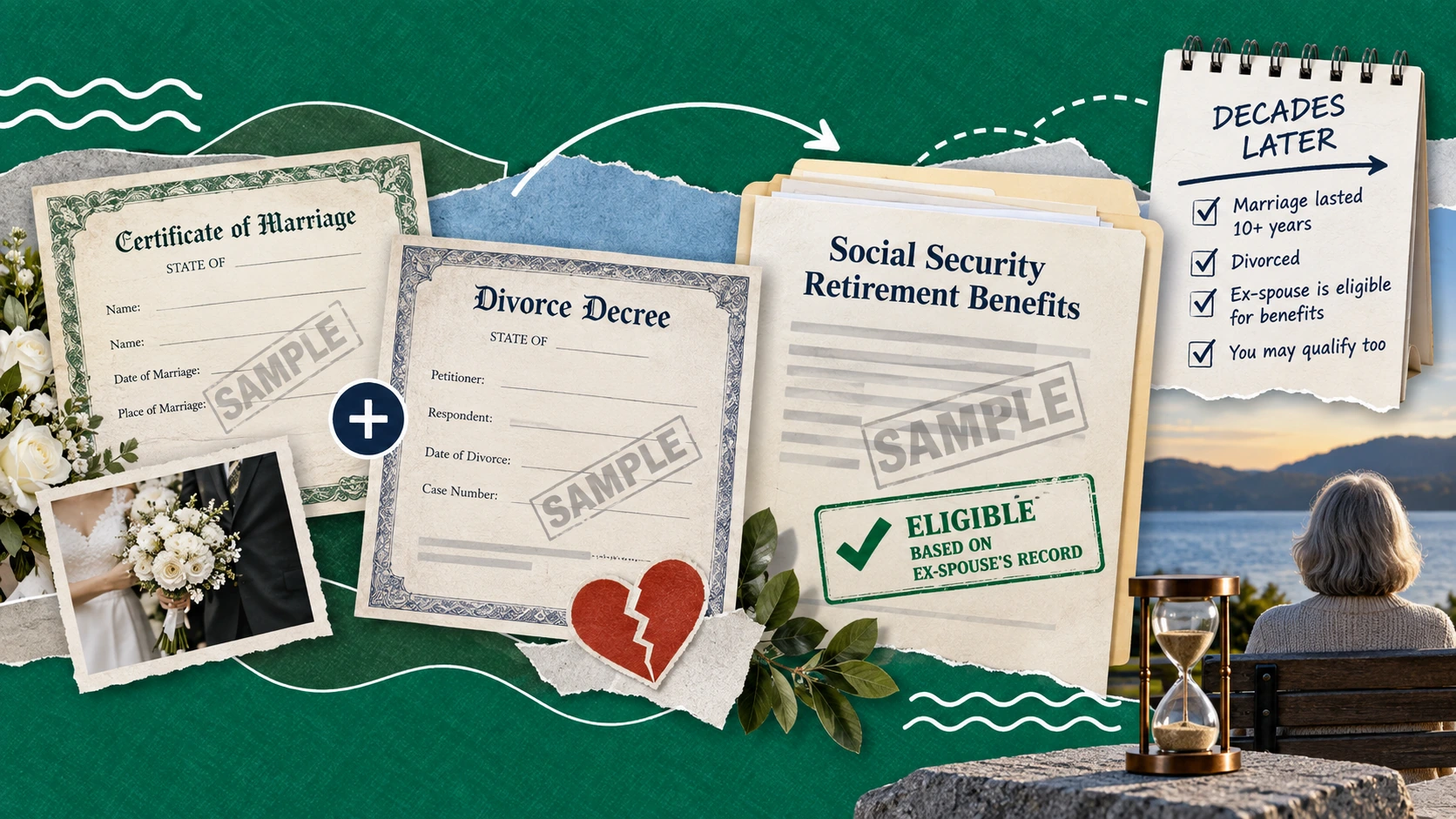
A marriage that ended twenty or thirty years ago can still pay out. If it lasted long enough, a divorced person may be entitled to Social Security benefits on the former spouse's earnings record, without the ex-spouse's cooperation, without their consent, and without reducing a dollar of what they or their current spouse receive. The catch is documentary: the claimant has to prove a marriage, its length, and the divorce that ended it, and the paper for all three is decades old.
This article is about the ex-spouse who is still alive. If the former spouse has died, that is a survivor claim with different rules, and our survivor-benefits documents guide covers it. This article does not state benefit amounts or adjudicate eligibility, the Social Security Administration decides that, and we route you there, and it is not the ordinary retirement claim that this guide covers.
A Distinct Claim Type
SSA's regulation on divorced-spouse benefits, 20 CFR 404.331, sets the conditions. In outline, and only in outline: the marriage must have lasted at least ten years immediately before the divorce became final; the claimant must currently be unmarried; the claimant must have reached the qualifying age; and the former spouse must be entitled to retirement or disability benefits, or, if the former spouse has not applied but is eligible, the divorce must have been final for at least two continuous years. SSA applies those conditions to the facts of each claim, and the details and exceptions are SSA's to state.
Three things about the claim surprise people.
- The ex-spouse is not involved. SSA does not need their permission, and they are not asked. If they have not applied for their own benefits, the two-year independent-entitlement rule exists precisely so the claimant is not held hostage to their timing.
- Their benefit is not reduced. SSA states that benefits paid to a divorced spouse do not reduce the amount payable to the worker or to the worker's current spouse. There is no pot being divided.
- Remarriage matters: the claimant's, not the ex's. The claimant must be unmarried. The former spouse can have remarried any number of times.
Our page on Social Security and vital records covers the general document picture; what follows is specific to this claim.
The Documentary Burden Falls on the Claimant
SSA has the earnings record. It does not have your marriage or your divorce, and it will not go looking for them. The application for spouse's benefits, Form SSA-2, lists what to bring, and two items are the whole of this article: your marriage certificate and your final divorce decree.
Both are required because the claim has to establish two facts, not one: that a marriage existed, and that it lasted at least ten years before it ended. The marriage certificate proves the start. The divorce decree proves the end, and its date is what SSA subtracts from. A claimant with only one of the two cannot establish the duration, and duration is the condition most claims live or die on.
Find them together. A marriage certificate from 1988 and a divorce decree from 2001 are held by two different offices, often in two different states, and neither is the kind of document people keep once the marriage is over. Locate both before you file, not after SSA asks.
Decree or Certificate? SSA Prefers the Decree
This is the question the brief we worked from flagged as unsettled, and it settles cleanly against the primary sources. SSA's rule on evidence that a marriage has ended, 20 CFR 404.728, restated in the SSA Handbook, is that "the preferred evidence that a marriage has ended is a certified copy of the decree of divorce or annulment." Form SSA-2 asks for the "final divorce decree" by name.
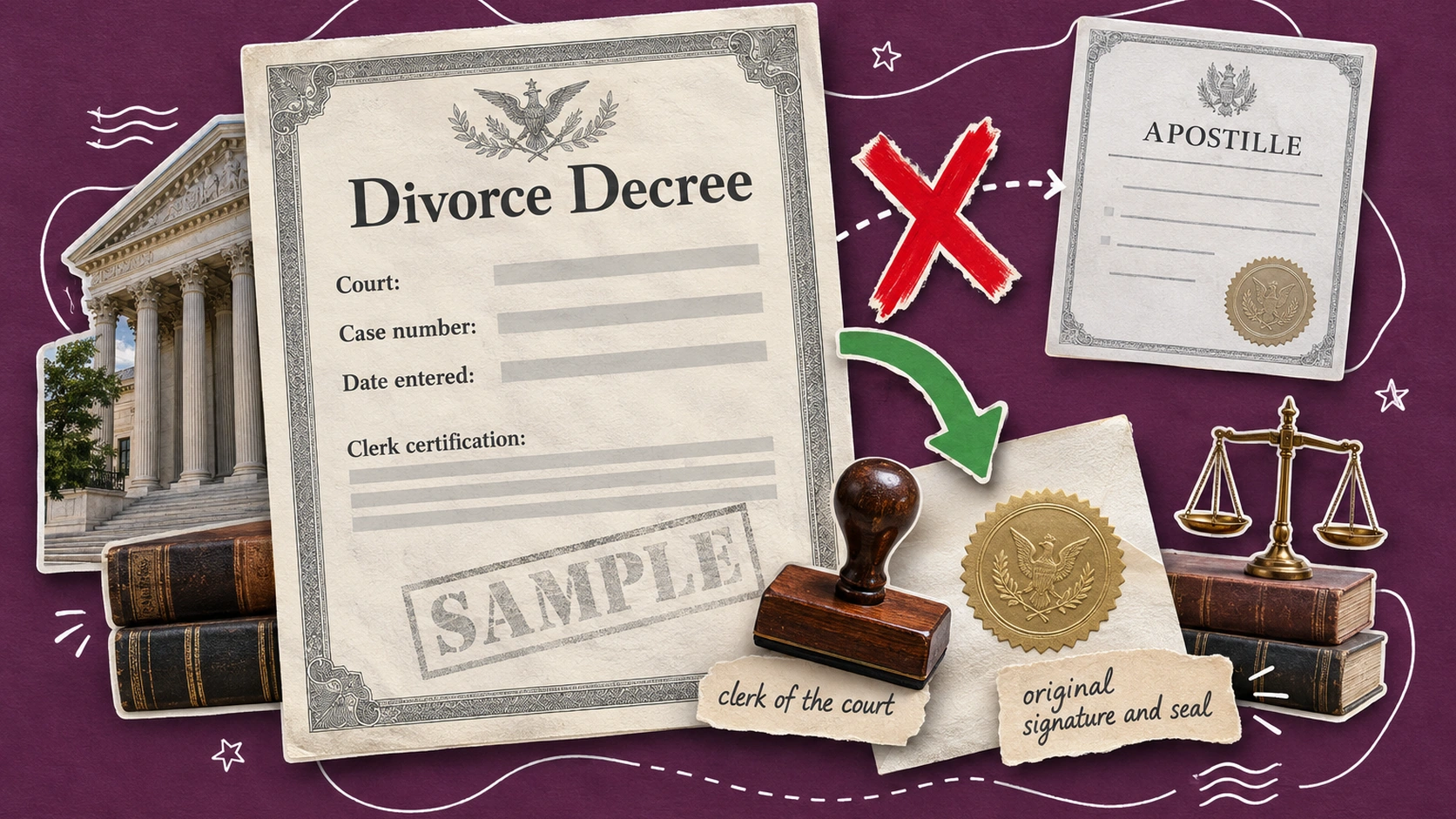
That has a practical consequence for anyone reading this on a site that sells divorce certificates, and we are going to say it plainly. A divorce decree is the court's judgment, issued by the court that granted the divorce. A divorce certificate is a vital-records abstract, issued by the state, recording that a divorce occurred. They are different documents from different offices; our guide to the difference explains both. For this claim, the document SSA prefers is the decree, and the place to get a certified copy is the clerk of the court that granted the divorce.
Where a certificate fits: as secondary evidence when the decree cannot be located, or as the document that tells you which court and which year to ask for the decree from. If your SSA office will accept a certificate in your circumstances, it will tell you; ask before ordering either document, because the office's answer decides which one you need. Our FAQ on getting a divorce certificate covers the state-issued document.
Originals, and Not Delaying
SSA asks for original documents or copies certified by the issuing agency; it does not accept photocopies. It returns originals after it has examined them. And it says not to delay filing because a document is missing: SSA will help you get what it needs, and filing establishes the date. The sequence, then, is: file, and gather the documents in parallel.
What to Find, in Order
- The final divorce decree: a certified copy from the clerk of the court that granted the divorce. If you do not remember the court, the county where the divorce was filed is the place to start.
- The marriage certificate: a certified copy from the state or county that recorded the marriage.
- Your own birth certificate, which SSA-2 also lists, if SSA does not already have your date of birth verified.
- The ex-spouse's Social Security number, or enough identifying information for SSA to find the record. You do not need their permission to give it.
If the marriage certificate is the document you are missing, you can order a certified copy from the state that recorded the marriage; if what you need is the state-issued record of the divorce rather than the court decree, our divorce certificate page explains what that document is. Vital Records Online is a third-party service and not a government agency; a divorce decree comes only from the court that issued it, and SSA alone decides eligibility. The regulation is at 20 CFR 404.331.
Frequently Asked Questions
Can I get Social Security on my ex-spouse's record if we divorced decades ago? Possibly, if the marriage lasted at least ten years and you meet SSA's other conditions. SSA decides; this article covers the documents.
Does my ex-spouse have to agree, or will they find out? No. SSA does not need their consent, and your benefit does not reduce theirs or their current spouse's.
Does SSA want the divorce decree or the divorce certificate? SSA's preferred evidence that a marriage ended is a certified copy of the divorce decree, from the court. A certificate is secondary. Ask your SSA office before ordering.
Why do I need the marriage certificate too? Because the claim has to prove the marriage lasted ten years. The marriage certificate proves when it began; the decree proves when it ended.
Should I wait to file until I have both documents? No. SSA says not to delay filing because a document is missing. File, and gather the documents while the claim is open.