Why Do I Need a Death Certificate?
A death certificate is the official record a state issues when someone dies. It states who died, and when and where, and it is the document almost every bank, insurer, court and government agency will ask for before they will act on the death. In practice you will need certified copies rather than photocopies, and usually more than one, because many organisations keep the copy they are given.
Why a certified copy, and not a photocopy
A certified copy is printed by the issuing office on secure paper and carries a seal or the registrar’s signature, which is what allows the receiving organisation to treat it as proof. A photocopy or a scan has no legal standing for most purposes. USAGov makes the same distinction: certified copies are what you need for substantive tasks such as notifying Social Security or closing accounts, while an ordinary copy may be enough for minor administrative ones.
What you will be asked to produce one for
The list is longer than most people expect, which is the main reason families end up ordering more copies later:
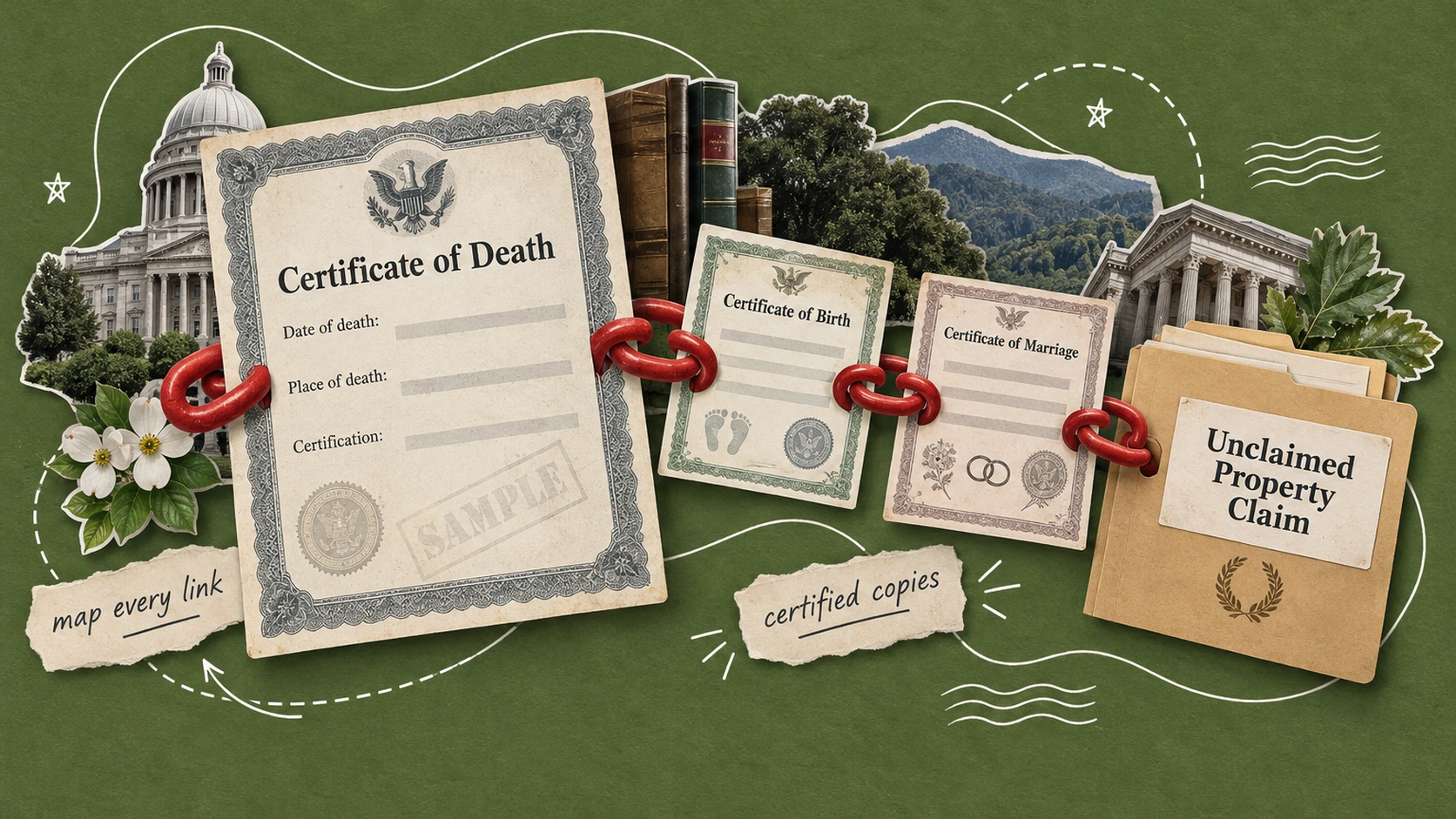
- Settling the estate. Probate courts require a certified copy to open a case, and executors are generally asked for one before they can act.
- Banks and financial accounts. Closing or transferring accounts, releasing funds to a joint holder, and claiming the contents of a safe deposit box.
- Life insurance and annuities. Insurers will not process a claim without one.
- Property and vehicles. Transferring a title or deed, and removing a name from a mortgage or registration.
- Pensions and employer benefits. Workplace pensions, retirement accounts and union or veterans’ benefits.
- Social Security. Survivors applying for benefits will be asked to establish the death.
Does the funeral home notify Social Security?
Usually, yes. Funeral directors commonly report a death to the Social Security Administration using Form SSA-721, and the SSA’s own guidance is that you generally do not need to report it yourself. The practical step is to give the funeral director the deceased person’s Social Security number so the report can be filed. If no funeral home is involved, or you are not sure the report was made, contact the SSA directly. Reporting the death is a separate matter from applying for survivors benefits, which you have to do yourself.
How many certified copies should you order?
There is no single right number, because it depends on how many accounts, policies and titles the person held. Families commonly order somewhere between five and ten. Ordering them together at the outset is normally cheaper and faster than coming back for more, since most states charge less for additional copies requested at the same time, and a second request starts the processing clock again.
Who is allowed to request one
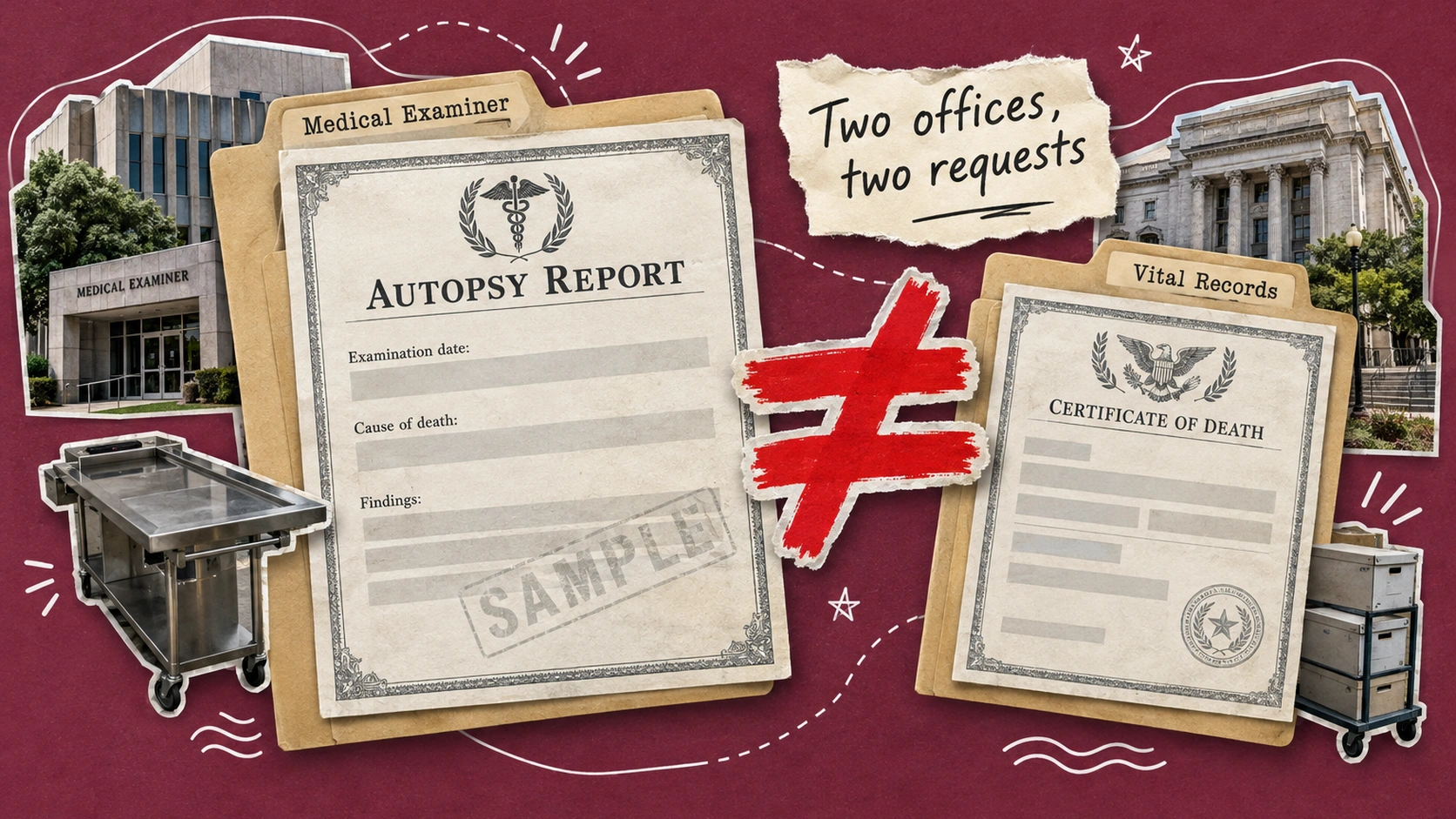
Access is restricted at first, and the rules are set by each state rather than nationally. USAGov’s general guidance is that only certain family members can obtain a death certificate soon after the death, typically a spouse, children or siblings, and some states also allow an executor, a legal representative or someone who can show a documented interest in the estate. Records become public after a period that varies by state. Because the detail differs, check the rule for the state where the death occurred before you apply, and be ready to show your own identification and your relationship to the deceased.
How to get a certified copy
Death certificates are issued by the vital records office in the state where the death occurred, not where the person lived or where you live now. There are three routes:
- Through the funeral director. The simplest option in the days after a death. Funeral homes normally order the first set of certified copies on the family’s behalf, so say how many you want before the paperwork is filed.
- Directly from the state. Every state vital records office accepts requests by mail, most accept them online, and some allow in person collection, which is generally the fastest route where it is offered.
- Through an online filing service. If you would rather not work out which office holds the record and what each state requires, you can order a death certificate online through VRO. We prepare and submit the application to the correct issuing office. Vital Records Online is a private company and is not a government agency, and our filing fee is separate from the state’s own fee.
How long it takes
Processing time is set by the issuing office and varies widely between states, from a few days to several weeks. It also depends on how recent the death is, because the record has to be registered by the state before a certificate can be issued, which is why a request made in the first days after a death can take longer than one made later. You can check the current figure for each state on our death certificate processing times page, and the state’s fee on our death certificate fees page. Expedited shipping shortens delivery, not the state’s own review.
If the death happened outside the United States
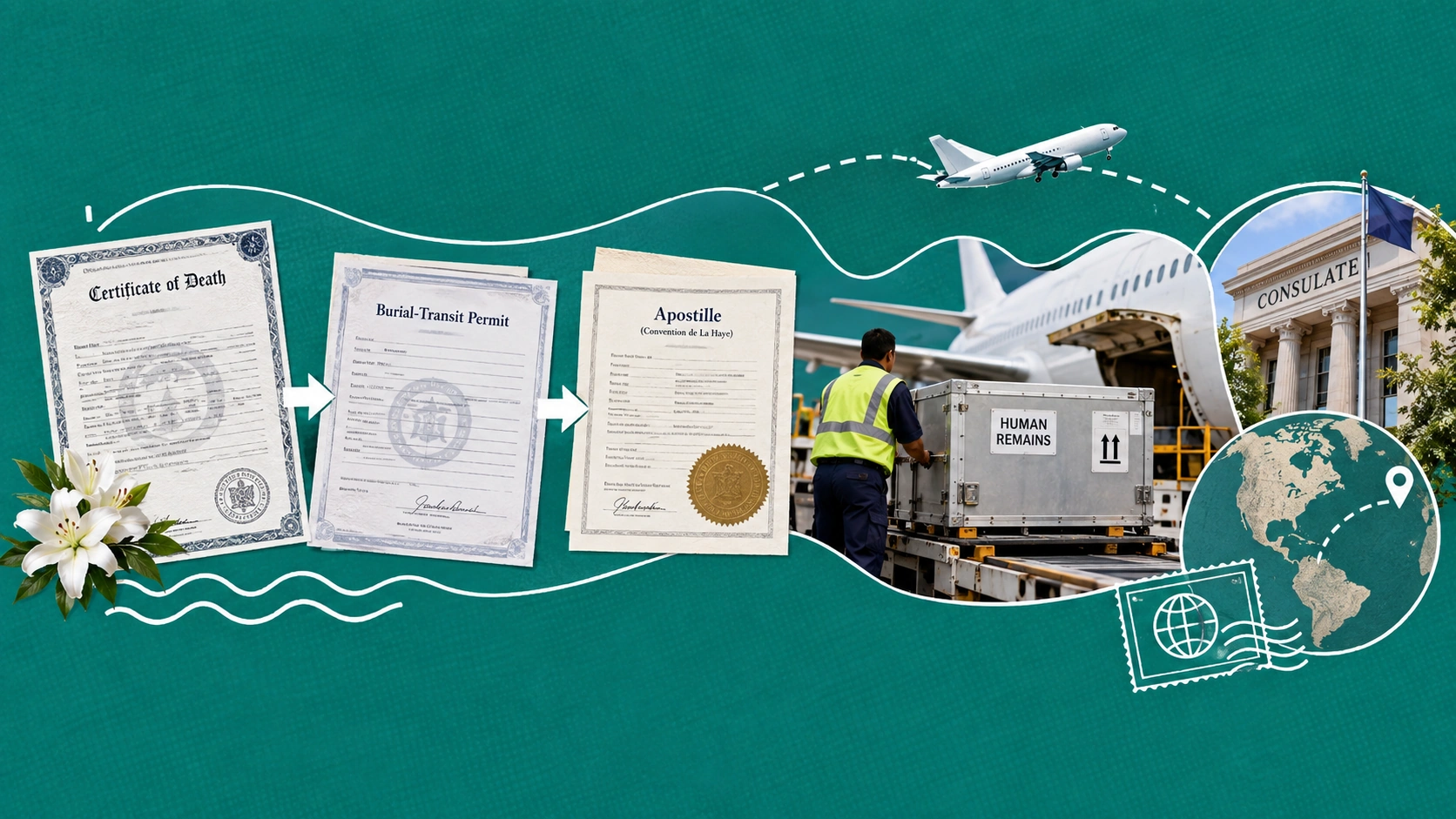
When a US citizen dies abroad, the US embassy or consulate issues a Consular Report of Death Abroad, which serves the same purpose as a state death certificate for most US institutions.
Official sources
Requirements, fees and processing times are set by each state and change from time to time. These federal references are the places to confirm the current position:
- USAGov: How to get a certified copy of a death certificate
- CDC/NCHS: Where to Write for Vital Records, the federal directory of state vital records offices
- The Social Security Administration publishes guidance on what to do when someone dies, including Form SSA-721, the statement of death filed by a funeral director.
This page explains a general process and is not legal advice. Where a situation is unusual, the issuing state’s vital records office is the authority on what it will accept.