Voter ID Requirements by State (2026): Do You Need an ID to Vote?
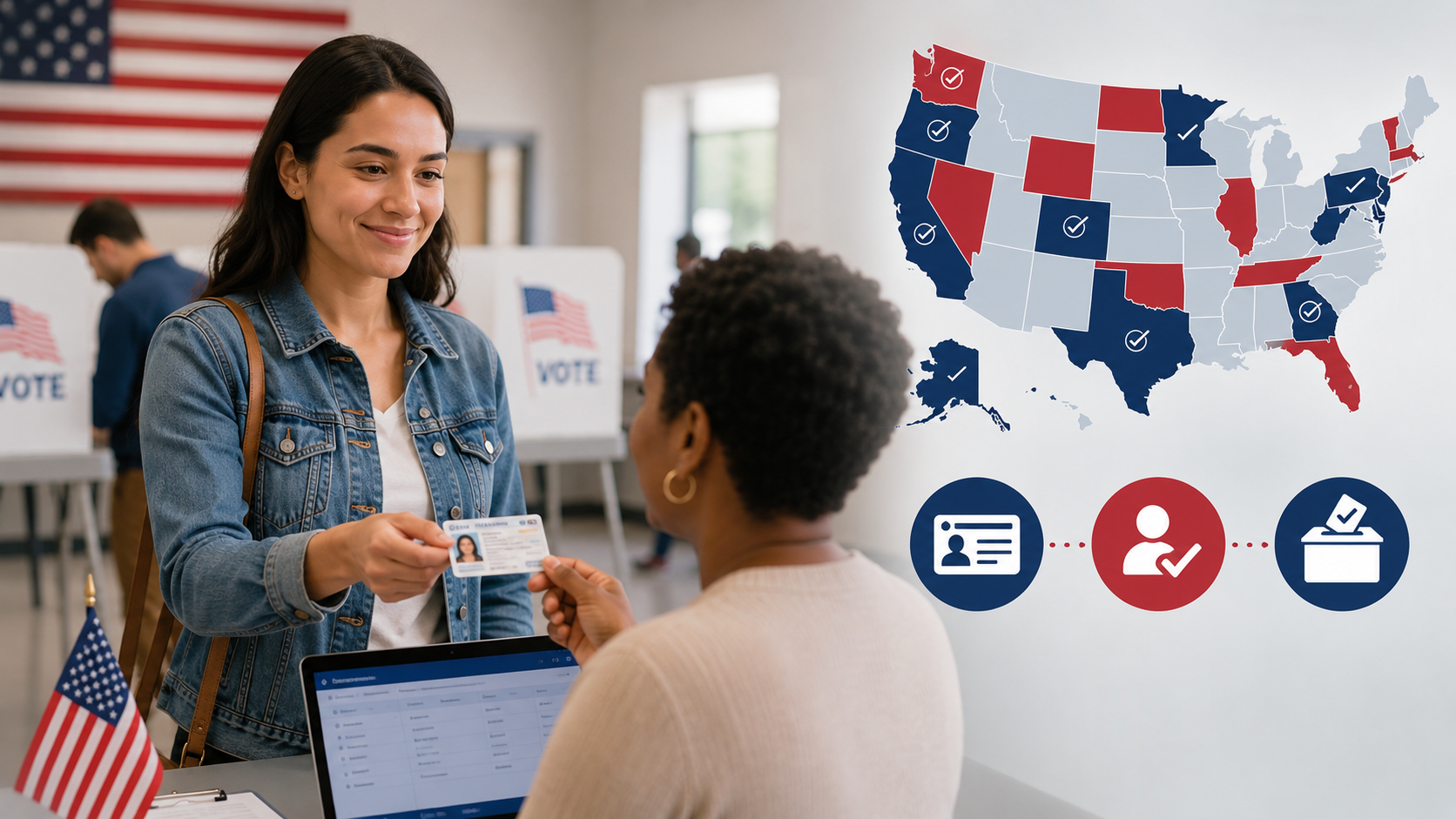
One of the most common questions American voters ask before an election is simple: “Do I need an ID to vote?” The answer depends entirely on where you live. Some states require a photo ID at the polls, others accept a non-photo document, and others ask for no document at all. On top of that, a separate national debate over proof of citizenship to register could reshape the rules in every state.
This guide breaks down voter ID requirements by state for 2026, explains the difference between “strict” and “non-strict” laws, and shows where a document many Americans already need, a certified birth certificate, fits into the picture.
Do You Need an ID to Vote? The Short Answer
Most states ask voters for some form of identification, but the rules fall into five distinct groups. As of 2026, nine states require a photo ID with strict enforcement, ten more request a photo ID with backup options, three require a non-photo ID strictly, fourteen request a non-photo ID with backup options, and the remaining states plus Washington, D.C., don’t require any document at the polls. Even in “no ID” states, first-time voters who registered by mail are usually asked to show ID the first time they vote. Because these classifications change often, always confirm your state’s current rule with your local election office (via USA.gov) before Election Day.
The Four Categories of Voter ID Laws
The National Conference of State Legislatures (NCSL) groups state voter ID laws along two lines: what kind of ID is requested (photo or non-photo), and how strict the rule is if a voter shows up without acceptable identification.
The distinction between strict and non-strict is the part most people miss, and it’s the part that actually determines whether your vote counts:
- Strict states require voters without acceptable ID to cast a provisional ballot and then take an extra step after Election Day, such as returning with ID, for the vote to count.
- Non-strict states give voters without ID another way to have their ballot counted on the spot, for example by signing an affidavit, having a poll worker verify their identity, or providing other information.
Voter ID Requirements by State (2026)
Below is how states fall into each category, based on NCSL’s classifications. Start with the quick-reference table, then read the detailed breakdown for your state’s group. Because laws change frequently, sometimes between elections, always confirm the current rule with your state or local election office before you vote.
| Category | What it means for you | States |
|---|---|---|
| Strict photo ID | Must show photo ID; without it, you vote provisionally and follow up after Election Day | GA, IN, KS, MS, NE, NC, TN, VA, WI |
| Photo ID requested | Photo ID asked for, but you can still vote with an affidavit or identity verification | AL, AR, FL, HI, ID, LA, MI, RI, SD, TX |
| Strict non-photo ID | Must show ID, but it doesn’t need a photo (e.g., utility bill, bank statement) | AZ, ND, OH |
| Non-photo ID requested | ID asked for, non-photo accepted, with fallback options if you have none | AK, CO, CT, DE, IA, KY, MO, MT, NH, OK, SC, UT, WA, WV |
| No document required | No document needed at the polls; identity verified another way (first-time voters may still need ID) | CA, IL, ME, MD, MA, MN, NV, NJ, NM, NY, OR, PA, VT + DC |
States That Require Photo ID to Vote (Strict)
In these states, a photo ID is required, and voters without one must take extra steps after Election Day for their ballot to count:
Georgia, Indiana, Kansas, Mississippi, Nebraska, North Carolina, Tennessee, Virginia, and Wisconsin.
States That Request Photo ID to Vote (Non-Strict)
These states ask for a photo ID, but voters without one still have a way to cast a ballot that counts, often by signing an affidavit or having their identity verified:
Alabama, Arkansas, Florida, Hawaii, Idaho, Louisiana, Michigan, Rhode Island, South Dakota, and Texas.
States That Require Non-Photo ID to Vote (Strict)
These states accept identification that doesn’t have to include a photo, such as a bank statement, utility bill, or government document, but still require some acceptable form of ID:
Arizona, North Dakota, and Ohio.
States That Request Non-Photo ID to Vote (Non-Strict)
These states ask for ID but accept non-photo documents and provide fallback options for voters without one:
Alaska, Colorado, Connecticut, Delaware, Iowa, Kentucky, Missouri, Montana, New Hampshire, Oklahoma, South Carolina, Utah, Washington, and West Virginia.
States That Don’t Require ID to Vote
The remaining states and Washington, D.C., generally do not require voters to present a document at the polls. In these states, your identity is verified by other means, such as a signature match against your registration record. States in this group include California, Illinois, Maine, Maryland, Massachusetts, Minnesota, Nevada, New Jersey, New Mexico, New York, Oregon, Pennsylvania, and Vermont, along with the District of Columbia.
Important caveat: Even in “no ID” states, federal law generally requires first-time voters who registered by mail without verifying their identity to show ID the first time they vote. So even where ID isn’t routinely required, new registrants should be prepared to show one.
What Counts as Acceptable Voter ID?
Accepted documents vary by state, but commonly accepted forms of ID include:
- A state-issued driver’s license or non-driver ID card
- A U.S. passport
- A military or veteran ID
- A tribal ID
- For non-photo states: a current utility bill, bank statement, paycheck, or government document showing your name and address
If you’ve recently moved or changed your name, your ID may no longer match your voter registration, a mismatch that can slow you down at the polls. Keeping your underlying vital records consistent is part of being “election ready.”
The Bigger Shift: Proof of Citizenship to Register
Voter ID at the polls is only half the story. A separate and growing debate concerns whether you must prove your citizenship when you register to vote, not just show ID when you cast a ballot.
At the federal level, the SAVE Act (Safeguard American Voter Eligibility Act) would require documentary proof of U.S. citizenship to register. As of mid-2026, the bill has passed the U.S. House of Representatives, most recently in February 2026, but has not passed the Senate, so it is not currently federal law. Several states, meanwhile, have advanced their own proof-of-citizenship requirements for registration. (For a state-level example, see our guide to the Florida SAVE Act and the documents you need to vote.)
If a documentary proof-of-citizenship requirement takes effect where you live, the accepted documents typically include a U.S. passport, a Certificate of Citizenship or Naturalization, or a certified U.S. birth certificate. For most Americans who don’t hold a passport, a certified birth certificate is the simplest and least expensive way to prove citizenship.
Where a Certified Birth Certificate Comes In
Even today, a meaningful share of registered voters, by some estimates around 11%, don’t have ready access to their birth certificate. That can become a real obstacle if your state adopts a proof-of-citizenship rule, or if you need to establish your identity for a new ID.
There’s also a name-matching wrinkle worth understanding. A birth certificate proves citizenship, but it shows your name at birth. If you’ve since changed your name through marriage, divorce, or a court order, your birth certificate alone may not match your current ID. In that case you may also need a marriage certificate or court order to legally connect your birth name to your current name. (See our guide on how to update your documents after a name change.)
For voters, that means two records are worth keeping current and accessible:
- A certified birth certificate as primary proof of citizenship and identity.
- A certified marriage certificate (or applicable court order) if your name has changed, to bridge your birth name and current legal name.
How to Be Election-Ready, Wherever You Live
Regardless of your state’s current rules, a few steps will keep you prepared as requirements evolve:
- Check your state’s current rule. Confirm with your state or local election office, since classifications change.
- Verify your registration is active and that your name and address match your ID.
- Locate your citizenship and identity documents well before any deadline: birth certificate, passport, or naturalization paperwork.
- Replace anything missing now, rather than during the rush before an election.
Frequently Asked Questions
How many states require ID to vote?
A majority of states ask for some form of identification, split among strict photo, non-strict photo, strict non-photo, and non-strict non-photo categories. The remaining states and D.C. do not routinely require a document, though first-time voters often must show ID.
Which states don’t require ID to vote?
States that generally don’t require a document at the polls include California, Illinois, Maryland, Massachusetts, Minnesota, Nevada, New Jersey, New Mexico, New York, Oregon, Pennsylvania, Vermont, and Maine, plus Washington, D.C. Rules can change, so verify with your state.
Can I use a birth certificate to vote?
A birth certificate is not typically used as in-person voter ID (which usually means a photo ID or, in some states, a current document showing name and address). However, a certified birth certificate is a primary document for proving U.S. citizenship when registering, which matters under proof-of-citizenship laws, and for obtaining a photo ID in the first place.
Is the SAVE Act law?
As of mid-2026, the SAVE Act has passed the U.S. House but not the Senate, so it is not federal law. Some states have pursued their own proof-of-citizenship requirements.
Make Sure Your Documents Are Ready
Voter ID rules differ from state to state and continue to shift, but one principle holds everywhere: having your core identity and citizenship documents in order protects your ability to register and vote without delay. If you don’t have a certified copy of your birth certificate or you need a certified marriage certificate to match a name change, Vital Records Online can help you request these documents quickly and securely, so you’re ready well ahead of the next election.
This article is for general informational purposes only and does not constitute legal advice. Voter ID and registration laws change frequently and vary by state. Always confirm current requirements with your state or local election office before you register or vote.