ETIAS Delayed Again: Europe’s Travel Authorization Now Expected in 2027
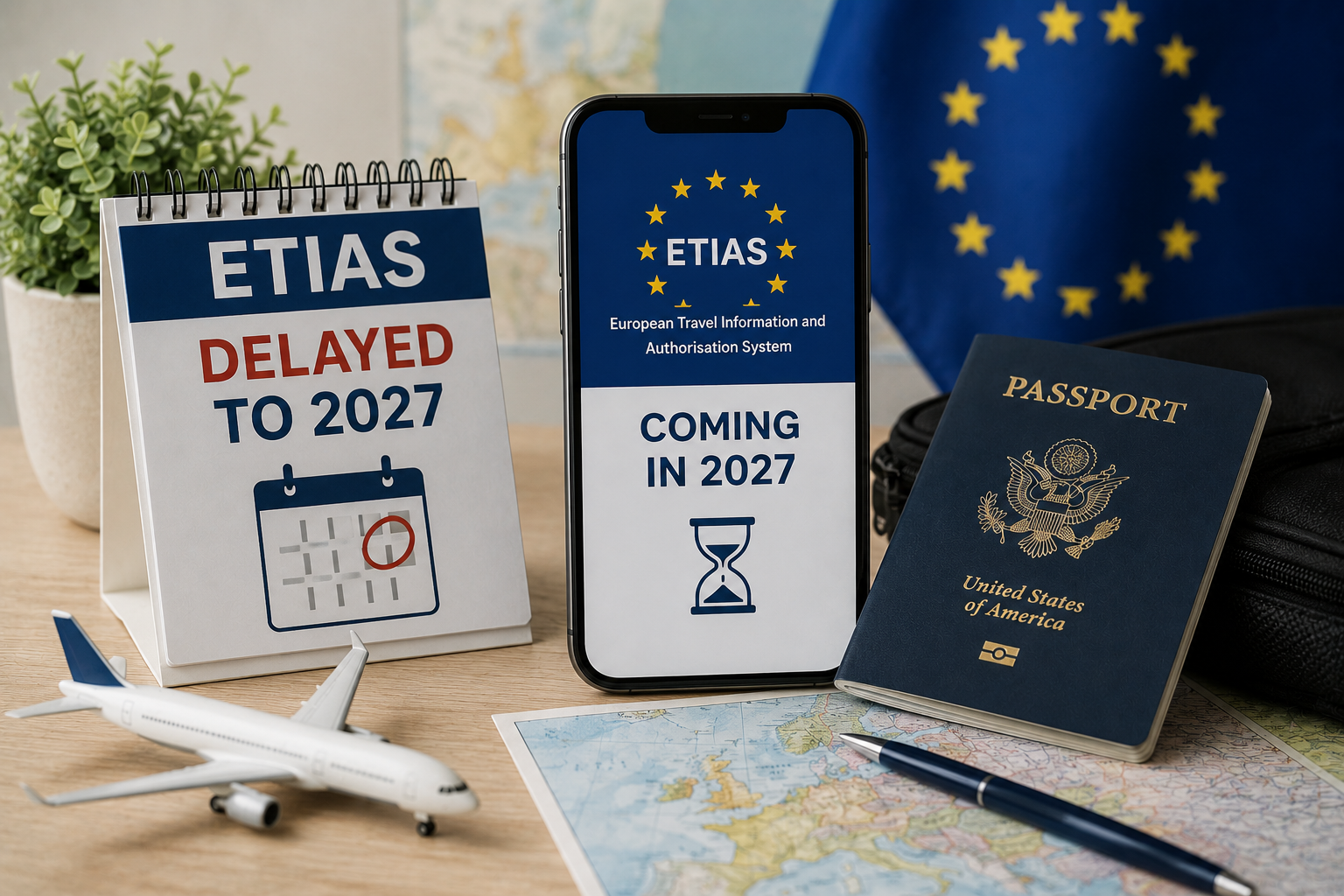
If you have been tracking Europe’s new travel rules, here is the headline: ETIAS has been delayed again, and the launch is now widely expected in 2027 rather than late 2026. Industry watchers point to a possible start around April 2027, tied to technical readiness and the phased rollout of the linked Entry/Exit System (EES). For U.S. travelers, the practical takeaway is reassuring: you do not need ETIAS to visit Europe right now. You do, however, still need a valid U.S. passport with enough remaining validity. This update explains what changed and how to prepare, and it complements our fuller EES and ETIAS guide for U.S. travelers.
What ETIAS Is (and Is Not)
ETIAS stands for the European Travel Information and Authorisation System. It is a pre-travel authorization the European Union plans to require from visa-exempt visitors, including U.S. citizens, before they enter participating European countries.
- Mostly online: Most travelers will apply through an official website or app, answering a short set of questions.
- Low cost: The fee is expected to be about €7 for eligible adult applicants.
- Multi-year validity: Once approved, an authorization is expected to be valid for up to three years, or until your passport expires, whichever comes first.
- Not a visa: ETIAS is a travel authorization, not a visa. It does not change the visa-free status U.S. citizens currently enjoy for short stays.
The Latest Delay: Now Expected in 2027
Earlier official guidance had pointed to a late-2026 start for ETIAS. That timeline has slipped. The launch is now widely expected in 2027, with industry estimates clustering around April 2027.
- Why the delay: The postponement is tied to technical issues and to the phased rollout of the EES, which must be operating before ETIAS takes effect.
- Dates keep shifting: ETIAS has been pushed back several times. Any date you see today, including 2027, is subject to change.
- Check official sources: Because timelines keep moving, confirm the current status with the official EU ETIAS site rather than relying on older articles.
You can verify the latest guidance directly on the official EU ETIAS website.
How EES Fits In and Its Phased Rollout
To understand the ETIAS delay, it helps to know about the EES, the system it depends on.
- What EES does: The Entry/Exit System is a biometric border system that records the entries and exits of non-EU travelers and helps enforce the 90-days-in-any-180-days short-stay rule.
- Replacing passport stamps: Over time, EES is designed to replace manual passport stamping with digital records at EU external borders.
- A phased start: EES is rolling out in stages at external borders rather than switching on everywhere at once, which can mean varied experiences at different crossings during the transition.
- Order of operations: Once EES is fully operational, ETIAS is expected to follow. That sequencing is a key reason ETIAS keeps moving with the EES schedule.
What the Delay Means for U.S. Travelers Right Now
The most important points for planning a European trip in the near term are straightforward.
- You do not need ETIAS yet: Until ETIAS is officially live, U.S. citizens can continue traveling to Europe for short stays without it.
- You do need a valid passport: A current U.S. passport remains essential, and many destinations expect several months of remaining validity beyond your travel dates.
- Watch for advance notice: When ETIAS does launch, expect an official transition period and public guidance, so you should have time to apply before it becomes mandatory.
- Beware look-alike sites: As launch nears, unofficial sites may appear. When the time comes, apply only through the official EU channel.
For destination-specific entry requirements, the U.S. State Department’s international travel pages are a reliable reference.
How to Prepare Before Your Next Trip
Because a valid passport is the one requirement that matters today, passport readiness is the smartest way to prepare.
- Check your expiration date: Confirm your passport is valid and has enough remaining validity for your destination, ideally six months or more.
- Renew early if needed: If your passport is expiring within a year, consider renewing now to avoid seasonal processing crunches. See our guide on how to renew your passport.
- Plan around processing times: Build in a buffer for application and mailing. Our overview of how long it takes to get a passport can help you time your request.
- Keep documents organized: Have your supporting records, photos, and application details ready so you are not scrambling later.
Government Sources vs. Vital Records Online
Vital Records Online is a third-party service, not a government agency. ETIAS applications, when they launch, and official passport applications are handled through government channels such as the EU’s official ETIAS system and the U.S. Department of State. What we offer is optional, paid help preparing and submitting passport-related applications, so the process is simpler and less time-consuming for you. Using our service is always your choice, and you can work directly with the relevant government agencies at no service fee if you prefer.
Frequently Asked Questions
Do I need ETIAS to travel to Europe in 2026?
No. ETIAS is not yet in effect and is now widely expected to launch in 2027. Until it is officially live, U.S. citizens can continue short visa-free trips to Europe without it. Always confirm the current status with official sources before you travel.
Why does ETIAS keep getting delayed?
The launch is tied to the phased rollout of the EES biometric border system and has faced technical challenges. Because ETIAS depends on EES being fully operational first, its timeline has shifted more than once and remains subject to change.
What should I do right now to get ready?
Focus on your passport. Make sure it is valid with enough remaining validity for your destination, and renew early if it is close to expiring. That is the one requirement that applies to your trip today.
Is ETIAS the same as a visa?
No. ETIAS is a travel authorization, not a visa. It is expected to be a mostly online process costing about €7 and valid for up to three years or until your passport expires, whichever comes first.
Related Guides
- EES and ETIAS in 2026: What U.S. Travelers Need to Know
- How Long Does It Take to Get a Passport?
- How to Renew Your Passport
- Passport Application Help
Don’t let a soon-to-expire passport derail your next trip to Europe. Get your passport application or renewal moving today with Vital Records Online’s passport services.