Ordering a Death Certificate When the Death Happened in Another State
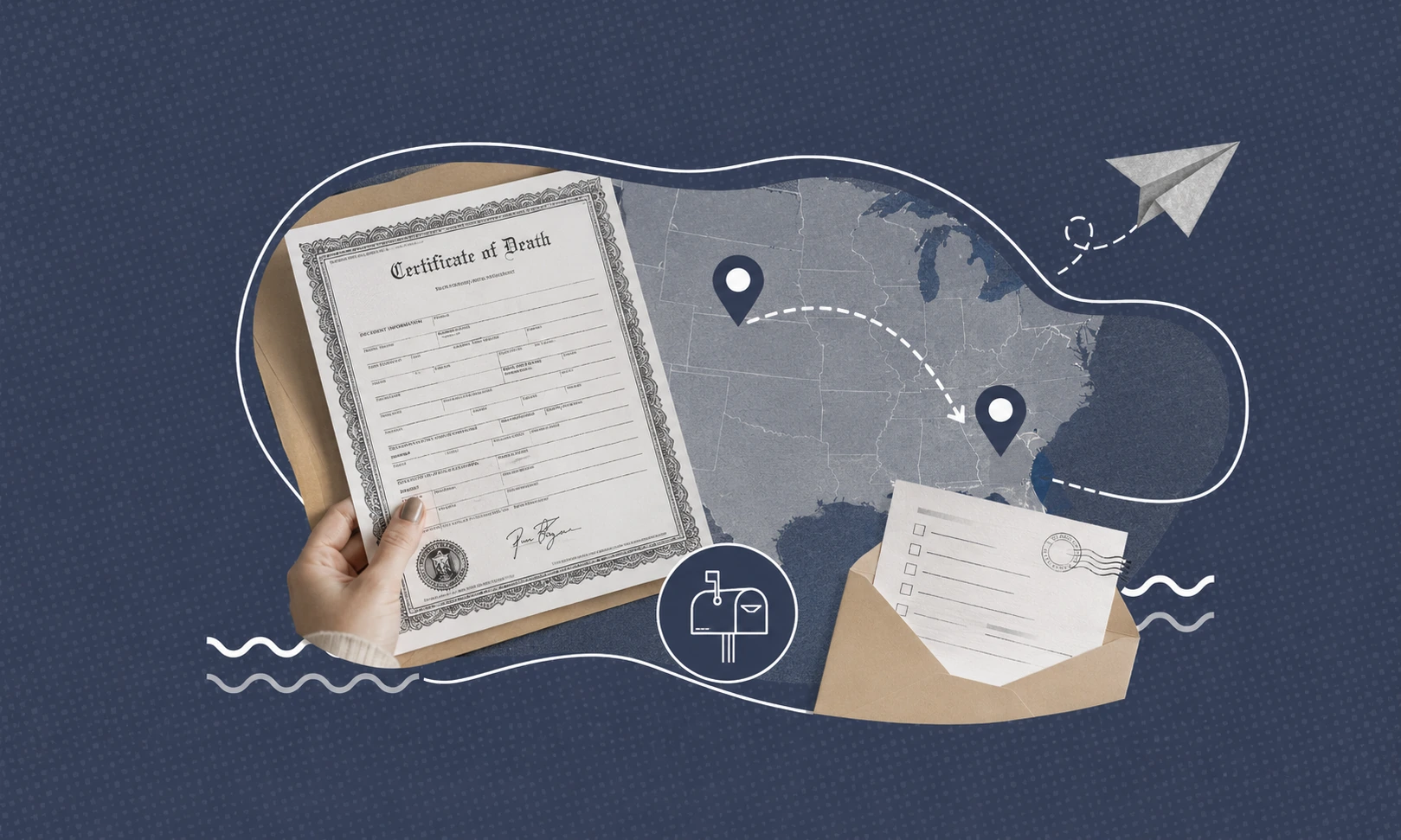
When someone dies away from home, the first instinct is to contact the vital records office in the state where they lived. That office does not have the record, and it cannot get it for you. A death certificate is filed and held by the state where the death physically occurred, and that single rule accounts for most of the confusion families run into while settling an estate.
It comes up more often than people expect: a parent transferred to a specialty hospital across a state line, a grandparent who died on vacation, a retiree who spent winters in another state, a hospice placement in a neighboring county that happened to be over the border.
Place of Death Governs, Not Place of Residence
Vital records in the United States are administered at the state level, and the event itself determines the custodian. A death that occurs in Arizona is registered in Arizona, even if the person had lived in Ohio for sixty years and is buried there. The USAGov guidance on getting a certified copy of a death certificate puts it plainly: contact the vital records office of the state where the death occurred.
The place of death is recorded on the certificate itself, which is why a hospital transfer matters so much. If your father was admitted in one state and died after being moved to a hospital in another, the second state holds the record. The funeral home that handled arrangements can usually tell you where the death was registered, and it is worth asking before you start filing applications.
The Same Logic Applies to Other Records
This is not unique to death records. A marriage is registered where the ceremony took place, and a divorce is held by the court and state that granted it, which is why our FAQ on getting a divorce certificate from another state follows the same pattern. Once you understand that the event location controls, ordering across state lines stops being mysterious.
Eligibility Rules Change at the State Line
Here is the part that catches people who have ordered a death certificate before. Who may request a certified copy is decided by each state, and the rules genuinely differ.
- Some states are relatively open, allowing a broad set of family members to order a certified copy.
- Some restrict certified copies to the spouse, parents, children, and the legal representative of the estate.
- Some issue an informational copy to anyone while reserving certified copies for a defined list of eligible requesters.
- Some require documented proof of the relationship, such as your own birth certificate showing the decedent as your parent.
- Some restrict recent records more tightly than older ones, easing the rules once a record passes a set age.
The consequence is that being eligible in your home state tells you nothing about being eligible in the state where the death happened. A grandchild who could order a certificate in one state may be refused in another. Check that state's rules before you pay a fee, because a rejected application usually means the fee is spent on a search rather than refunded.
Our overview of the unusual state rules about death certificates covers several of the more surprising variations.
What You Will Need to Provide
The specifics vary, but nearly every state asks for the same categories of information. Assembling these before you start makes the difference between one application and three.
- Full legal name of the deceased, including any maiden or former names the record might carry.
- Date of death, and the city or county where it occurred.
- Your relationship to the deceased, and often documentation proving it.
- Valid government-issued photo identification for you as the applicant.
- The reason for the request, which several states require you to state.
- Payment of the state's fee, which is a government fee set by that state.
State Office or County Office
Some states let you order from either the state vital records office or the county where the death occurred; others route everything through the state. County offices are sometimes faster for recent deaths, since the record reaches them first. When both options exist, ask which is quicker for a death of that date rather than assuming.
How Long It Takes and Why It Varies So Much
Processing times are set by each state and range from a few business days to several weeks, before mailing. That variation is real and worth planning around, especially when a probate deadline or an insurance claim window is running. Our state processing time reference shows how much the timeline differs from one state to the next.
Two practical points make the wait less painful. First, order every copy you expect to need in a single request; a second order restarts the clock and pays the fee again. Institutions that typically want their own certified copy include life insurers, banks, pension and retirement administrators, the Social Security Administration, motor vehicle agencies, and county property offices. Second, ask whether the state offers expedited handling, since some do and some do not, and the answer changes what you should promise an attorney or an executor.
When the Death Happened Outside the United States
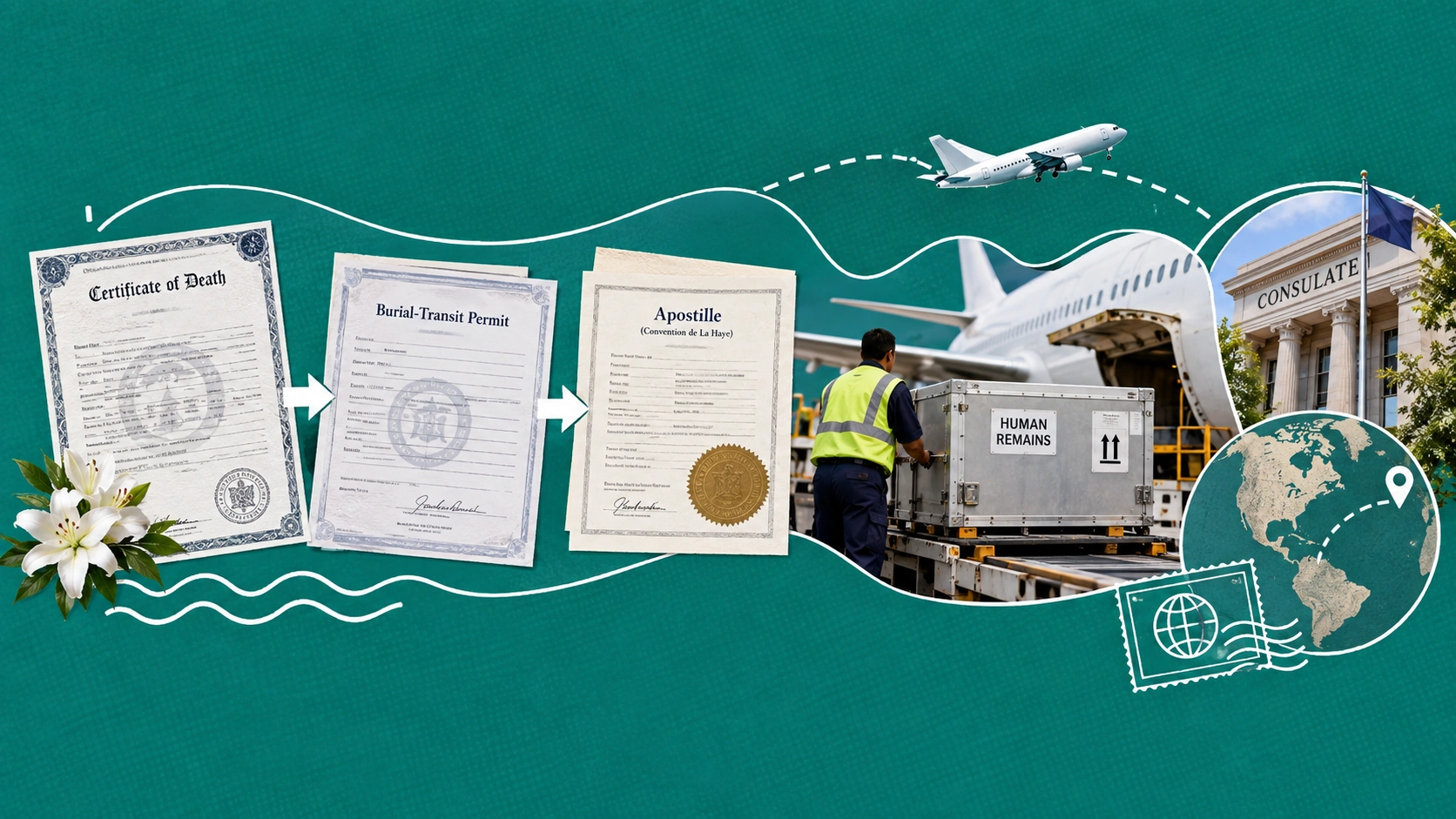
If the death occurred in another country, no state holds the record at all. For a U.S. citizen who died abroad, the document is a Consular Report of Death Abroad issued by the U.S. Department of State, and it is requested through an entirely different process. Our guide on getting a copy of a Consular Report of Death Abroad covers who may request one and how long it takes.
Getting the Order Placed
Ordering from a state you have never dealt with means learning a new set of forms, fees, and eligibility rules while you are already handling everything else that follows a death. That is the part most families would rather not do twice.
Vital Records Online is a third-party service, not a government agency, and using it is optional; you may always apply directly to the state. If you would rather not navigate an unfamiliar state's process yourself, you can order a certified death certificate through our service, and our checklist for what to do when a parent dies covers what else needs attention.
Frequently Asked Questions
Which state has the death certificate if the person died away from home? The state where the death occurred. Residence does not determine where a death is registered.
What if my relative died during a hospital transfer between states? The record is held by the state where the death was pronounced. The funeral home or hospital can confirm which state that was.
Can I order a death certificate from another state online? Most states offer an online or mail path for out-of-state requesters. What varies is who is eligible for a certified copy and what proof of relationship is required.
Why was my request rejected when I qualified in my own state? Eligibility is set by the state holding the record. Rules differ, and a relationship that qualifies in one state may not qualify in another.
How many certified copies should I order? More than you think. Life insurance, pensions, banks, retirement accounts, and property transfers each commonly require their own certified copy, and reordering restarts the processing time.