When the Record Predates Statewide Registration: Genealogy Without a Birth Certificate
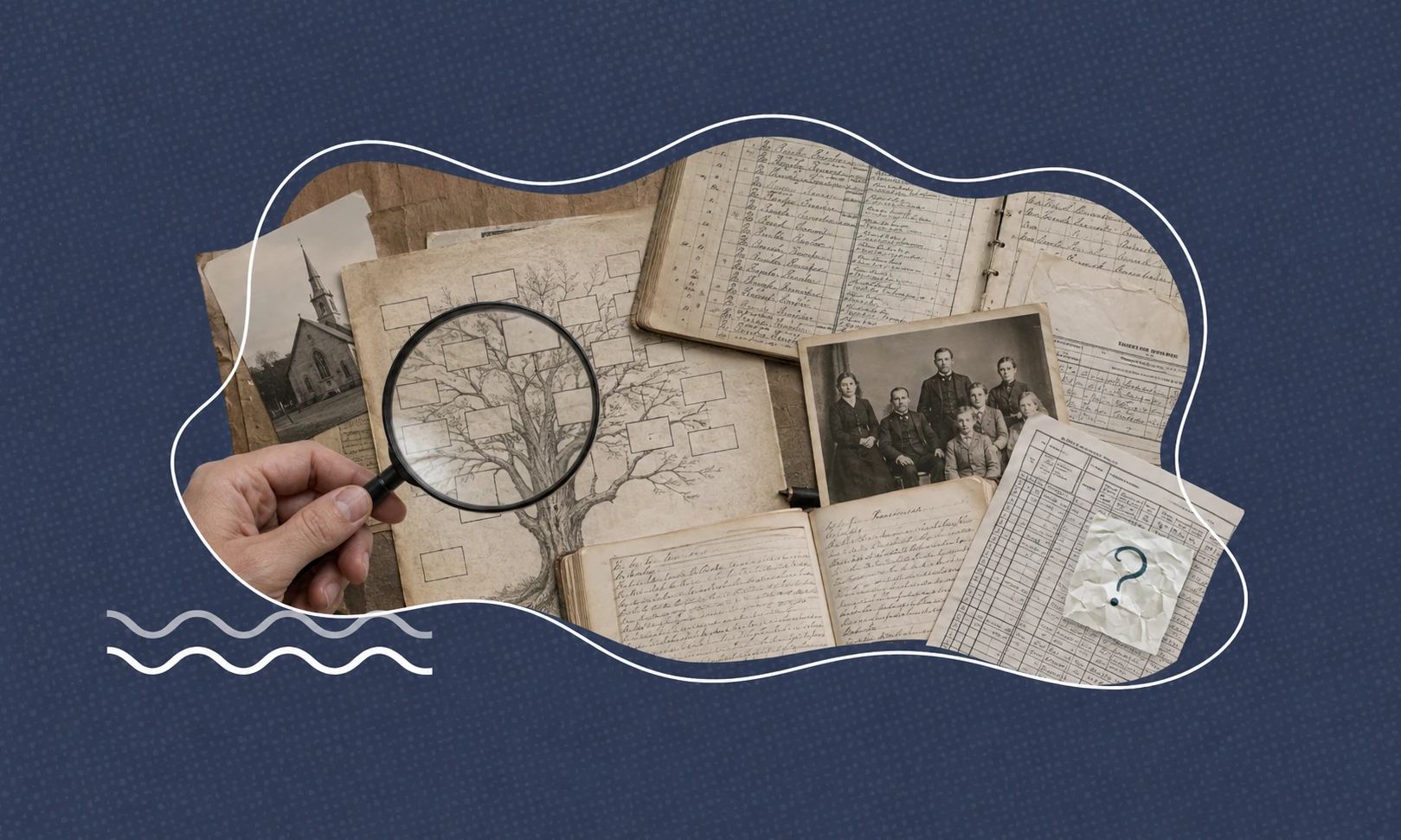
You have traced the family back four generations, you know roughly when your great-great-grandmother was born, and the state vital records office has nothing. In most cases this is not a lost record or a clerical failure. The certificate was never created, because the state was not registering births yet.
Understanding when registration actually began, and what people used instead, turns a dead end into a research plan. This article is about the era before certificates existed. If your ancestor's birth was registered and you simply need to obtain the certificate, that is a different task, and our genealogy records service is the place to start.
When Statewide Birth Registration Actually Began
Birth registration in the United States rolled out state by state over several decades, and the national picture came together surprisingly late.
- 1915: The federal birth registration area was established with 10 states and the District of Columbia.
- 1920: Twenty-four states and the District of Columbia were providing statewide birth data.
- 1933: All 48 states and the District of Columbia were included in the birth registration area.
- 1959 and 1960: Alaska and Hawaii were added after statehood.
The entry bar explains the slow pace. A state could only join the registration area by demonstrating that at least 90 percent of its births were actually being recorded, a threshold that was difficult to meet where home births were the norm and where physicians and midwives often did not file paperwork. Rural and less-funded states, particularly in the South, were among the last to qualify.
What This Means for Your Search
Two practical conclusions follow. First, the relevant question is not "was my ancestor born in the United States" but "was that state registering births in that year." Second, joining the registration area is not the same as the first birth ever being recorded locally; some counties and cities kept birth records well before their state did, and some states registered births for years before meeting the federal threshold. Check the specific state and county, not the national timeline.
The Records That Stand In for a Birth Certificate
Genealogists rarely rely on a single substitute. The convention is to assemble several independent records that agree, since no one of them carries the authority of a birth certificate on its own.
Delayed Birth Registrations
This is the strongest substitute and the most overlooked. When Social Security arrived in the 1930s and people suddenly needed to prove their age, enormous numbers of adults born before registration went back and registered their own births. A delayed registration is filed years or decades after the birth, supported by whatever evidence the applicant could produce at the time.
These are held by state vital records offices and are often indexed separately from ordinary birth records, which is exactly why a standard search misses them. Ask specifically whether a delayed registration exists. Our FAQ on what a delayed birth certificate is explains how these records work.
Church and Religious Records
Baptismal, christening, and confirmation records frequently predate civil registration by centuries and often name both parents and the exact date of birth. They live with the individual parish or congregation, or with a denominational archive, rather than with any government office. Where the congregation has closed or merged, the denominational archive is the place to ask.
Family Bible Records
Handwritten birth, marriage, and death pages in a family Bible were the household's own record system and were treated as evidence in their own time. Their value depends on when the entries were made. Entries written as events occurred are far stronger than a page filled in decades later from memory, and the Bible's own printing date sets an outer limit on when the writing could have begun.
Federal and State Census Schedules
Census records will not give you a birth date, but they place a person in a household with an approximate age and a stated birthplace, and they do it repeatedly across the decades. Several censuses together narrow a birth year considerably. Treat ages as approximate; they were reported by whichever household member answered the door.
County Courthouse Records
Before states registered births, counties were already recording the transactions of ordinary life: marriages, land and property deeds, probate and estate files, guardianship appointments, and court proceedings. Probate files in particular are underused, because a will or an estate distribution often names children and their relationships explicitly.
State Archives
State archives hold the material that no longer sits with the agency that created it, including early local registers, institutional records, militia and military rolls, and school census records. Archivists know their holdings well, and a specific question about a county and a decade usually gets a far better answer than a general request.
How to Work the Problem
A rough order of operations saves months of scattered searching.
- Establish the state's registration start date and check whether the county or city was recording births earlier.
- Ask the state vital records office about a delayed registration, explicitly, rather than assuming a general search covered it.
- Work backwards from records you already have. A death certificate, a marriage record, or an obituary names parents and birthplaces, which tells you where to search next.
- Identify the religious community the family belonged to, then find where its records ended up.
- Build agreement across sources. Three independent records pointing to the same birth year is the standard, not one document that looks official.
Our guides on researching family history and on finding grandparents' names when you never knew them cover the earlier stages of this work, and using marriage certificates for family tree research covers the record that most often bridges two generations.
When You Reach the Era Records Do Exist
Most family trees straddle the boundary. The oldest generations predate registration and require the substitutes above, while later generations have ordinary certificates sitting in state vital records offices, sometimes across several states. For the generations whose births, marriages, and deaths were registered, our genealogy records service can help you obtain the certified records that anchor the rest of the tree.
Frequently Asked Questions
When did birth certificates start in the United States? There is no single date. The federal birth registration area began in 1915 with 10 states and the District of Columbia, and all 48 states plus DC were included by 1933. Alaska and Hawaii joined in 1959 and 1960.
Why is there no birth certificate for my ancestor born in 1890? Most likely because the state was not registering births then. Some counties and cities kept records earlier, so it is worth checking locally.
What is a delayed birth registration? A birth registered long after it occurred, often decades later, typically filed by adults who needed proof of age for Social Security or employment. State vital records offices hold them, frequently in a separate index.
Are church records accepted as proof of birth? For genealogical research they are strong evidence, especially baptismal records naming both parents. Whether a government agency accepts one for a legal purpose is a separate question decided by that agency.
Can census records establish a birth date? Not precisely. They give an approximate age and a stated birthplace, and several censuses together can narrow a birth year, but the ages recorded are often inexact.