The Death Was Never Registered: Late-Filed Death Certificates and the Estate That Can't Close
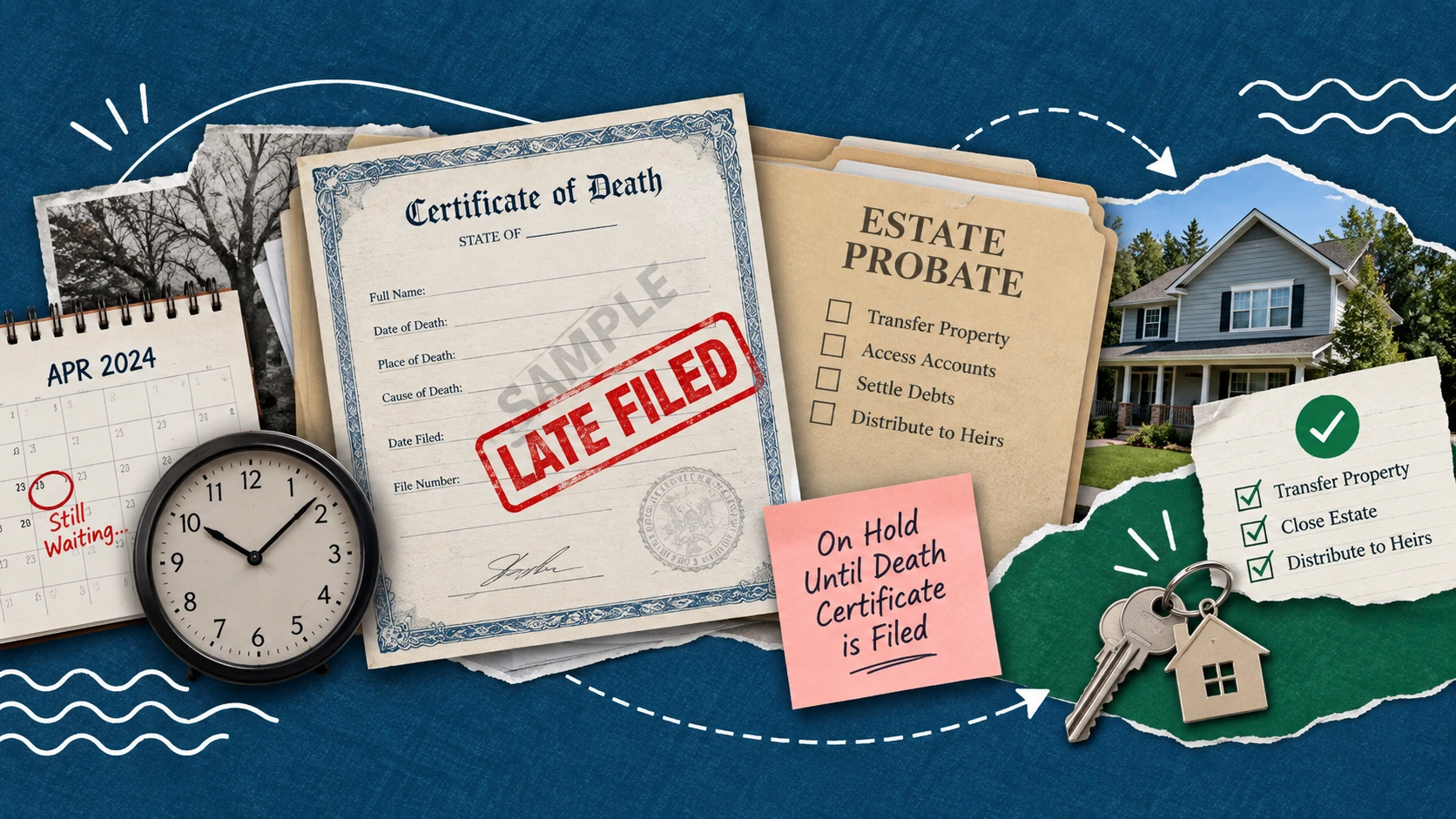
The request comes back with no certificate in the envelope. A parent who died in another state forty years ago, a death on a farm or at home that never reached a registrar, a certificate that was filed so late the state flagged it, and now the estate, the pension claim or the family history stops cold, because the record you are trying to order does not exist. No amount of reordering will find a death certificate that was never filed. The fix is a different process entirely.
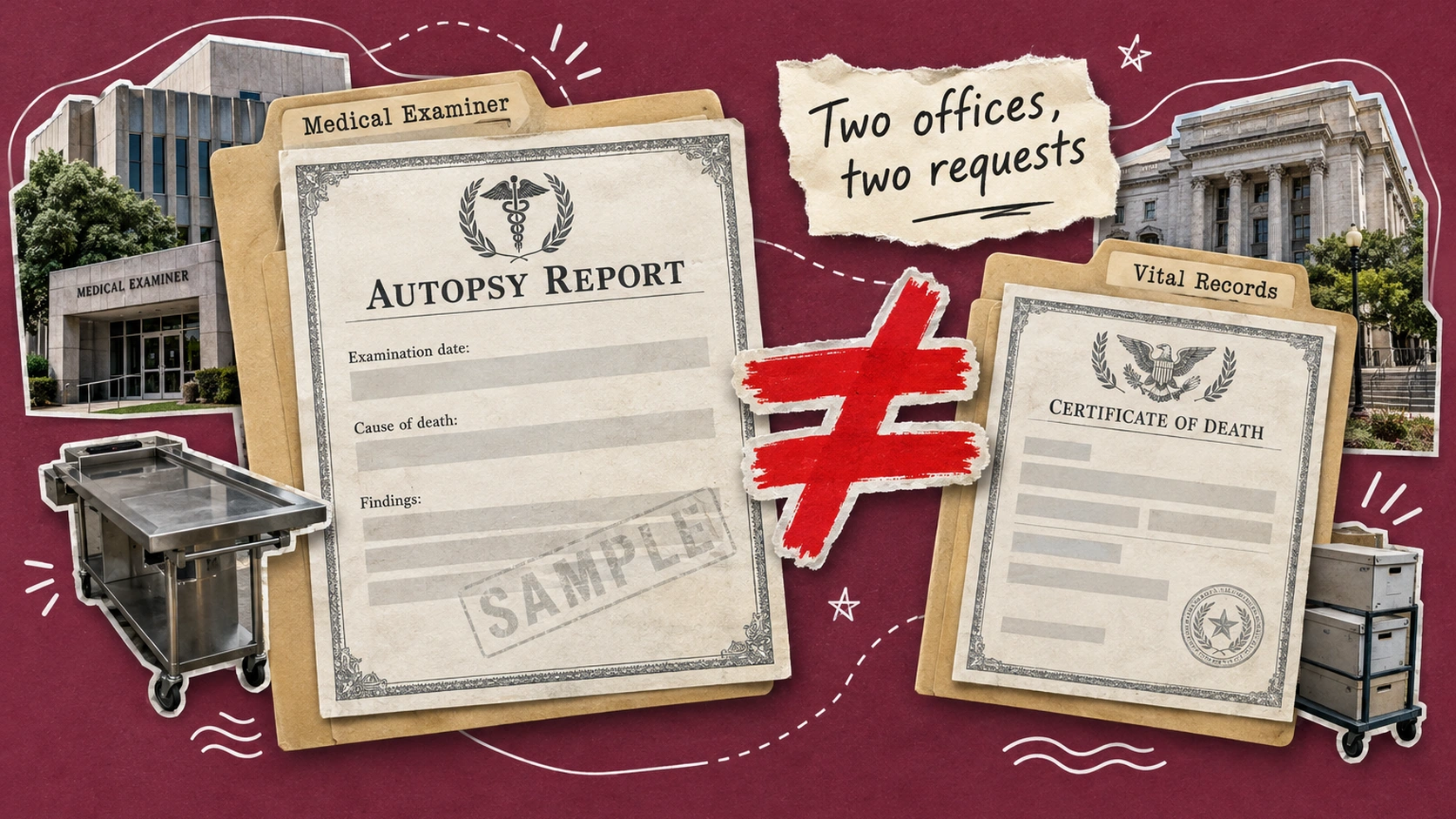
This article is about absence. It is not about how long an ordinary death certificate takes to arrive after a recent death; that guide and this FAQ own that question; and it is not about fixing an error on a certificate that exists, which has its own step-by-step guide. It is also not about a missing person with no confirmed death; that is a separate problem. Here the person died, everyone knows it, and the state has no record.
A Death Certificate Is Built by a Chain
Nobody "gets" a death certificate the way you get a receipt. The record is assembled by two people with legal duties and statutory clocks. The funeral director, or whoever takes custody of the body, supplies the personal information and files the certificate. A medical certifier, such as a physician, medical examiner or coroner, supplies and signs the cause of death. Only when both parts are complete does the registrar accept the record.
The clocks are real and set by statute. South Carolina's Department of Public Health states that in 2015 the General Assembly amended S.C. Code § 44-63-74 to require that death certificates be filed within five days from the date of death, and that the amendment exists "to allow DPH to assess administrative penalties" for certificates filed late. Five days is South Carolina's figure; other states set their own, but every state sets one.
When the chain works, the record exists within days. When a link failed, no funeral director was involved, the certifier never signed, the paper form was mailed and lost, or the death happened in an era and a place where the chain was thin, the record was never created. Decades later, that is what the empty envelope means.
What the State Actually Sends Back
A state vital records office that searches and finds nothing does not simply return your fee. It typically issues a written statement that a search was conducted for the named person across the stated years and no record was found. The name varies: a no-record letter, a certificate of failure to find, a negative certification. So does whether a fee applies, so ask the office what it issues.
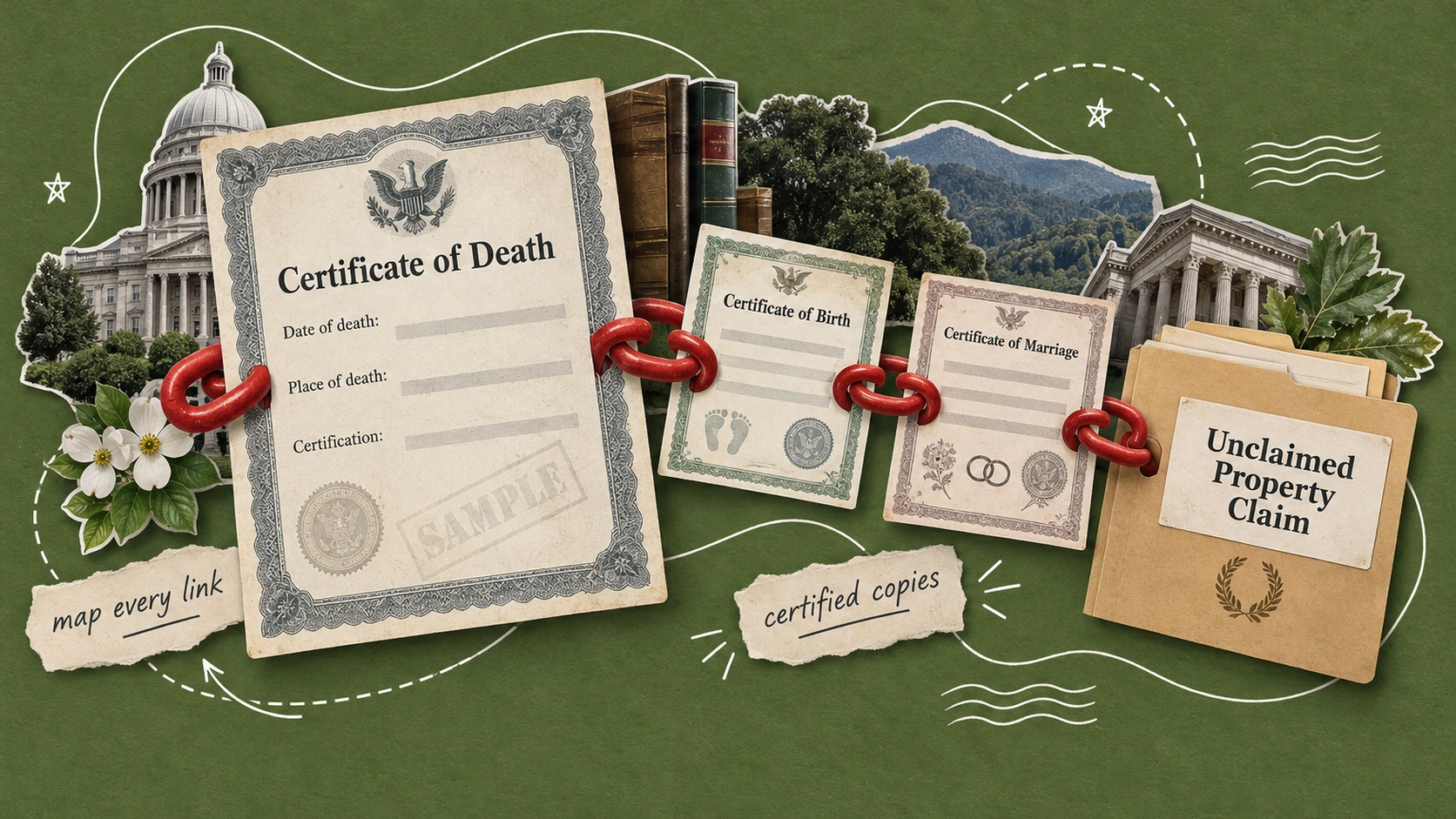
That document matters more than it looks. A probate court, a pension administrator or an insurer that requires proof of death cannot accept "the state has nothing" from you. It can accept a statement from the state that the record does not exist, because that is what opens the door to the alternative: registering the death late, on secondary evidence, so that a certificate can finally be issued. Keep the no-record statement. It is the first exhibit in the delayed registration.
Delayed Registration: What It Is
A delayed death certificate is a death record created after the ordinary filing window has closed, on evidence the state accepts as a substitute for the contemporaneous filing chain. The process is state law, varies substantially, and generally becomes more demanding the more time has passed. Two states we verified show the range.
California: Through the Court
The California Department of Public Health registers a Court Order Delayed Certificate of Death. The petitioner files a Petition to Establish Fact, Time and Place of Death (Judicial Council Form BMD-003, with a supporting declaration on BMD-003A) in Superior Court. If the court is satisfied by the evidence, it signs an Order Establishing Fact of Death, which forms the top portion of state Form VS 109. A certified copy of the signed order and the completed delayed-registration form are then submitted to CDPH Vital Records, which registers the death. Once registered, certified copies can be ordered like any other California death record.
Texas: Through the Probate Court, With an Unaltered Affidavit
The Texas Department of State Health Services, in its death registration guidance, states that a delayed death certificate may be filed only through the county probate court in the county where the death occurred. The surviving next of kin may petition that court. Texas prescribes a standard affidavit form for the delayed record and requires that it be used unaltered; a petition on a modified or homemade form is not accepted.
The two states share a structure worth noticing: both route a delayed death through a court, not through a clerk's counter, and both require the petitioner to prove the fact of death with evidence the court finds sufficient. What counts as sufficient is for the court and the state to say, and it varies: an obituary, a burial record, a church record, an insurance file, affidavits from people with personal knowledge. We verified California and Texas; we did not verify any other state, and you should ask yours what its procedure is before assembling anything.
Court-Ordered Records Run on a Slower Clock
A delayed registration by court order is not the only court-involved change to a death record, and the timing pattern is the same across the category. South Carolina, which processes most in-person amendment requests at its regional offices in one to two business days, states that court-ordered amendments take up to two weeks. It also stopped same-day amendment processing at its Richland County office as of November 17, 2025. The lesson generalizes even where the figures do not: anything a court has to sign takes longer than anything a clerk can stamp, and a delayed registration has the court step plus the registration step, in sequence.
Our state processing-time page tracks ordinary certified-copy turnaround. A delayed registration adds its own timeline in front of that.
Why Recent Deaths Are Fast and Old Gaps Are Not
The structural point, and the honest one. States have moved the filing chain online. South Carolina requires that certificates for deaths in the state be filed electronically, under S.C. H3325, passed in 2022, which requires funeral homes and medical certifiers to complete, certify and file death certificates electronically. Electronic filing makes it very hard for a recent death to go unregistered: the system does not let a funeral director close the file without a certifier's signature, and it does not lose the form in the mail.
It does nothing for the paper era. A death in 1962 that never reached the registrar is exactly as unrecorded today as it was then, and no modernization backfills it. The gaps are old, they are real, and the only way through them is the delayed-registration process the state provides.
What to Do
- Confirm the absence. Request a search from the state where the death occurred, for the correct name and a range of years, and keep the no-record statement it issues.
- Check the county. Some older deaths were recorded locally and never forwarded to the state; a county clerk or register of deeds may hold what the state does not.
- Ask the state vital records office for its delayed-registration procedure: who may petition, what evidence it accepts, whether a court order is required, and which form to use.
- Gather secondary evidence of the death: burial and cemetery records, obituaries, church records, insurance or pension files, and people who can give sworn statements.
- Consult a probate attorney in that state if the procedure runs through a court. The standard is state law, and this article is not legal advice.
Once the death is registered, however late, certified copies can be ordered from the state that holds the record for the estate, the pension and the family file. Vital Records Online is a third-party service and not a government agency; we cannot register a death or create a record that does not exist, and you can work with the state office directly. South Carolina's filing rules are published by its Department of Public Health.
Frequently Asked Questions
The state says there is no death certificate. Can I just reorder? No. If the record was never filed, no reorder will find it. Ask the state for a no-record statement and for its delayed-registration procedure.
What is a delayed death certificate? A death record created after the normal filing window, on secondary evidence the state accepts. In California and Texas the process runs through a court.
Who can file a delayed death registration? It depends on the state. Texas allows the surviving next of kin to petition the county probate court where the death occurred. Ask your state who may petition.
How long does a delayed registration take? Longer than a normal order, because a court step precedes the registration step. South Carolina, for example, says court-ordered amendments take up to two weeks, and a delayed registration has more steps than that.
Why was my parent's death never recorded? Usually a break in the filing chain: no funeral director, no medical certifier's signature, or a paper form that was never forwarded. Electronic filing has closed that gap for recent deaths but not for older ones.