How to Get a Copy of a Consular Report of Death Abroad (CRDA)
When a U.S. citizen dies in another country, families are usually told to "get the death certificate." What they actually need in most cases is a Consular Report of Death Abroad, or CRDA, and it is not a state vital record. It cannot be ordered the way a Texas or Florida death certificate can, and most families learn this only after a bank or an insurer rejects what they sent.
This guide explains what a CRDA is, who may request a copy, and exactly how the request works at the U.S. Department of State. The fees and timelines below were verified against State Department guidance in August 2026. Government fees and processing times change, so confirm them before you mail anything.
What a Consular Report of Death Abroad Is
When a U.S. citizen dies overseas, the U.S. embassy or consulate in the country where the death occurred creates the Consular Report of Death Abroad. It reports the death of a U.S. citizen based on the death record issued by the local foreign authority, and it is the document that U.S. banks, insurers, courts, and federal agencies generally accept as proof that the death occurred.
- Who creates it: The U.S. embassy or consulate in the country where the death happened.
- What it rests on: The death record issued by that country's own authorities.
- Who it covers: U.S. citizens only. The State Department does not issue a CRDA for lawful permanent residents.
Why a State Vital Records Office Cannot Help You
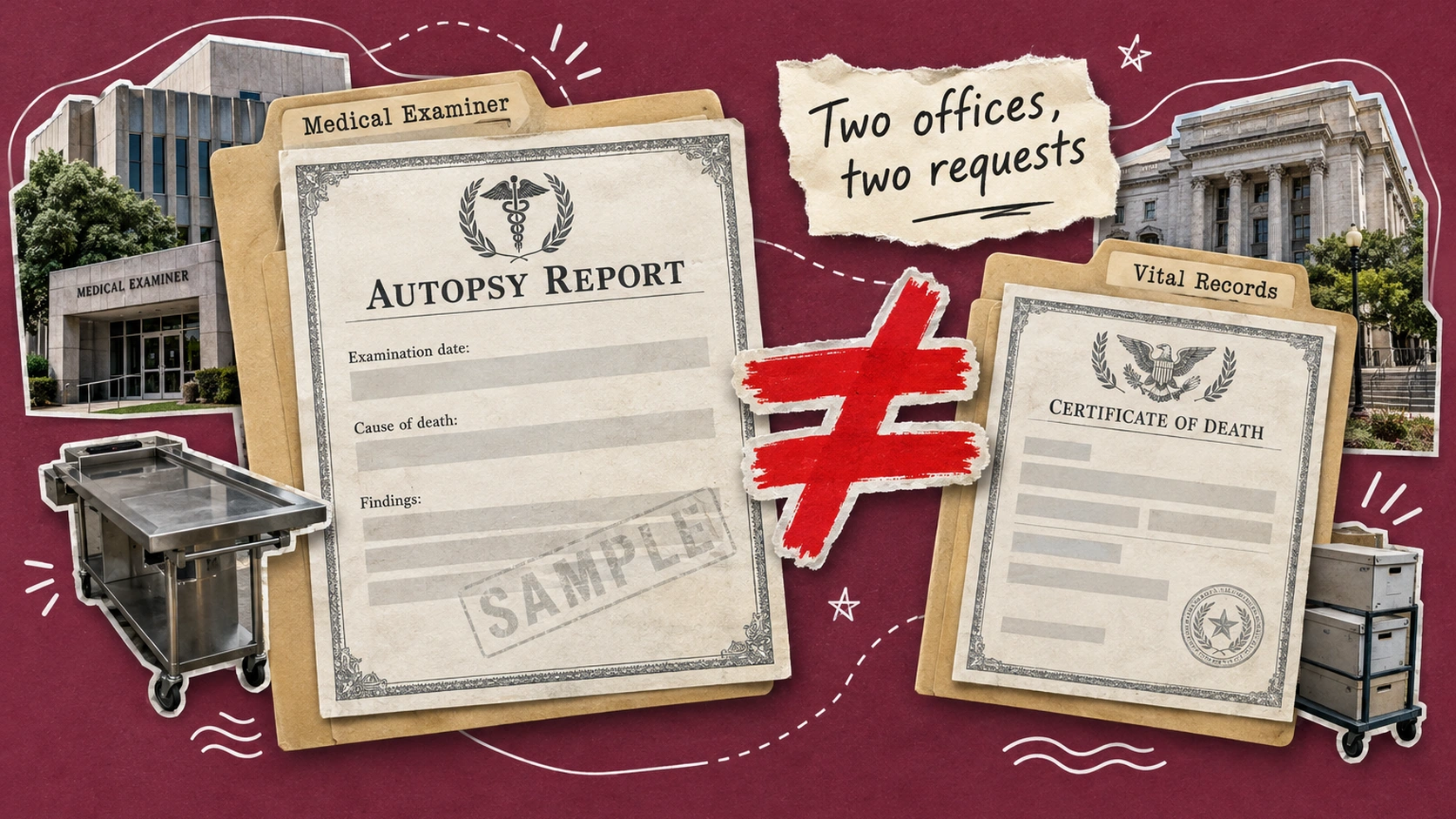
A U.S. death certificate is held by the vital records office of the state where the death occurred, which is why an out-of-state death still has a clear state custodian. A death abroad has none. No state registrar holds the record, no county clerk can produce it, and no state office can certify it.
The custodian is the U.S. Department of State's Passport Vital Records Section, and every request goes there by mail on one specific form. There is no state-level shortcut and no county alternative, which is the single most useful thing to understand before you start making phone calls.
Who May Request a Copy
The State Department issues copies of CRDAs filed in 1975 or after to two groups:
- Next of kin of the person who died.
- Legal representation acting for estate purposes.
This is narrower than the eligibility rules at many state vital records offices, where a broader set of relatives can sometimes order a certified copy. If you are not next of kin and not representing the estate, you will not be issued a copy, and it is worth resolving that question inside the family before anyone fills out a form.
How to Request a Copy Using Form DS-5542
Requests are made on Form DS-5542, mailed to the Passport Vital Records Section. The steps are straightforward, but each one has a detail that causes returned applications.
- Complete Form DS-5542 in full. This is the form used to request certified copies of overseas U.S. citizen vital records.
- Sign in front of a notary public. The State Department specifically advises signing before a notary to avoid delays.
- Include a photocopy of your identification.
- Include payment. Make it payable to the "U.S. Department of State." Payment must be in U.S. dollars through a U.S. bank. Do not send cash.
- Mail the package to the U.S. Department of State, Passport Vital Records Section, 44132 Mercure Cir., PO Box 1213, Sterling, VA 20166-1213.
Full current instructions are published by the State Department on its page on requesting a copy of a CRDA.
Cost, Timing, and the Missing Expedite Option
Three figures matter here, and the third one is the one that catches families out.
- The fee is $50 for each record you request. This is a government fee paid to the State Department.
- Processing takes 4 to 8 weeks once the request arrives at the office. Mailing time is on top of that in both directions.
- There is no expedited service. Unlike a passport application, you cannot pay more to move faster.
Because there is no expedite option and no way to shorten the wait, order every copy you expect to need in the same request rather than discovering three weeks later that you need two more. Estates, life insurance claims, pensions, and property transfers each tend to want their own certified copy, and a second request restarts the clock from zero.
Deaths Recorded Before 1975
The Passport Vital Records Section issues copies of CRDAs filed in 1975 or after. For a CRDA issued before 1975, the State Department directs requesters to the National Archives and Records Administration instead. This matters most for genealogical research and for older estates that are only now being settled.
The Foreign Death Certificate Is a Separate Document
The CRDA is a U.S. record of the death. The country where the death happened will have issued its own death record, and the two are not interchangeable. Some institutions ask for the local record as well, usually with a certified translation, and occasionally with authentication so it will be accepted here.
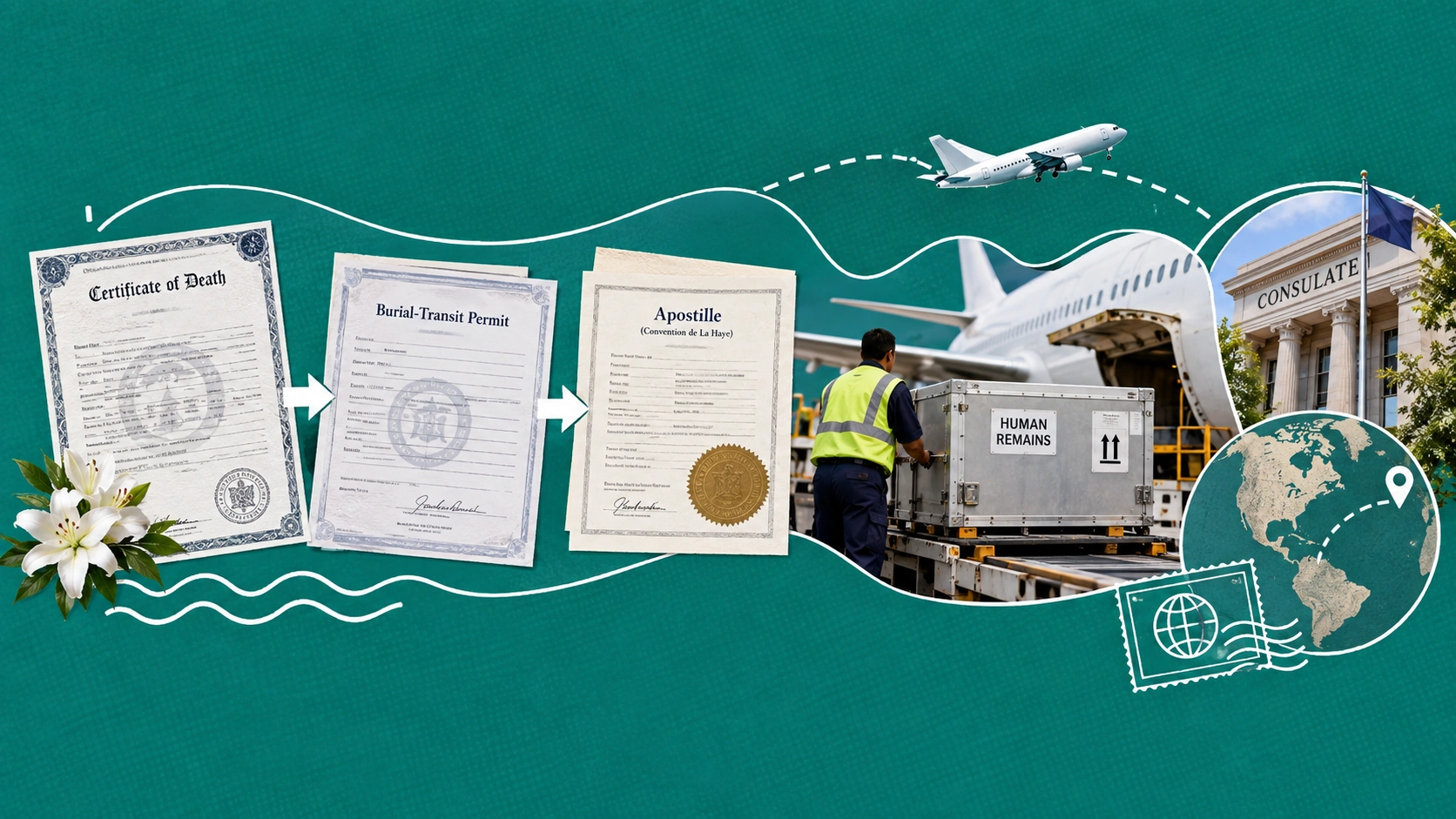
If a foreign document has to be recognized in the United States, or a U.S. document has to be recognized abroad, that is a separate authentication question. Our guide to getting an apostille for U.S. vital records used abroad covers how that process works and who the competent authority is.
Where This Fits in Settling the Estate
A death overseas rarely stops at the CRDA. Estates routinely also need U.S. records the person left behind: a marriage certificate to establish a surviving spouse, a birth certificate to establish a child's relationship, or a death certificate for a relative who died in the United States. Those are ordinary state vital records, and they are ordered the normal way while the CRDA request is in the mail.
Vital Records Online is a third-party service and not a government agency. We cannot obtain a CRDA for you, since the State Department issues those directly to next of kin and estate representatives only. What we can help with are the U.S. state vital records the same estate usually needs. If the estate also requires U.S. records, you can order a certified death certificate while you wait, and our estate planning resources explain which documents typically come up.
Frequently Asked Questions
Is a Consular Report of Death Abroad the same as a death certificate? Not exactly. It serves the same practical purpose in the United States and is generally accepted as proof of death, but it is issued by the U.S. Department of State rather than by a state vital records office, and it reports a death that occurred in another country.
How much does a copy of a CRDA cost? The State Department charges $50 for each record requested. That is a government fee, separate from any third-party service fee.
Can I pay to get a CRDA copy faster? No. The State Department does not offer expedited service for CRDA copies. Processing takes 4 to 8 weeks after the request is received.
Can a grandchild or a sibling request a copy? Copies are issued to next of kin and to legal representation for estate purposes. Whether a particular relative qualifies depends on the circumstances, so contact the Passport Vital Records Section before mailing a request you are unsure about.
What if the death happened before 1975? Contact the National Archives and Records Administration. The Passport Vital Records Section only issues copies of CRDAs filed in 1975 or after.