Who Actually Reports a Death to Social Security, and Why the Funeral Home's Report Isn't the End of It
Two beliefs cause most of the confusion after a death, and they point in opposite directions. One is that the family must urgently call Social Security. The other is that once the funeral home has handled it, everything is taken care of. Both are wrong, and the gap between them is where "my parent's benefit didn't stop" and "the bank says SSA hasn't updated" come from.
This article explains the reporting chain: who transmits the death, what that accomplishes, and what remains the family's job. It does not cover the survivor claim's document list; that is a separate task, covered in our guide to the documents SSA wants for survivor benefits.
The Funeral Home Usually Reports It
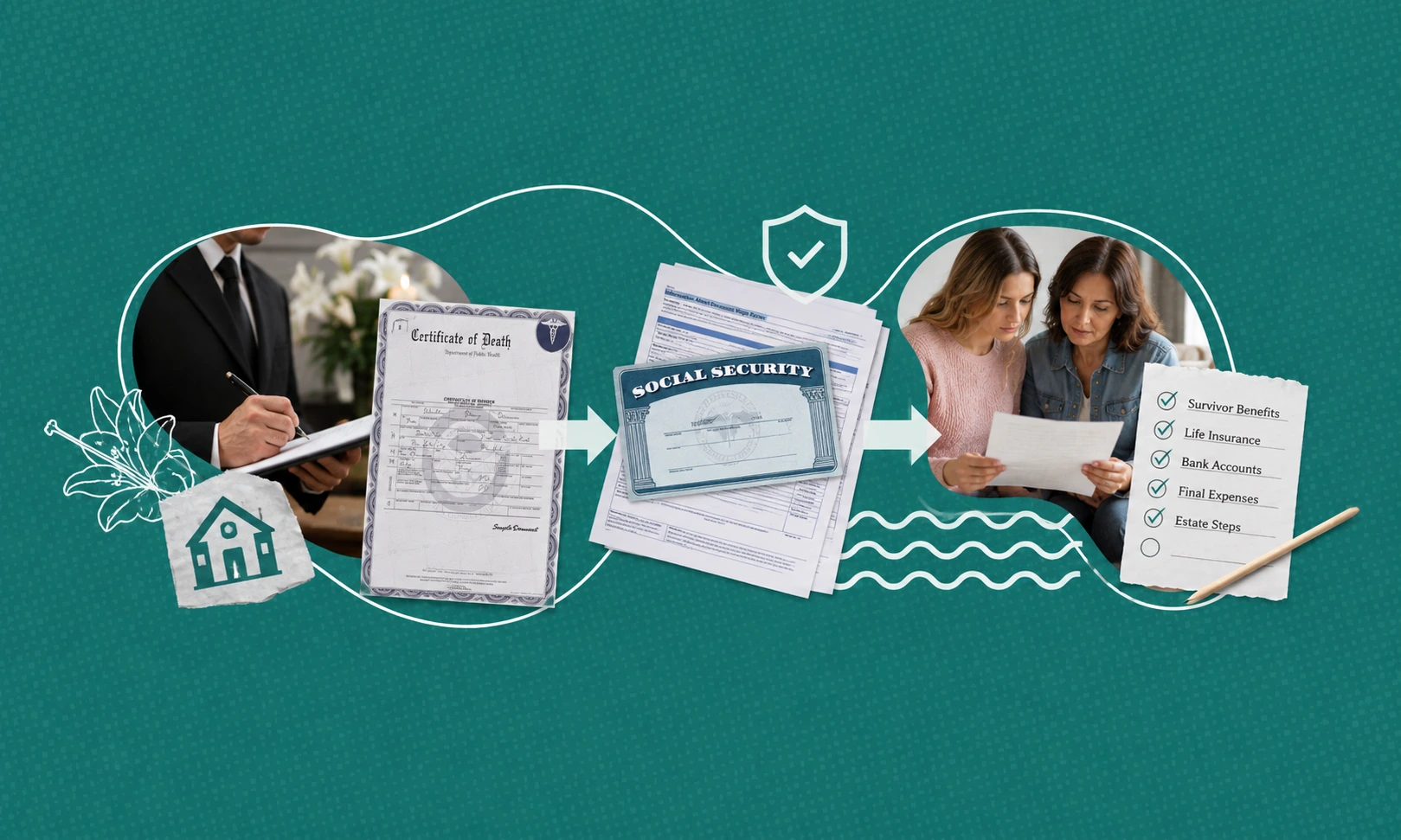
SSA states it plainly: "Funeral homes generally tell us when someone dies. So, you don't typically need to report a death to us."
The funeral director transmits the death, which is why the practical step for the family is simply to make sure the funeral home has the deceased person's Social Security number. Give them that, and the report is handled.
If a funeral home is not involved, or does not report the death for some reason, the family should call SSA and provide the name, Social Security number, date of birth, and date of death for the person who died. SSA takes these reports by phone at 1-800-772-1213.
If the Death Happened Outside the United States
SSA directs people living outside the U.S. to a Federal Benefits Unit or its International Call Center. And if the person who died was a U.S. citizen, the death should also be reported to the nearest U.S. embassy or consulate, which is the same step that produces a Consular Report of Death Abroad. Our guide on getting a copy of a Consular Report of Death Abroad covers that document.
What the Report Does, and What It Does Not
This is the distinction that matters most. A death report is not a benefit claim. It tells SSA the person has died so the agency can stop payments and update its records. It does not open anything on your behalf.
Nobody is automatically enrolled in anything as a result. If a surviving spouse or child is entitled to monthly survivor benefits, someone has to apply. If a spouse or child is eligible for the one-time lump-sum death payment, someone has to apply for that too, and you must apply for the lump-sum payment within 2 years of the death. The amount is $255, paid to a surviving spouse who was living with the worker at the time of death; if there is no spouse, some children may be eligible.
That two-year deadline is the one genuine clock in this whole process, and it runs quietly while a family assumes the funeral home's report covered everything.
Payments Received After the Death Usually Have to Go Back
Social Security benefits are not paid for the month in which a person dies, and a payment that arrives after the death generally has to be returned. Families sometimes leave the money untouched in the account, assuming it will sort itself out; it is better to expect it to be reclaimed and to avoid spending it.
Direct deposit changes have been an active issue for beneficiaries this year, and a survivor managing a payment-method change and a death report simultaneously is a common and confusing situation. Our article on Social Security ending paper checks covers that shift.
The Reporting Chain Is Fast. The Certified Copy Is Not.
Here is the timing mismatch that trips up nearly every family, and understanding it in advance removes most of the frustration.
The funeral director's report to SSA travels quickly. Separately, and on its own schedule, the state registers the death and begins issuing certified copies of the death certificate. Those are two different systems moving at two different speeds, and only one of them produces a document you can hand to anyone.
The consequence is that in the first weeks after a death, SSA may already know while you still have nothing to show the bank, the insurer, or the county. Nothing has gone wrong. The certified copy simply is not ready yet, and how long that takes varies by state and by circumstance. Our FAQ on how long after a death you can get a death certificate covers the timing, and the state processing time reference shows how much it varies.
It also runs the other way. Because SSA generally learns of the death without needing a certified copy from you, families sometimes conclude that the certified copy is optional. It is not; it is the document every other institution requires.
What the Family Still Has to Do
- Give the funeral home the Social Security number so the report goes through, or call SSA yourself if no funeral home is involved.
- Apply separately for survivor benefits if anyone in the family may be entitled. The report does not do this.
- Apply for the lump-sum death payment within two years if a surviving spouse or eligible child qualifies.
- Order certified copies of the death certificate for every institution that will demand one, which is nearly all of them.
- Expect to return any benefit payment that arrives for or after the month of death.
The order matters less than the recognition that these are four separate actions, not one. A single phone call from a funeral director accomplishes exactly one of them.
The certified death certificate is the piece the family controls and the piece everyone else asks for, so order it early; you can order certified copies from the state where the death occurred. Vital Records Online is a third-party service and not a government agency; you may also order directly from the state, and our Social Security documents guide covers what these claims involve.
Frequently Asked Questions
Do I need to call Social Security when someone dies? Usually not. Funeral homes generally report the death. If no funeral home is involved or it does not report, call SSA with the person's name, Social Security number, date of birth, and date of death.
Does reporting the death start survivor benefits? No. A death report is not a benefit claim. Survivor benefits and the lump-sum death payment must be applied for separately.
How much is the lump-sum death payment and how long do I have? It is a one-time payment of $255, and you must apply within 2 years of the death.
Does SSA need a copy of the death certificate from me? Generally not for the death report itself, since the funeral home reports it. You will still need certified copies for banks, insurers, pensions, and property transfers.
Why does the bank say Social Security has not updated its records? The reporting chain and the certified copy move on different timelines. SSA may have the death before the state has issued a certified copy you can present elsewhere.