"Cause of Death: Pending": What It Means and How to Get the Amended Certificate

You order the death certificate, it arrives, and where the cause of death should be it says "Pending." Nothing has gone wrong. A pending cause of death is a normal part of how medical examiners and coroners work, not a mistake on your certificate.
It is still unsettling, and the practical questions are urgent: is this document usable, what will it fail at, and when does the real one arrive. This article answers those. If you are dealing with an actual error on a certificate, such as a misspelled name or a wrong date, that is a different process covered in our guide on how to correct an error on a death certificate.
Why a Certificate Is Issued With the Cause Pending
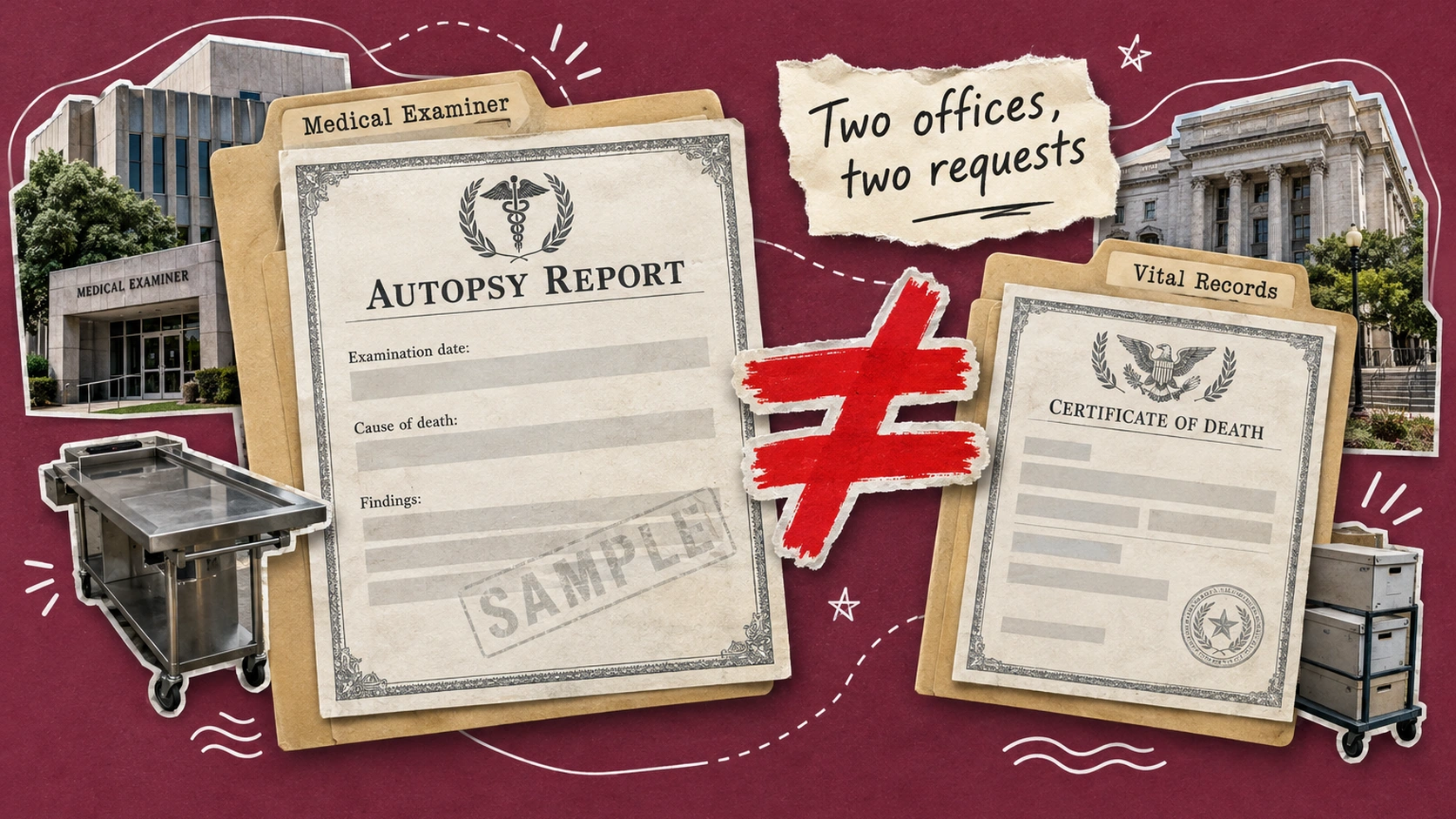
When a death falls under a medical examiner or coroner's jurisdiction, that office has to determine both the cause of death, meaning the injury or illness that resulted in death, and the manner of death, meaning the circumstances. Sometimes that determination cannot be made at the time the certificate has to be filed.
The certificate is filed anyway, with the cause marked pending. That is deliberate. Registering the death promptly is what allows the family to proceed with burial or cremation and to begin handling the estate, rather than waiting weeks with no document at all.
Common reasons a case stays open include toxicology testing, which is slow by nature, additional laboratory studies, autopsy findings that require follow-up, and an ongoing investigation. A pending status usually reflects the complexity of the case rather than anything unusual about the death.
How Long It Typically Takes
Medical examiner offices commonly describe the process as taking about two to three months, and some cases require roughly ninety days of further investigation. Timelines vary by jurisdiction and by case, and a complex toxicology workup takes as long as it takes.
The office handling the case is the only reliable source for a status update. Ask for the case number and the name of the investigator when you first make contact, because it makes every later call shorter.
What the Pending Certificate Can Still Do
This is the part families most need to hear. A certificate with a pending cause is a real, registered death certificate. It serves as proof of death, and a great deal of the work after a death only requires proof that the person died.
In practice it is commonly accepted for tasks such as:
- Funeral, burial, and cremation arrangements.
- Closing or transferring bank accounts.
- Notifying the Social Security Administration and other agencies.
- Cancelling credit cards, utilities, subscriptions, and other accounts.
- Starting probate, depending on the court.
- Vehicle title and registration changes at many motor vehicle agencies.
Acceptance is set by each institution rather than by a single rule, so the honest guidance is to try. Many organizations that require a certified death certificate do not care what the cause section says. Our overview of the real-life uses of a death certificate covers where certified copies are typically required.
What Will Usually Stall
A smaller set of claims turns on the cause itself, and those are the ones that wait. A pending cause sits on top of the issuing office’s own schedule, which you can check against death certificate processing times by state.
- Life insurance. Many insurers will not treat a pending certificate as sufficient to pay a claim, because policy terms can depend on cause and manner. This is the most common sticking point by far.
- Accidental death and dismemberment coverage, which pays only for specific manners of death.
- Workers' compensation and some employer death benefits, where work-relatedness has to be established.
- Certain veterans' and government benefits tied to a service-connected or specific cause.
- Wrongful death or liability claims, where cause is the central fact.
File the claim anyway rather than waiting. Notify the insurer promptly, submit the pending certificate, and ask them to confirm in writing what they need and whether the claim is open pending the final cause. Insurers routinely handle this situation, and starting the file early means the only remaining step later is supplying the updated certificate.
How the Final Cause Reaches the Certificate
Once the medical examiner or coroner completes the investigation, the office reports the determined cause and manner to the state's vital records office. This is typically done through a supplemental report of cause of death, and the registered certificate is updated to reflect the actual cause.
Two things about this are worth understanding, because they cause most of the confusion.
- Nobody mails you a new certificate automatically. The record is updated at the vital records office. The certified copies already sitting in your file do not change and are not replaced by anyone.
- You get the updated version by ordering a new certified copy. Once the record has been amended, a fresh certified copy shows the finalized cause of death.
The practical sequence is therefore: confirm with the medical examiner's office that the determination has been made and reported, then order new certified copies from the state, then send those to whoever was waiting. Ordering too early simply produces another pending copy at full price.
Order for the Claims That Are Waiting
When you do reorder, count the institutions that specifically rejected the pending version and order that many certified copies at once. Life insurers, benefit administrators, and courts each generally keep their own certified copy, and a second order means a second wait. Our article on what information appears on a death certificate explains which sections these organizations examine.
When the medical examiner has finalized the cause, you can order updated certified death certificates reflecting the amended record.
Frequently Asked Questions
Is a death certificate with a pending cause of death valid? Yes. It is a registered death certificate and serves as proof of death. Many institutions accept it for routine matters.
How long does a pending cause of death take to resolve? Medical examiner offices commonly describe two to three months, and some cases take about ninety days of further investigation. Timelines vary by office and by case.
Will life insurance pay out on a pending death certificate? Often not, because coverage can depend on the cause and manner of death. File the claim anyway so it is open, and supply the updated certificate when it is available.
Do I get a new certificate automatically when the cause is determined? No. The record is amended at the vital records office, and you must order a new certified copy to receive a version showing the finalized cause.
Is a pending cause the same as an error on the certificate? No. A pending cause is a normal step in the medical examiner's process. An error, such as a wrong name or date, goes through a separate correction process.